 Pin It
 There's something about a 15-minute dinner that feels like a small victory, especially when it tastes like you've been cooking all afternoon. One Tuesday evening, I was staring at the clock and a bag of shrimp, wondering if I could pull off something that wouldn't taste rushed. That's when this noodle bowl happened—sesame-kissed, bright with fresh vegetables, and somehow elegant enough to feel like dinner, not a shortcut. Now I make it whenever I want to feel competent and fed without the fuss.
I served this to my friend Maya on a hot summer night when the thought of turning on the oven felt criminal. She watched skeptically as I assembled everything in what felt like a blur, then took one bite and immediately asked for the recipe. The best part wasn't her approval—it was realizing that simple, fast food doesn't have to taste simple or feel rushed.
Ingredients
- Large shrimp (200 g): Buy them peeled and deveined if you can; it saves precious minutes and they cook so quickly you barely have time to think.
- Soy sauce (3 tbsp total): Use a good quality one if you have it—the flavor really shines when it's the backbone of your sauce.
- Sesame oil (2 tbsp total): This is non-negotiable; it's what makes this taste authentically Asian rather than just noodles with stuff on top.
- Rice vinegar (1 tbsp): It's the brightness that keeps everything from feeling heavy or one-note.
- Honey or maple syrup (2 tsp total): Just a whisper of sweetness to balance the salt and acid.
- Sriracha or chili sauce (1 tsp): Adjust this based on your heat tolerance—it's there to wake everything up, not punish anyone.
- Toasted sesame seeds (1 tsp): Toast them yourself if you have time; it makes a genuine difference in the nuttiness.
- Asian wheat or rice noodles (150 g): Read the package to see which cooks fastest—some are ready in 3 minutes, others take 8.
- Fresh vegetables (carrot, cucumber, spring onions, cilantro, red bell pepper): These are your texture insurance; they keep the bowl from becoming a monotonous pile of soft things.
- Lime wedges: Never skip this—squeezing fresh lime over everything at the last moment changes the entire dish.
Tired of Takeout? 🥡
Get 10 meals you can make faster than delivery arrives. Seriously.
One email. No spam. Unsubscribe anytime.
Instructions
- Build the shrimp marinade:
- Combine your shrimp with soy sauce, sesame oil, honey, minced garlic, grated ginger, and chili flakes in a bowl. The aromatics will start perfuming the air immediately, and the shrimp will absorb flavor while you handle everything else.
- Cook the noodles:
- Get water boiling and follow your package instructions—don't overcook them or they'll fall apart when you toss them. Drain and rinse under cold water immediately so they stop cooking and don't clump together.
- Whisk the dressing:
- In a large bowl, combine soy sauce, sesame oil, rice vinegar, honey, and sriracha, then stir in the toasted sesame seeds. Add your cooled noodles and toss until every strand is coated in that glossy, fragrant sauce.
- Sear the shrimp:
- Heat your grill pan or skillet over medium-high heat until it's genuinely hot—you want to hear them sizzle when they hit the surface. One to two minutes per side and they'll be pink and tender; any longer and they toughen up.
- Assemble the bowls:
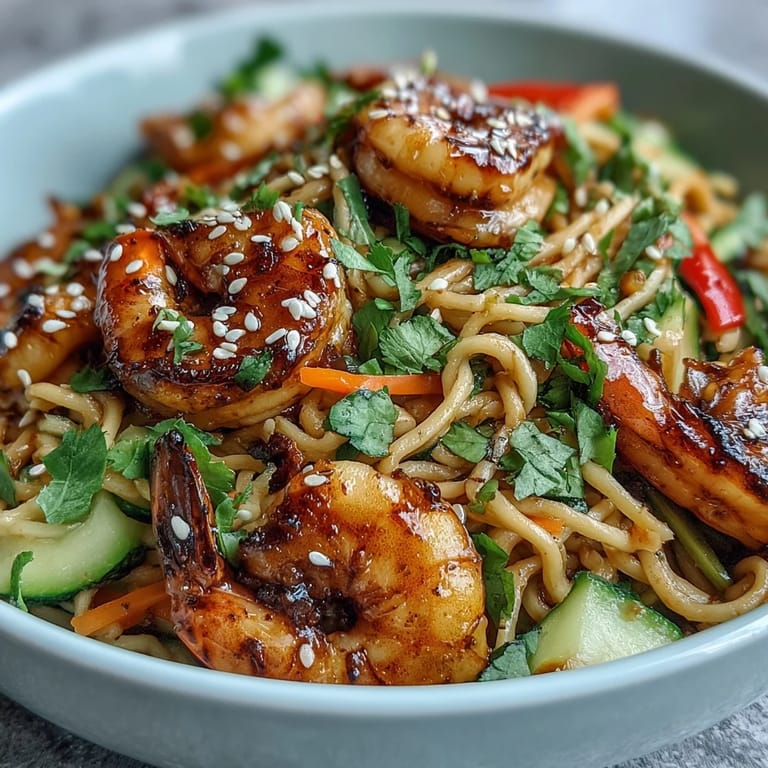
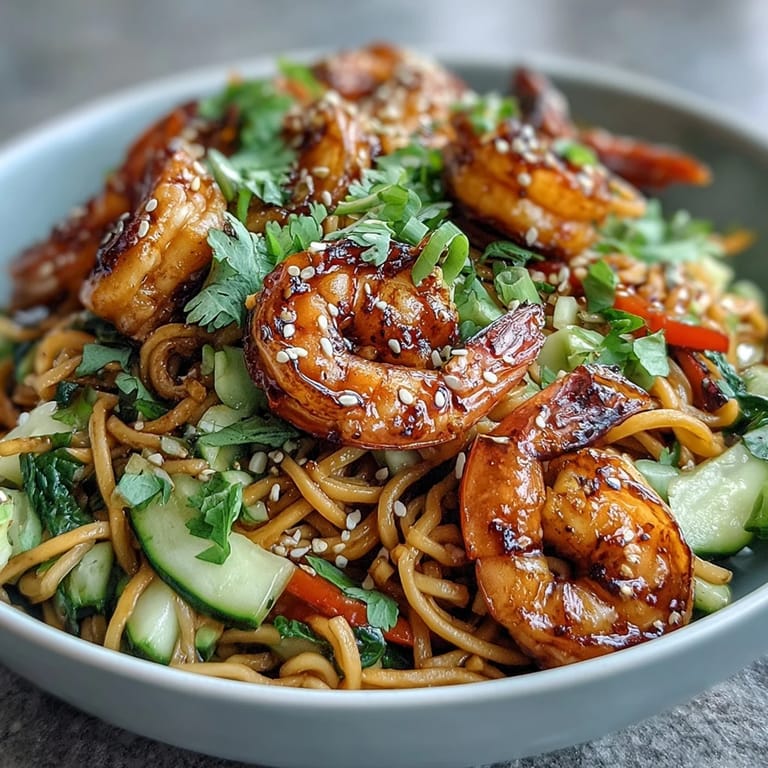
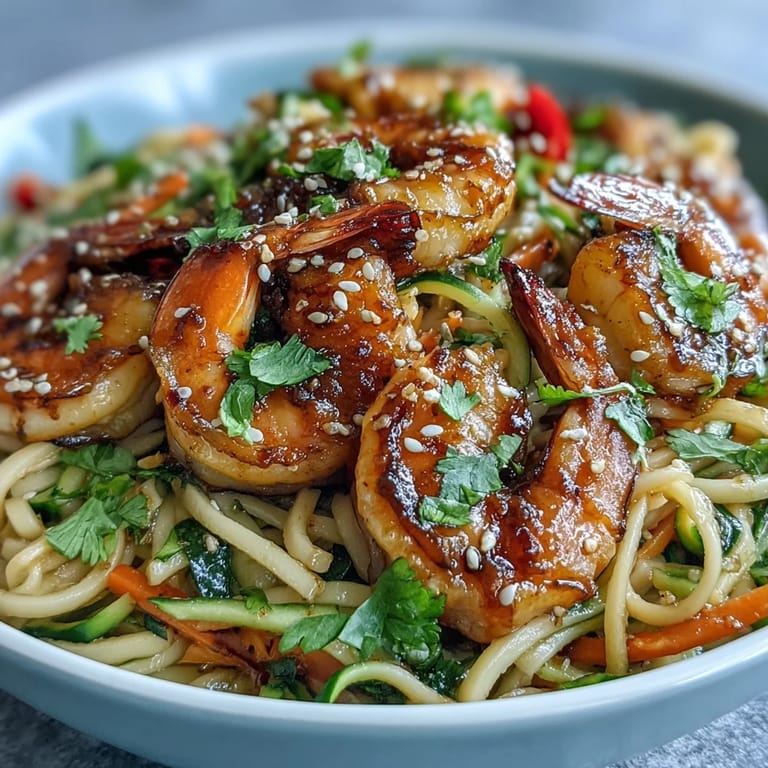
- Divide the dressed noodles between bowls and arrange your grilled shrimp on top like you're plating something intentional. Layer the fresh vegetables around everything—the colors matter as much as the flavors.
- Finish and serve:
- Scatter cilantro on top and set out lime wedges so everyone can squeeze their own. This final squeeze is when everything comes alive.
 Pin It
 What surprised me most about making this regularly is how it transformed from a busy-weeknight solution into something I genuinely look forward to. There's something meditative about julienning vegetables quickly, watching shrimp turn from gray to pink, and knowing dinner will be on the table while the sun is still out.
The Sesame Oil Secret
Sesame oil is doing two major jobs in this recipe—it's in the shrimp marinade and in the noodle dressing—and that repetition is intentional. It creates a flavor thread that ties everything together and gives the whole bowl a signature taste that feels more sophisticated than the ingredient list suggests. A little goes a long way, so don't be tempted to pour; a measured hand is what keeps it tasting nutty rather than overwhelming.
Why Cold Noodles Matter
Warm noodles would wilt the fresh vegetables and absorb all the dressing unevenly, turning everything mushy and sad. Rinsing them in cold water stops the cooking process instantly and firms them up so they hold their texture and actually have something to push against when you toss them in sauce. It's a small detail that makes the difference between a noodle bowl that sings and one that just sits there.
Customizing Your Bowl
This recipe is built on shrimp, but it's endlessly flexible depending on what you have and what you're craving. Grilled chicken works beautifully if shellfish isn't your thing, and tofu is wonderful if you want to keep it vegetarian—just marinate and sear it the same way. You can add shredded lettuce for extra crunch, throw in some edamame for protein, or swap the sesame seeds for crushed peanuts if that's more your style.
- Grilled chicken or crispy tofu are seamless protein swaps that work with the exact same marinade.
- Add edamame, shredded lettuce, or sliced avocado for texture variations and extra nutrients.
- If you have leftover roasted vegetables, they're beautiful in here too—just toss them in cold.
 Pin It
 This noodle bowl taught me that speed and care aren't opposites—you can make something in 15 minutes that feels intentional and tastes like you actually tried. That's the kind of dinner magic worth keeping close.
Recipe FAQ
- → Can I use other proteins instead of shrimp?
Absolutely. Grilled chicken strips work beautifully with these flavors. For a vegetarian version, try firm tofu cubes or edamame. Both absorb the marinade well and pair nicely with the sesame noodle base.
- → What type of noodles work best?
Asian wheat noodles, ramen, or rice noodles all work great here. Rice noodles make the dish gluten-free if needed. Cook according to package directions and rinse under cold water to stop cooking and remove excess starch.
- → How can I make this gluten-free?
Use rice noodles instead of wheat noodles and substitute tamari for soy sauce. Double-check that your chili sauce and other condiments are certified gluten-free. The rest of the ingredients are naturally gluten-free.
- → Can I prepare components ahead?
You can marinate the shrimp up to 4 hours in advance. The noodle dressing can be whisked together and stored separately. Slice vegetables earlier in the day, but keep them refrigerated. Assemble just before serving for best texture.
- → What's the best way to julienne vegetables quickly?
Use a julienne peeler or mandoline for even, quick strips. Alternatively, cut vegetables into thin matchsticks by hand—carrots and cucbers slice easily when you cut them into planks first, then into strips.
- → How do I prevent shrimp from becoming rubbery?
Don't overcook—shrimp only need 1-2 minutes per side over medium-high heat. They're done when they turn pink and opaque. Remove immediately to prevent toughening, as residual heat continues cooking them slightly.