 Pin It
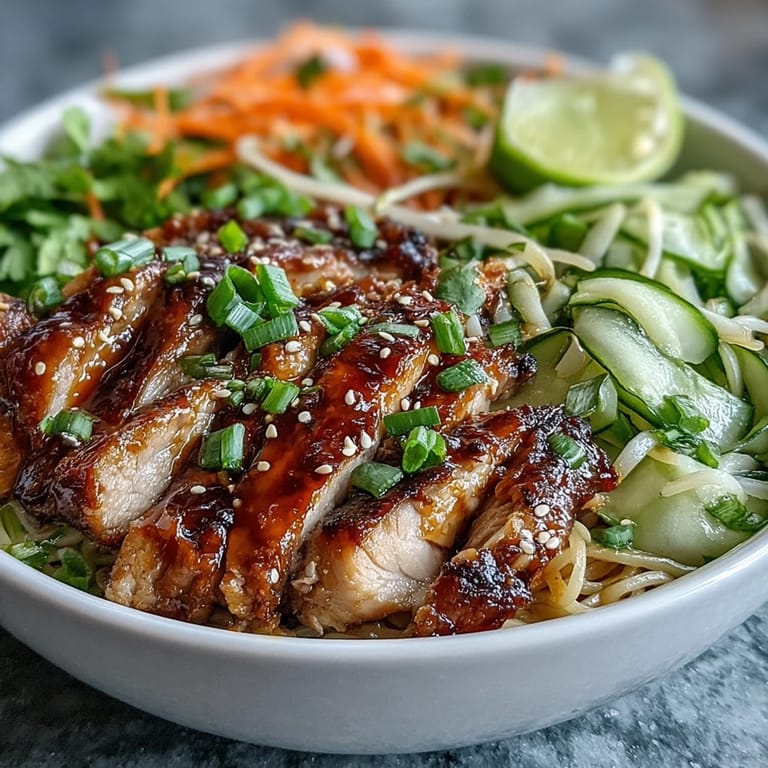
 My neighbor stopped by one afternoon with a container of leftovers from her trip to Vietnam, and honestly, that one bowl changed how I thought about weeknight dinners. The balance of flavors—tangy, sweet, savory all at once—felt almost impossible to recreate at home, but then I realized the magic was in layering the sauce and letting each element breathe. Now this noodle bowl sits on my regular rotation, and it's become the dish I make when I want to feel like I've traveled without leaving my kitchen.
I made this for my partner after a long week, and I watched them take that first bite and just pause—the kind of pause that means the flavors landed exactly right. We ended up eating in comfortable silence for a while, and then they asked if I'd make it again next week. That's when I knew this recipe was a keeper.
Ingredients
- Chicken breast or thighs (500 g): Thighs stay more tender, but breasts work beautifully too—just don't skip the marinade or they'll dry out.
- Tamari (3 tbsp): This soy sauce alternative is naturally gluten-free and has a deeper, rounder flavor than regular soy.
- Fish sauce (1 tbsp): A tiny amount transforms the entire sauce with umami depth; your guests won't taste fish, they'll taste why everything tastes so good.
- Rice vinegar (2 tbsp): The acidity keeps the sauce bright and prevents it from becoming too heavy or cloying.
- Honey (1 ½ tbsp): This rounds out the salty and tangy notes, creating that savory-sweet balance that makes people ask for the recipe.
- Toasted sesame oil (2 tbsp): Use the dark kind and measure carefully—a little goes a long way, and it's what makes this taste authentically Asian.
- Neutral oil (2 tbsp): This helps the chicken cook evenly without the sesame oil overpowering at high heat.
- Garlic and ginger (3 cloves and 1 tsp): Fresh and aromatic, these build the foundation of the sauce; don't skip the ginger just because it's marked optional.
- Chili flakes or Sriracha (1 tsp): Heat is optional but highly recommended—it wakes up your palate and makes each bite more interesting.
- Rice noodles (250 g): These have a delicate chew that absorbs sauce beautifully; wheat noodles work too if that's what you have.
- Fresh vegetables (carrot, cucumber, bell pepper, bean sprouts, spring onions): The raw freshness is essential here—it's the contrast to the warm chicken and sauce that makes this bowl sing.
- Cilantro and sesame seeds: These finishes add texture and a last-minute brightness that pulls everything together.
- Lime wedges: A squeeze of acid right before eating elevates every flavor.
Tired of Takeout? 🥡
Get 10 meals you can make faster than delivery arrives. Seriously.
One email. No spam. Unsubscribe anytime.
Instructions
- Make the sauce and marinate:
- Whisk tamari, fish sauce, rice vinegar, honey, sesame oil, neutral oil, garlic, and ginger together in a bowl. Split the mixture in half—one half will coat the chicken for 15 minutes, and the other half stays untouched until you finish cooking, so it stays bright and raw.
- Cook the noodles:
- Follow the package instructions, then drain and rinse under cold water to stop them from cooking further and to remove excess starch. Cold noodles won't clump together in the bowl.
- Sear the chicken:
- Heat your skillet or wok over medium-high heat until it's properly hot—you'll see a shimmer—then add the marinated chicken without crowding the pan. Let it sit for a minute or two before stirring so it gets a light golden crust on the outside.
- Build the bowls:
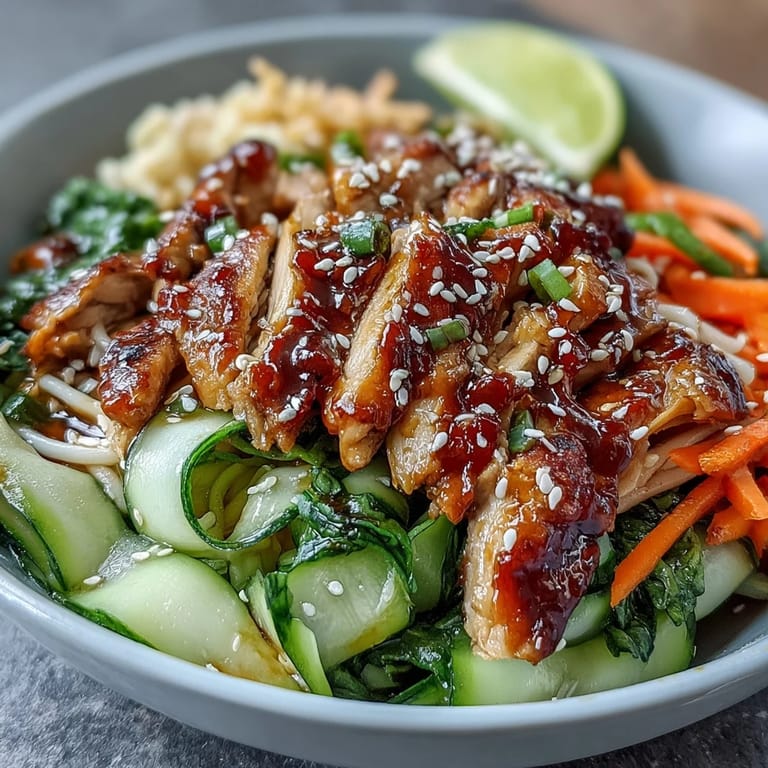
- Start with noodles as your base, then arrange the warm chicken on top with all the fresh vegetables in little sections around it. This presentation makes people actually want to eat it.
- Dress and garnish:
- Drizzle the reserved sauce over everything—don't hold back, this sauce is meant to be generous. Top with cilantro, sesame seeds, and a good squeeze of lime juice right before eating.
 Pin It
 My kid, who's usually skeptical about anything that looks colorful and unfamiliar, ate two full bowls and asked what was in the sauce because it was "actually good." It's those small victories that remind me why I love cooking—that moment when something you made breaks through someone's defenses.
The Power of Balance
What makes this bowl work is the same principle that makes a perfect song—every note matters, and nothing can be too loud. The sauce has four distinct flavors that somehow become one: salty (tamari and fish sauce), sour (rice vinegar), sweet (honey), and rich (sesame oil). When you taste it, your brain gets confused in the best way because it's trying to figure out what it's experiencing. This is what separates a good noodle bowl from one you'll crave for days afterward.
Why Fresh Vegetables Matter Here
The raw vegetables aren't just decoration—they're the entire reason you eat this instead of ordering takeout. Crunch, coolness, and brightness cut through the richness of the sauce and warm chicken in ways cooked vegetables never could. I used to roast my vegetables until I realized I was working against myself; raw is what makes this bowl feel light and refreshing instead of heavy, even though it's completely satisfying.
Making It Your Own
This recipe is a framework, not a rulebook, so feel free to swap in whatever vegetables you have in your crisper drawer. I've made versions with shredded cabbage, snap peas, sliced mushrooms, and even leftover roasted broccoli, and every version has been delicious. The sauce carries the dish, so as long as you nail that, you're golden.
- Substitute chicken with pressed tofu, shrimp, or even thinly sliced beef for different proteins.
- If you can't find rice noodles, use whatever dried noodles you have—ramen, wheat, even spaghetti works in a pinch.
- Make the sauce ahead of time and it'll actually taste even better the next day as the flavors deepen.
 Pin It
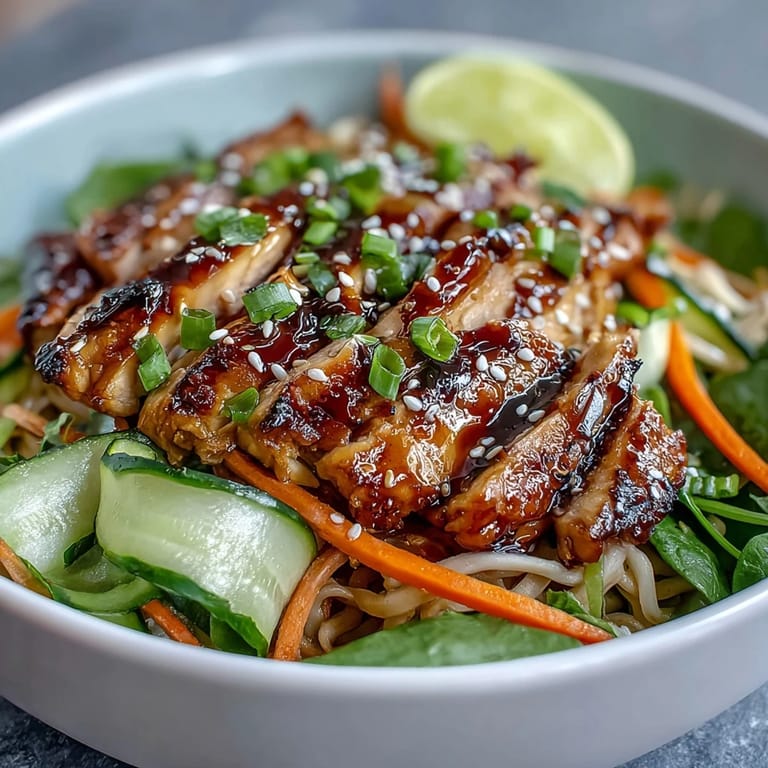
 This bowl became my go-to when I wanted to prove to myself that simple, clean cooking could be just as impressive as anything complicated. It still is, every single time.
Recipe FAQ
- → What type of noodles work best?
Rice noodles are traditional and gluten-free, but wheat noodles, soba, or even udon work beautifully. Choose noodles that hold up well to tossing with sauce.
- → Can I prepare this in advance?
Marinate the chicken up to 24 hours ahead. Slice vegetables and prepare the sauce in the morning. Assemble bowls just before serving to keep textures fresh and crisp.
- → How do I make it vegetarian?
Replace chicken with firm tofu cubes and omit fish sauce or use a vegetarian version. The sauce and vegetable medley remain just as flavorful and satisfying.
- → What can I add for more vegetables?
Edamame, snap peas, shredded cabbage, bok choy, or mushrooms all complement the flavors beautifully. Add whatever fresh produce you have on hand.
- → Is this dish spicy?
The base version is mild, but you can adjust heat with chili flakes or Sriracha in the sauce or served on the side. Customize to your preference easily.