 Pin It
 The monsoon rains were drumming against my apartment windows when I first attempted Tom Kha Gai. My Thai neighbor had insisted I try making it myself rather than ordering takeout again. The aromatic symphony of lemongrass, galangal, and lime leaves transformed my kitchen that evening, creating a fragrant cloud that lingered for hours. Something magical happens when coconut milk meets those traditional Thai aromatics—it's like they were destined to dance together.
Last winter, I made this Tom Kha Gai for my partner who had caught a terrible cold. The steamy, aromatic broth seemed to work better than any medicine cabinet remedy. We sat wrapped in blankets, holding warm bowls close, while the fragrant steam cleared sinuses and lifted spirits. Even now, the scent of lemongrass simmering immediately transports me back to that evening of simple comfort.
Ingredients
- Galangal: This knobby rhizome might look like ginger but offers a sharper, piney flavor that forms the backbone of authentic Tom Kha—I once substituted too much ginger and learned the hard way they're definitely not interchangeable.
- Makrut Lime Leaves: These glossy, double-lobed leaves release an intense citrus oil that ginger simply cannot replicate—I keep them in my freezer since finding them fresh can be challenging.
- Coconut Milk: Please use full-fat, unsweetened coconut milk for that silky richness—the light versions just create a watery disappointment that I learned about through an unfortunate experiment.
- Thai Bird's Eye Chilies: These tiny peppers pack serious heat, so handle with care and adjust to your preference—I learned to make small slits rather than smashing them for more controlled spiciness.
- Fish Sauce: This provides the essential umami foundation that balances the soup's sour and sweet notes—my Thai friend taught me to add it incrementally and taste as you go.
Tired of Takeout? 🥡
Get 10 meals you can make faster than delivery arrives. Seriously.
One email. No spam. Unsubscribe anytime.
Instructions
- Infuse the Broth:
- Start by bringing your chicken broth to a gentle simmer in a medium pot, then add those aromatic treasures—lemongrass, galangal, lime leaves, and chilies. Let them slowly release their essence for about 5-7 minutes, filling your kitchen with that unmistakable Thai fragrance.
- Add Protein and Vegetables:
- Slip in those thin slices of chicken and shallot, stirring gently until the chicken loses its pink color. The chicken will continue cooking in the next steps, so don't worry about it being completely done yet.
- Create the Creamy Base:
- Now for the magical transformation—add your sliced mushrooms and pour in the coconut milk, stirring with care. Keep the heat moderate to prevent boiling which would separate the coconut milk and make the soup grainy.
- Balance the Flavors:
- This is where you become the conductor of taste—add fish sauce for saltiness, palm sugar for subtle sweetness, and lime juice for that essential sour note. Take little tastes and adjust until you find that perfect harmony that makes Tom Kha sing.
- Remove Aromatics and Serve:
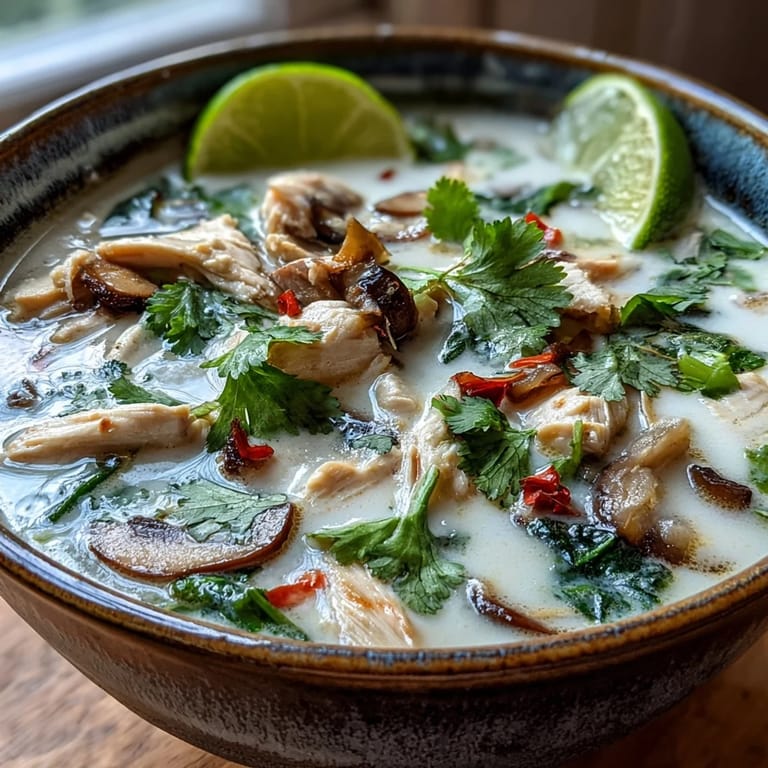
- Most Thais leave the aromatics in the soup and eat around them, but you can remove the lemongrass, galangal, and lime leaves if preferred. Ladle this liquid treasure into bowls and crown with fresh cilantro and green onions.
 Pin It
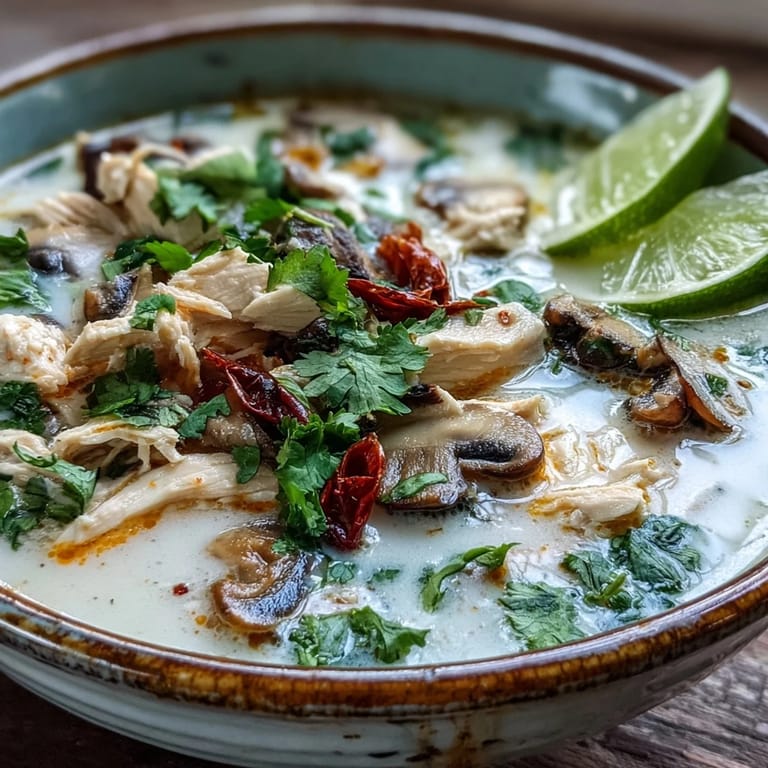
 My most cherished memory with this soup happened during a dinner party when my friend from Bangkok took one spoonful and fell silent. For a moment I worried something was terribly wrong, until I saw her eyes close in appreciation. She whispered that it tasted like her grandmother's soup, the highest compliment I could have received. That single moment validated all my efforts to honor this recipe's cultural roots.
Making Vegetarian Tom Kha
Converting this recipe to vegetarian taught me valuable lessons about flavor building. Swap chicken broth for vegetable broth, replace chicken with cubed firm tofu or thinly sliced king oyster mushrooms, and use soy sauce or tamari instead of fish sauce. The trick I discovered is adding a tablespoon of white miso paste to the broth for that umami depth that vegetarian versions often miss. This adaptation honors the spirit of Tom Kha while welcoming plant-based eaters to the table.
Sourcing Authentic Ingredients
The hunt for galangal and makrut lime leaves became something of an adventure that connected me to my city in new ways. Asian grocery stores are your best bet, but I've found success at farmers markets with Southeast Asian vendors and specialty spice shops. Fresh is ideal, but dried galangal and frozen lime leaves work surprisingly well. Building a relationship with shop owners has led to them setting aside ingredients when fresh shipments arrive—a connection that enriches both my cooking and community bonds.
Serving Suggestions
Tom Kha Gai exists in this beautiful space between soup and curry, making it versatile for various serving styles. I've served it over jasmine rice in shallow bowls for a more substantial meal, and in small cups as a starter before a larger Thai feast. The traditional approach treats it as a shared dish, served family-style from a central pot with individual bowls of rice alongside.
- For extra texture, try adding bean sprouts or water chestnuts in the final minute of cooking.
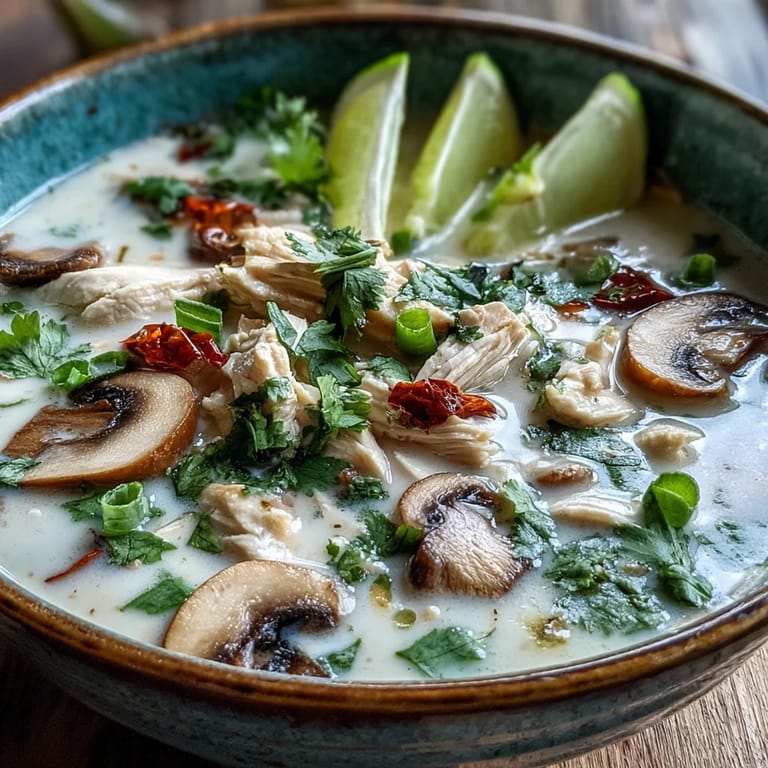
- Keep extra lime wedges and a small dish of crushed chilies on the table so guests can adjust the sour-spicy balance to their preference.
- If serving as a main course, simple cucumber salad with rice vinegar makes a perfect cooling counterpoint.
 Pin It
 This soup has become more than just a recipe in my collection—it's a reminder that cooking is a form of connection across cultures and distances. Each time the aroma of lemongrass and coconut fills my kitchen, it carries echoes of shared meals and stories exchanged over steaming bowls.
Recipe FAQ
- → Can I substitute galangal with ginger?
Yes, ginger makes an acceptable substitute if galangal is unavailable. While ginger lacks galangal's distinct piney and citrusy notes, it will still provide a pleasant warmth and aromatic quality to the broth.
- → How spicy is this soup?
The heat level is customizable. Three Thai bird's eye chilies provide moderate warmth that complements rather than overwhelms. Reduce to one or two chilies for milder flavor, or increase if you prefer more fire in your bowl.
- → Can I make this vegetarian?
Absolutely. Swap chicken broth for vegetable broth, replace chicken thighs with firm tofu cubes, and use soy sauce or tamari instead of fish sauce. The aromatic base and coconut milk remain exactly the same.
- → Why shouldn't the coconut milk boil?
Vigorous boiling can cause coconut milk to separate and become grainy. Gentle simmering preserves the silky, creamy texture that makes this soup so luxurious. Once you see small bubbles around the edges, reduce the heat immediately.
- → What makes this version authentic?
The combination of makrut lime leaves, galangal, and lemongrass creates the signature aromatic profile. Using full-fat coconut milk, fish sauce for depth, and balancing sweet, sour, and salty elements with palm sugar and fresh lime juice captures the true essence of this beloved Thai classic.
- → Can I prepare this in advance?
The flavor actually improves after sitting. Prepare up to a day ahead, but wait to add the final lime juice, cilantro, and green onions until serving. Reheat gently over low heat to maintain the creamy texture.