 Pin It
 There's something about the way bacon fat catches the light in a soup pot that makes you feel like you're doing something right in the kitchen. My grandmother would stand at her stove on cold mornings, the smell of smoky bacon filling her tiny kitchen, and I'd wander in wondering what magic was happening. This black-eyed peas and bacon soup became my answer to that question, a dish that feels like an embrace in a bowl. It's the kind of soup that transforms simple ingredients into something that tastes like it took hours, when really it's just an honest hour of your time. The first time I made it for friends, nobody left hungry or unsatisfied.
I made this soup on a Tuesday when my neighbor stopped by upset about a work situation, and we ended up sitting at my kitchen table for two hours while it simmered. By the time we ladled it into bowls, somehow the conversation had shifted to laughter. She told me later that she'd been thinking about that moment all week, and it wasn't really the soup she remembered—it was how safe she'd felt. That's when I realized this recipe was about more than feeding people; it was about creating space.
Ingredients
- Smoked bacon, 8 oz (225 g) diced: This is where the whole soup gets its personality—the rendered fat becomes your cooking medium, infusing everything with a subtle smokiness that makes people ask what your secret is.
- Black-eyed peas, 2 cups (350 g) dried or 3 cans (15 oz/425 g each) rinsed: If using dried, soak overnight to cut cooking time and make them tender without falling apart; canned works beautifully too if you're short on time.
- Yellow onion, 1 medium finely chopped: Chopping it finely helps it almost dissolve into the broth, creating body and sweetness.
- Carrots, 2 medium diced: Cut them to roughly the same size so they cook evenly and add natural sweetness to balance the smoke.
- Celery stalks, 2 diced: The holy trinity base that every good soup knows about—don't skip it, it's doing more work than you think.
- Garlic, 3 cloves minced: Added after the other vegetables soften so it stays fragrant and never tastes harsh or bitter.
- Low-sodium chicken broth, 6 cups (1.4 L): Use low-sodium so you control the salt level and the other flavors can shine.
- Bay leaf, 1: It sits quietly in the background doing the work of deepening flavors—fish it out before serving.
- Dried thyme, 1/2 tsp: This herb whispers rather than shouts, adding earthiness without overwhelming.
- Smoked paprika, 1/2 tsp: The paprika echoes what the bacon started, building layers of smokiness.
- Freshly ground black pepper, 1/4 tsp: Fresh grinding matters because the oils are still alive, giving you a sharper, cleaner bite.
- Salt, to taste: Always taste before you add—the bacon and broth already bring salt, so go slow.
- Fresh parsley, 2 tbsp chopped optional: A scatter of green at the end wakes everything up and adds brightness.
Tired of Takeout? 🥡
Get 10 meals you can make faster than delivery arrives. Seriously.
One email. No spam. Unsubscribe anytime.
Instructions
- Render the bacon until it sings:
- Dice your bacon and place it in a cold pot over medium heat—starting cold helps it cook evenly and render its fat gradually. Once it's crisp and golden, about 6 to 8 minutes, fish it out with a slotted spoon and set it aside on a paper towel, leaving that liquid gold behind.
- Build your flavor base in the bacon fat:
- Toss in your chopped onion, carrots, and celery, letting them soften and become translucent in the bacon fat for about 5 to 6 minutes. You'll know you're there when the vegetables smell sweet and the onion starts to turn glassy, then add your garlic and let it perfume the pot for just a minute.
- Bring everything together in the broth:
- Add your drained peas, the chicken broth, and all your seasonings—bay leaf, thyme, paprika, and pepper—then bring the whole thing to a rolling boil. Once it's boiling, you're ready to dial it back.
- Let it simmer gently until the peas yield:
- Lower the heat, cover the pot, and let it bubble away quietly for 30 to 35 minutes if you soaked dried peas, or just 20 minutes if you're using canned—the peas should be completely tender and the broth should taste like it's been simmering forever. Fish out that bay leaf before tasting.
- Taste and adjust with intention:
- Now taste it honestly—you might need a pinch more salt, maybe a crack more pepper, or you might realize the bacon brought enough. Trust your palate here.
- Serve it with the crunch and color it deserves:
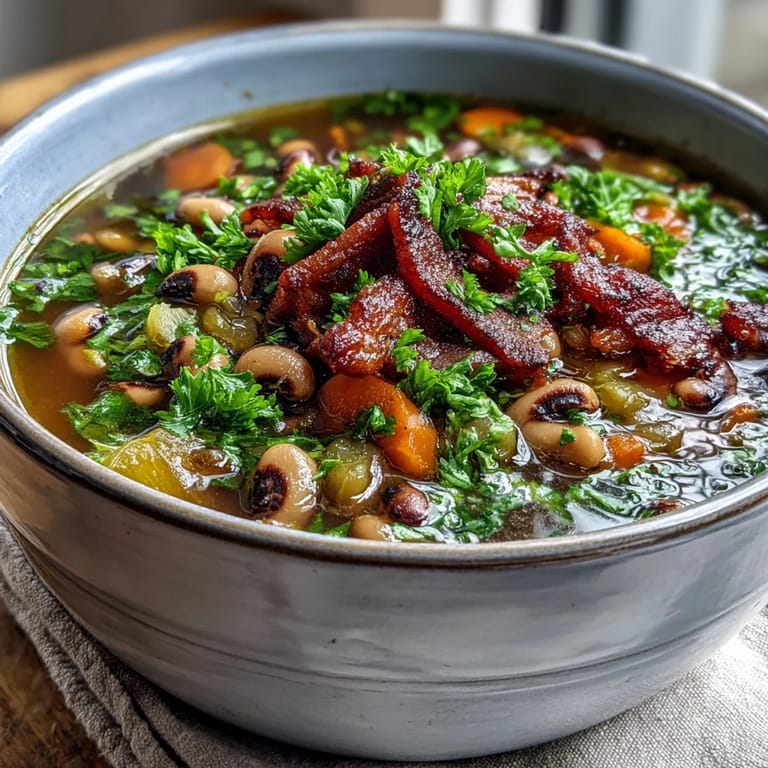
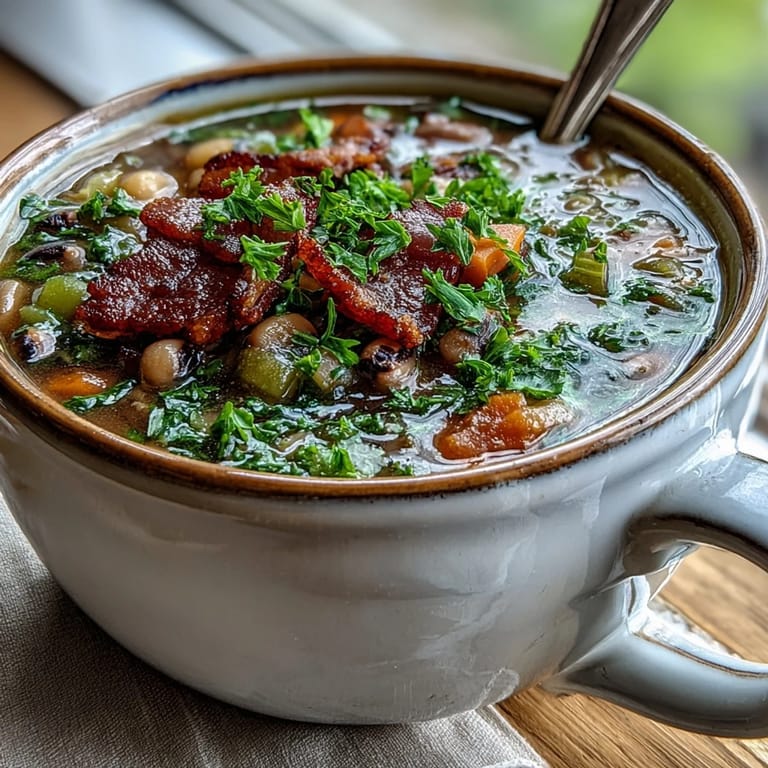
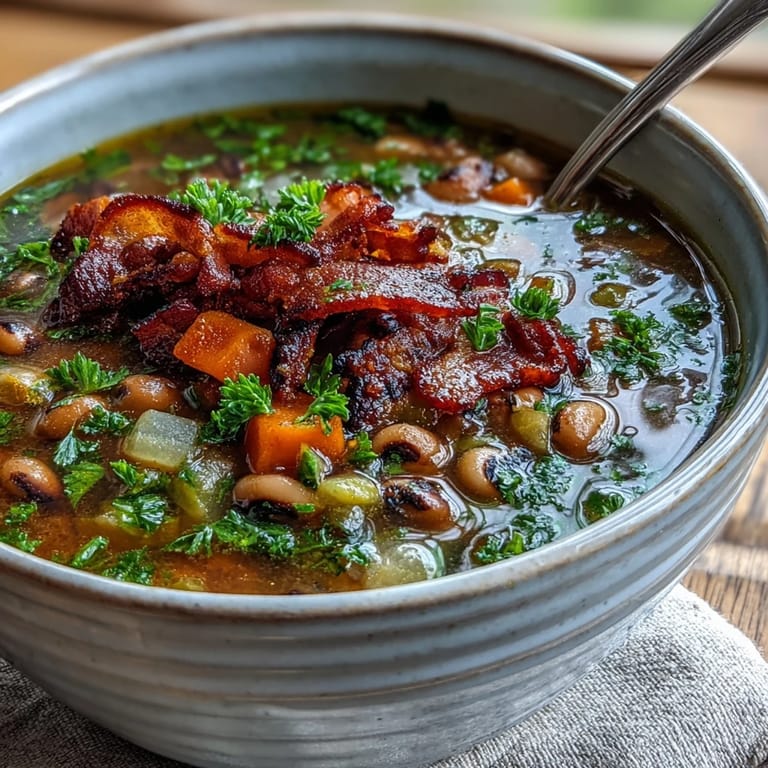
- Ladle the soup into bowls, scatter that reserved bacon on top, add a handful of fresh parsley if you have it, and watch people's faces light up.
 Pin It
 There was a morning last winter when my daughter asked why I was making soup on what was supposed to be cereal day, and I had no good answer except that my hands wanted to chop vegetables. By the time school pickup rolled around, she came home to the smell of it simmering, asked for a bowl before she even took off her coat, and ate two servings without complaining about the vegetables hiding inside. That's when I understood that routine meals can become rituals if you pay attention to them.
When to Make This Soup
This soup lives in the space between seasons—too hearty for late spring, but perfect for those unpredictable fall days when you can't quite tell if you need air conditioning or a sweater. I make it when someone needs comfort without sentimentality, when the week has been long, or when you've got a pot and an hour and want to turn that into something people will remember. It's also the kind of soup that tastes better the next day, so making it ahead actually improves things.
How to Make It Your Own
The beauty of this soup is that it welcomes your kitchen's personality. That collard green variation mentioned in the notes? Drop them in during the last 10 minutes so they keep their color and slight bite. If you're cooking for someone who doesn't eat pork, vegetable broth and a dash of liquid smoke gets you 90 percent of the way to something just as satisfying. I've added diced tomatoes, cooked sausage, hot sauce—each time it's become something different but still somehow recognizable as itself.
- For a vegetarian version, skip the bacon entirely and use vegetable broth with a teaspoon of liquid smoke stirred in at the end.
- Serve alongside cornbread or crusty bread to soak up every drop of broth—there's no shame in that.
- Leftovers freeze beautifully for up to three months, though they rarely make it that far in my house.
Storage and Make-Ahead Magic
This soup actually deepens overnight in the refrigerator as the flavors continue their quiet conversation, so making it a day ahead takes stress out of your actual serving day. Store it in an airtight container for up to four days, or freeze it in portions for those moments when you need comfort but have no time. The bacon topping should go on fresh right before serving so it stays crisp.
 Pin It
 This is the kind of soup that reminds you why you cook in the first place. Make it, share it, watch what happens.
Recipe FAQ
- → Can I use canned black-eyed peas instead of dried?
Yes, simply substitute 3 cans of rinsed and drained black-eyed peas for the dried version. Reduce the simmering time to 20 minutes since canned peas are already tender.
- → How do I make this vegetarian?
Omit the bacon and use vegetable broth instead of chicken broth. Add a dash of liquid smoke to maintain the smoky flavor profile that makes this dish special.
- → Can I freeze this soup?
This soup freezes well for up to 3 months. Cool completely before transferring to airtight containers. Thaw overnight in the refrigerator and reheat gently on the stove.
- → What goes well with this soup?
Cornbread or crusty bread are classic accompaniments. You can also add a side salad or serve it as a starter before a main course.
- → Can I add other vegetables?
Absolutely! Chopped collard greens or kale can be added during the last 10 minutes of cooking. Diced tomatoes or bell peppers also work wonderfully in this soup.
- → How long does this soup keep in the refrigerator?
Stored in an airtight container, this soup will keep for 4-5 days in the refrigerator. The flavors often develop and improve after a day or two.