 Pin It
 My grandmother used to say that black-eyed peas and collard greens were proof that soul food didn't need to be complicated to be unforgettable. One New Year's Eve, watching her stir that pot with the kind of patience only time and tradition can teach, I realized she wasn't just cooking dinner—she was passing down something that tasted like home and luck wrapped together. The kitchen filled with the smell of smoked paprika and simmering broth, and suddenly I understood why this dish had survived generations. Now, whenever I make it, I'm cooking alongside that memory, and something always feels right about it.
I made this for a potluck once when I was running late, and I brought it still bubbling in my Dutch oven. Three people asked for the recipe before dessert was even served, and one friend went back for thirds. That's when I learned that food made with genuine care—even rushed care—speaks for itself.
Ingredients
- Black-eyed peas: Dried peas have deeper flavor and silkier texture when simmered long, but canned work beautifully if you're short on time—just add them later so they don't fall apart.
- Collard greens: Don't skip removing those tough stems or you'll end up with chewy bits that detract from the whole experience; buy a bunch that looks vibrant and crisp.
- Onion, garlic, celery, and carrot: This aromatic base builds flavor from the ground up—don't rush the sauté or you'll miss those caramelized edges.
- Bay leaf: Just one leaf, but it whispers its presence throughout the entire pot without overwhelming anything.
- Smoked paprika and thyme: These two spices carry the soul of the dish; the paprika adds that gentle smoke, and thyme brings earthiness that makes everything taste intentional.
- Apple cider vinegar: A small splash at the end brightens everything and cuts through the richness in the best way—taste as you go and adjust to your preference.
- Vegetable or chicken broth: Use good broth because it carries the entire pot; I learned this after using something too salty and having to stretch it with water.
- Ham hock or smoked turkey (optional): If you want it, this adds a savory depth that vegetable broth alone can't quite reach, but the dish stands beautifully without it.
Tired of Takeout? 🥡
Get 10 meals you can make faster than delivery arrives. Seriously.
One email. No spam. Unsubscribe anytime.
Instructions
- Soak your dried peas overnight (if using dried):
- This isn't just tradition—it shortens cooking time and helps the peas cook evenly without splitting. If you forget, quick-soak them by bringing them to a boil for two minutes, then letting them sit covered for an hour.
- Build your flavor base:
- Heat oil in your Dutch oven and sauté the onion, celery, and carrot until the edges start to turn golden and the whole kitchen smells like comfort food. Listen for that gentle sizzle—it's your cue that everything is browning right.
- Wake up the garlic:
- Add minced garlic and let it cook just until fragrant, maybe a minute—any longer and it turns bitter and loses its brightness.
- Add the meat (if using):
- If you have a ham hock or smoked turkey, let it cook for a couple minutes so its smokiness begins to seep into the surrounding oil.
- Toast the spices:
- Stir in the black-eyed peas, bay leaf, smoked paprika, thyme, and red pepper flakes, coating everything in that golden spice mixture. You'll smell the difference immediately—that's the spices blooming and releasing their full flavor.
- Simmer the peas:
- Pour in your broth, bring to a boil, then reduce to a gentle simmer and cover. For dried peas, this takes about 45 minutes; for canned, about 20 minutes. You're looking for peas that yield gently when you press them with a wooden spoon.
- Add the greens and finish:
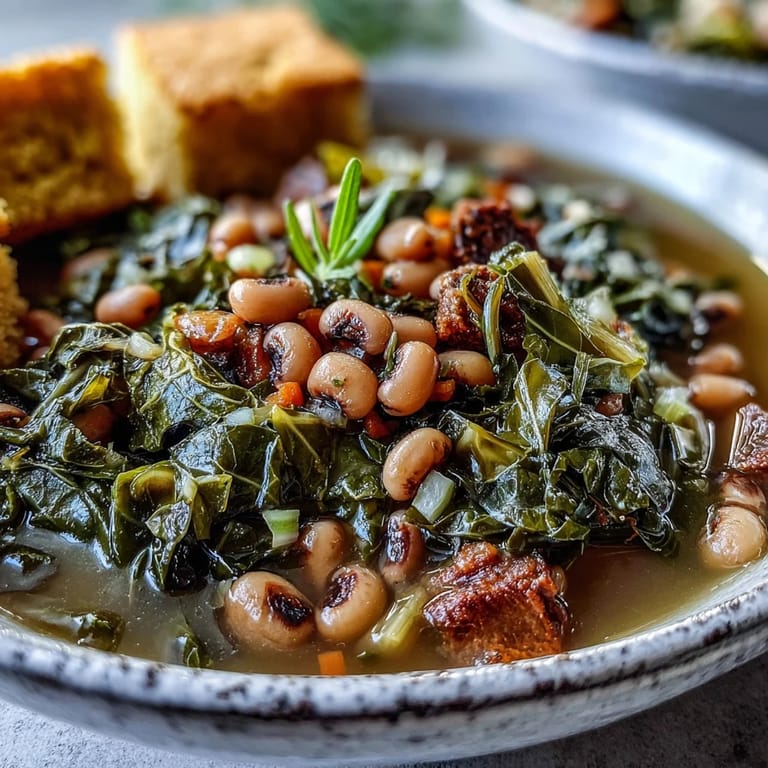
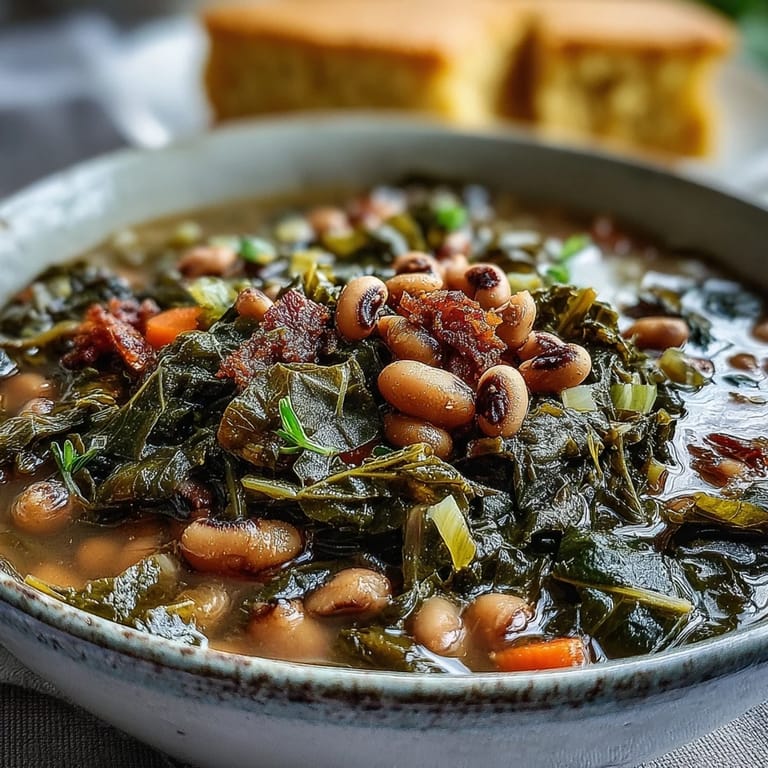
- Stir in your chopped collard greens and simmer uncovered for another 30 minutes until the peas are tender and the greens turn from bright green to a deeper, more concentrated color. They'll soften considerably and absorb all that savory broth.
- Season and serve:
- Stir in your apple cider vinegar, remove the bay leaf, and if using ham, pull out that hock and shred any meat clinging to the bone before returning it to the pot. Taste everything and adjust your salt and pepper—this is your moment to make it taste like home.
 Pin It
 There's something almost magical about how this dish brings people together around a table. I've served it at casual dinners and formal celebrations, and somehow it always becomes the thing people remember, the thing that makes a meal feel like a moment.
Vegetarian and Dietary Flexibility
If you're cooking vegetarian, simply skip the ham hock and use vegetable broth instead—the smoked paprika and thyme carry enough savory depth that you won't miss the meat. The peas themselves are protein-rich, so paired with cornbread and greens, it's a complete and satisfying meal. I've actually converted a few meat-eaters to this version because they couldn't tell the difference, and there's a quiet victory in that.
Why This Tastes Better the Next Day
Leftovers of this dish are genuinely better than the fresh pot, which is rare and wonderful. The peas continue to soften overnight, the greens become even silkier, and all those flavors settle into a kind of unified richness that didn't exist on day one. I always make extra on purpose now, knowing that tomorrow's lunch will be even more comforting than today's dinner.
Serving and Pairing Ideas
Cornbread is non-negotiable for soaking up every drop of broth, but don't stop there. A dash of hot sauce adds a personalized kick, and I've found that a crisp white wine or cold iced tea cuts through the richness beautifully without competing with the dish.
- Serve with thick wedges of cornbread—the crumbs that fall into your bowl are part of the experience.
- Have hot sauce on the side so everyone can adjust their own heat level.
- Save the broth in your pot because it's liquid gold for cooking grains or starting soups the next day.
 Pin It
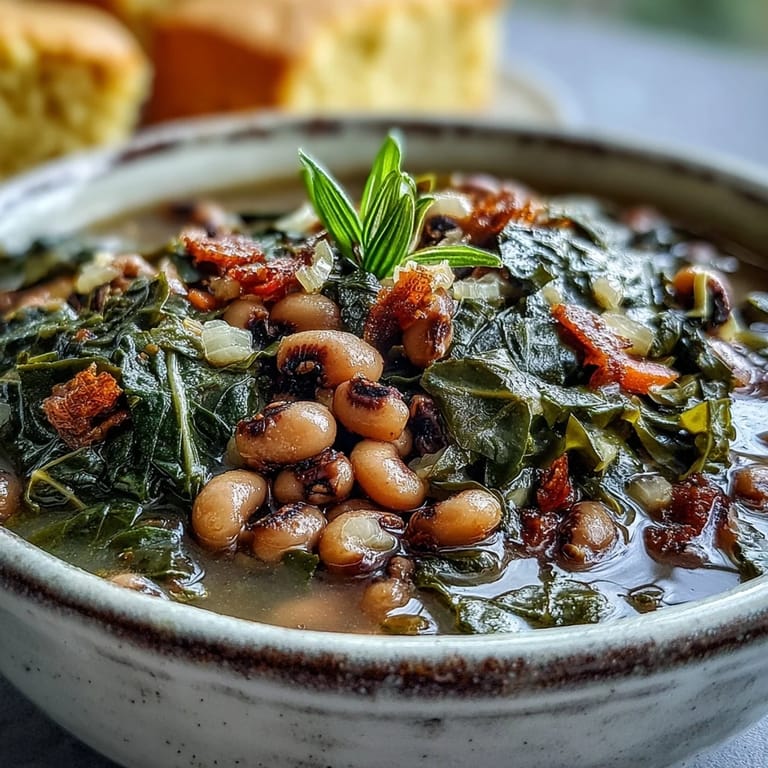
 This is the kind of recipe that deserves to be made often, not just on New Year's. Every time you cook it, you're honoring something deeper than dinner—you're keeping alive a tradition that knows how to warm both belly and soul.
Recipe FAQ
- → Do I need to soak dried black-eyed peas before cooking?
Yes, dried black-eyed peas should be soaked overnight in cold water to ensure even cooking and reduce the simmering time. If you're short on time, you can use the quick-soak method by boiling them for 2 minutes, then letting them sit for an hour off the heat. Alternatively, canned black-eyed peas work beautifully and skip the soaking step entirely.
- → Can I make this dish vegetarian?
Absolutely. Simply omit the ham hock or smoked turkey and use vegetable broth instead of chicken broth. The smoked paprika provides a subtle smoky flavor that helps compensate for the missing meat. Many people find the vegetarian version just as satisfying, especially when served with crusty cornbread and hot sauce.
- → What can I substitute for collard greens?
Kale, mustard greens, or turnip greens make excellent substitutes if collard greens aren't available. Each brings a slightly different flavor profile—mustard and turnip greens have a pleasant peppery bite, while kale is slightly milder. Adjust the cooking time slightly based on the greens you choose, as tougher greens may need a few extra minutes.
- → Why is apple cider vinegar added at the end?
The apple cider vinegar serves two purposes: it brightens the overall flavor profile and helps balance the earthiness of the greens and beans. Just a tablespoon cuts through the richness and adds a subtle tang that makes each taste more vibrant. Add it gradually and taste as you go to find your perfect balance.
- → How long do leftovers keep in the refrigerator?
Leftovers store beautifully in an airtight container in the refrigerator for 4-5 days. In fact, many Southern cooks insist this dish tastes even better on the second or third day as the flavors continue to meld. Reheat gently on the stovetop, adding a splash of water or broth if needed to loosen the consistency.
- → Is this traditional New Year's Day food?
Yes, black-eyed peas and collard greens are a classic Southern New Year's Day tradition. Black-eyed peas symbolize coins and collard greens represent paper money, making the combination believed to bring prosperity and luck in the coming year. This comforting dish is often the centerpiece of New Year's gatherings across the South.