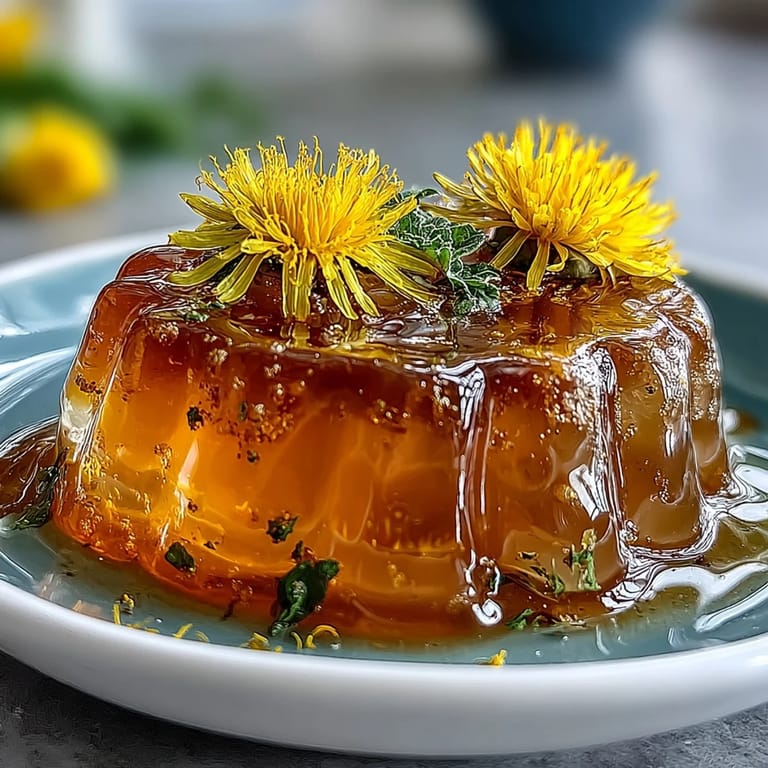
 Pin It
 The sun was barely up when I first experimented with dandelion jelly—petals still damp from dew, the yard vibrant and wild. The aroma that filled my kitchen was not what I expected: sweet and earthy, like honey wafting through a meadow. The sound of simmering petals was a gentle reminder that, sometimes, the best things come from slowing down. I still remember feeling oddly proud over each golden jar lined up on my counter, curious how something so humble could taste so bright. The lemon brought just the right zing, making that first spoonful feel like genuine springtime.
I once made a batch for an impromptu brunch, watching friends puzzle over the golden jelly until someone smeared it on warm sourdough. There were delighted whispers, and a chorus of oohs as the honeyed sweetness hit. Someone said it tasted like childhood afternoons outside—that moment made all the fiddling with petals feel absolutely worth it. Conversation lingered around the jars longer than around the eggs. It was proof that homemade gifts can start new stories.
Ingredients
- Fresh dandelion petals: The key is careful picking—removing every green bit prevents bitterness and leaves only the delicate floral flavor.
- Water: Using cold, filtered water makes a difference in extracting clean taste from the petals.
- Fresh lemon juice: Adds brightness and balances the mild earthiness; squeeze just before use for maximum zing.
- Granulated sugar: Provides structure, sweetness, and helps the jelly set; don't skimp on precise measurement.
- Mild honey: A floral honey subtly boosts flavor without overpowering; avoid strong types for balance.
- Fruit pectin: Ensures proper setting; always stir it in fully so the jelly is smooth and never gritty.
Tired of Takeout? 🥡
Get 10 meals you can make faster than delivery arrives. Seriously.
One email. No spam. Unsubscribe anytime.
Instructions
- Petal Prep:
- Gently pick the yellow dandelion petals, leaving all traces of green behind—your fingers will smell faintly sweet and grassy.
- Simmer the Blossoms:
- Add petals and water to a large saucepan and bring to a boil; the kitchen fills with a warm, floral steam. Simmer gently for ten minutes, stirring as petals soften and meld.
- Steep and Savor:
- Cover the pan and let it steep off the heat, ideally overnight; the infusion deepens as the flavors develop patiently.
- Strain for Clarity:
- Pour the mixture though cheesecloth or a fine sieve, pressing with a spoon to get every drop; the resulting liquid is bright and golden.
- Measure Carefully:
- Check for exactly three cups of infusion; top up with filtered water if you come up short.
- Add Citrus and Pectin:
- Return to the pan, stir in lemon juice and pectin, and bring to a lively boil—watch closely as it thickens.
- Sweeten and Boil:
- Add sugar and honey, stirring as the mixture bubbles furiously; the scent becomes intensely sweet and floral.
- Jelly Test:
- After boiling hard for 1–2 minutes, drop a hot spoonful onto a chilled plate and gently nudge it; if it wrinkles, you've got jelly.
- Jar and Seal:
- Ladle into sterilized jars, wipe the rims, and seal with hot lids—pop each jar in a water bath for 5 minutes to finish.
- Store and Savor:
- Cool jars undisturbed, then check seals before you tuck them away for bright mornings or foodie gifts.
 Pin It
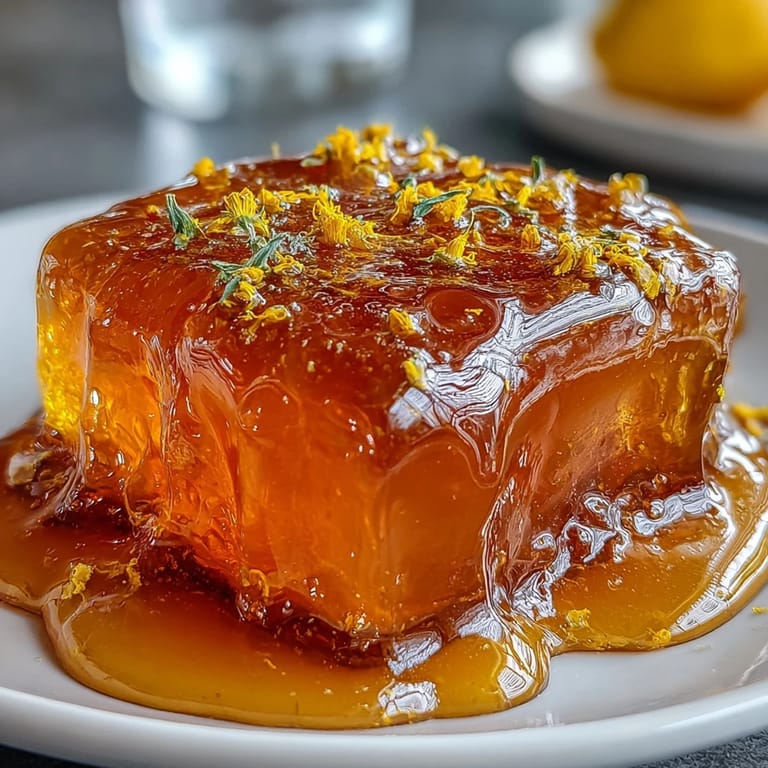
 The first morning I spooned dandelion jelly onto my yogurt, I paused to savor its golden shimmer. That simple breakfast felt strangely celebratory: a spot of sunshine, a homemade reminder that nature's gifts can taste extraordinary. Even spreading it on toast felt like an invitation to slow down and enjoy each bite.
Harvesting Dandelions Safely
Picking dandelions was surprisingly meditative—the breeze carried hints of grass and warmth, and taking care to avoid pesticide-treated areas felt like respecting the whole process. I always check the yard after rain so petals are clean and open, making foraging feel less like work and more like gentle treasure hunting.
Making the Jelly Set Perfectly
The jelly test is my favorite trick—the cold plate method tells you exactly when it’s ready, and seeing those wrinkles appear feels like magic. If it doesn’t set at first, repeating the boil with a pinch more pectin fixes it right up, so don’t stress if consistency isn’t perfect on your first try.
Creative Ways to Enjoy Dandelion Jelly
I love how this jelly pairs with soft cheeses and roasted chicken, adding a hint of floral sweetness not found in store-bought jams. Try swirling a spoonful into Greek yogurt or even using it as a glaze for carrots—its versatility makes it a staple in my spring kitchen.
- Store jars in a cool, dark place for longest shelf life.
- Write labels with date and batch for easy tracking.
- Don’t forget to check each seal before gifting or using.
 Pin It
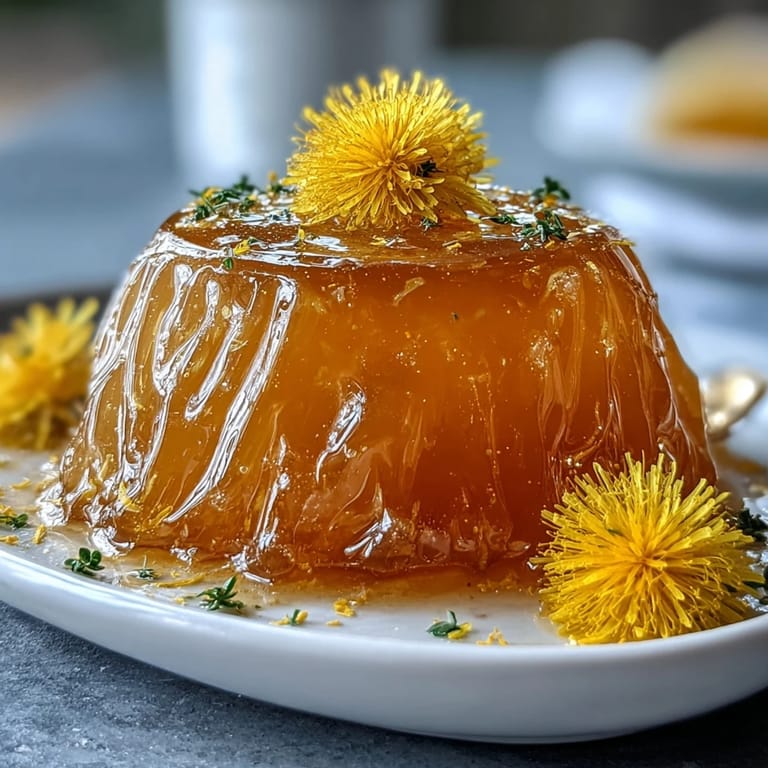
 Even on gloomy days, spooning dandelion jelly onto toast brings a little outdoor brightness into the kitchen. Try it for breakfast or gift a jar—it’s a small celebration in every bite.
Recipe FAQ
- → How do you prepare dandelion petals?
Pick only the yellow petals, removing green sepals and stems to prevent bitterness.
- → Why steep the petals overnight?
Steeping extracts maximum floral flavor, resulting in a more aromatic jelly.
- → Can I make a vegan version?
Replace honey with sugar or agave syrup to create a fully plant-based spread.
- → How do you know when the jelly is set?
Test by placing a spoonful on a cold plate; if it wrinkles when pushed, it's ready.
- → What does this jelly pair well with?
Enjoy it on toast, drizzled over yogurt, with soft cheeses, or as a glaze for roast chicken.
- → Are there allergen concerns?
Contains honey, unsuitable for infants under one year; check other ingredient labels as needed.