 Pin It
 The first time I made French onion soup, I cried. Not from emotion, but from those darn onions! Standing there with tears streaming down my face, I kept reminding myself of that perfect bowl I'd had at a tiny Parisian bistro years ago - the sweet caramelized onions, rich broth, and that glorious cheese pull that seemed to stretch for days. The scent that filled my kitchen that afternoon was transformative, turning my apartment into a little corner of France as rain tapped against the windows.
My neighbor Mark knocked on my door the first evening I made this soup, drawn by the aroma that had apparently seeped into the hallway. I invited him to stay, and we sat quietly at my little kitchen table, the only sounds being the clink of our spoons against the bowls and occasional murmurs of appreciation. Now he texts me whenever he smells onions cooking, hoping for another invitation.
Ingredients
- Yellow onions: The backbone of this recipe, I learned that yellow onions develop the most beautiful caramel flavor when cooked slowly, far better than white or red varieties for this particular dish.
- Butter and olive oil: Using both prevents the butter from burning while giving you that irreplaceable buttery richness that makes the soup feel indulgent.
- Beef broth: The foundation of your soup, I once tried making this with store-brand broth and regretted it immediately, so spring for the good stuff or make your own if you have time.
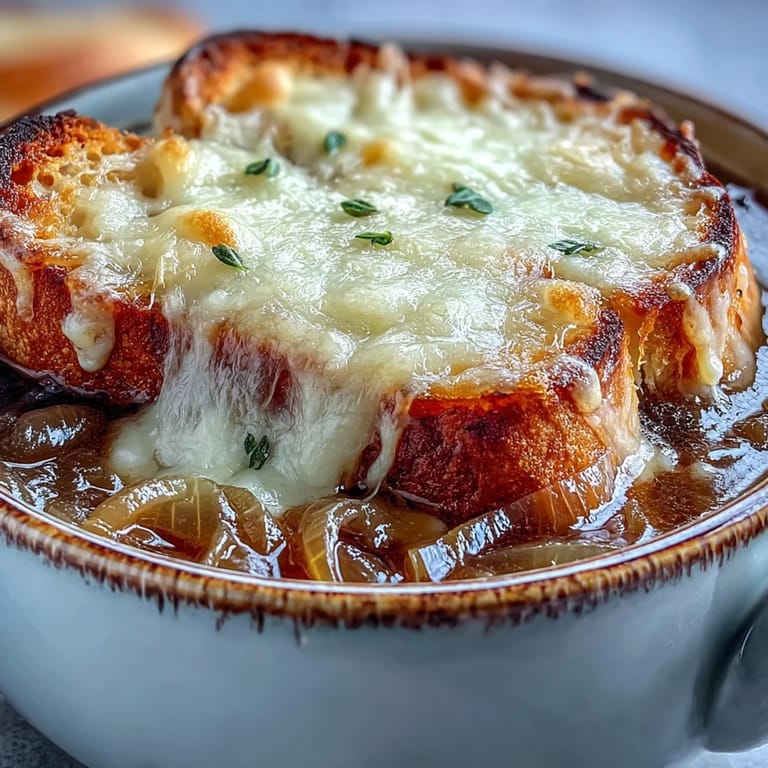
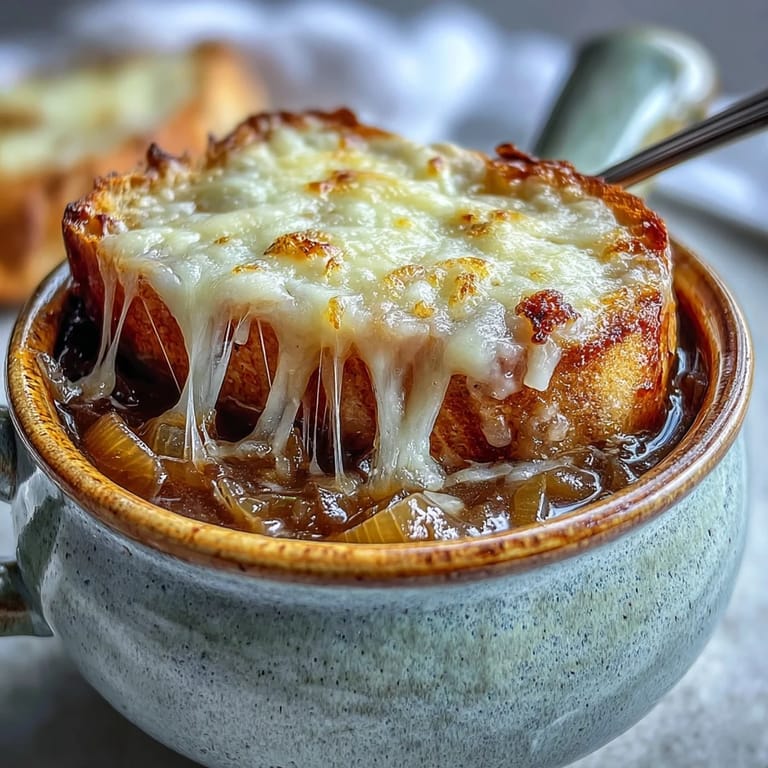
- Gruyère cheese: Its nutty flavor intensifies as it melts, creating that iconic cheese crown that makes this soup instantly recognizable.
Tired of Takeout? 🥡
Get 10 meals you can make faster than delivery arrives. Seriously.
One email. No spam. Unsubscribe anytime.
Instructions
- Begin with patience:
- Melt the butter with olive oil in your heaviest pot over medium heat, then add those thinly sliced onions. This is when you commit to staying nearby, occasionally stirring as they soften for about 15 minutes.
- The transformation:
- Sprinkle the softened onions with sugar and salt, then continue cooking and stirring frequently until they reach that magical deep golden color, about 30-40 minutes. You'll notice them shrinking dramatically and developing a sweet, complex aroma.
- Building flavor:
- Add the minced garlic and cook just until fragrant, about a minute. Then pour in the wine if using, scraping up all those flavorful browned bits from the bottom of your pot.
- The simmer:
- Add your broth, thyme, bay leaf, and pepper, bringing it to a gentle boil before reducing to a simmer for 30 minutes. Your kitchen will fill with an aroma that makes waiting difficult.
- The crowning glory:
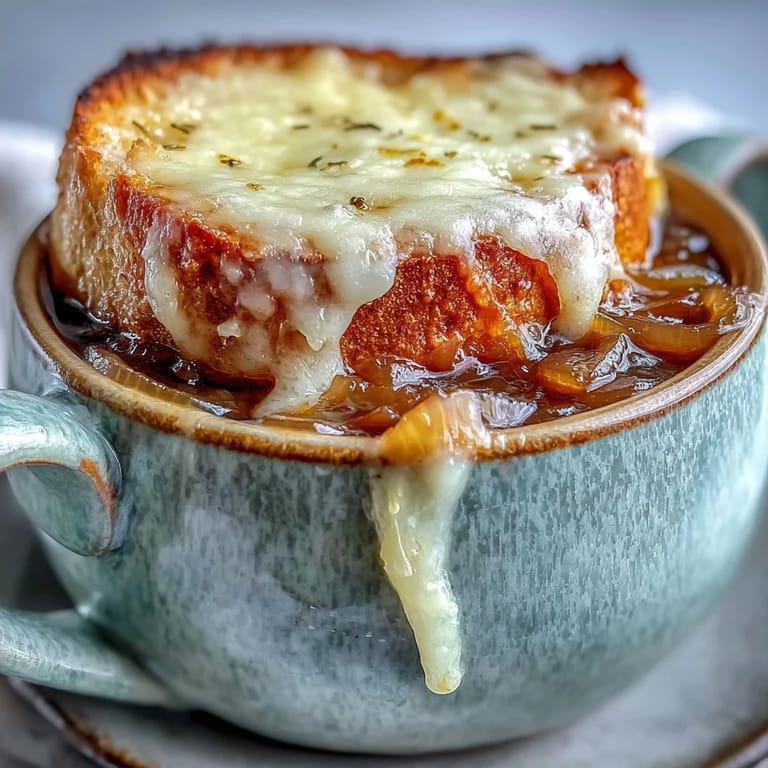
- Toast those bread slices under the broiler, ladle your soup into oven-safe bowls, and top each with bread and a generous handful of Gruyère. The few minutes under the broiler until the cheese bubbles and browns will feel like an eternity as you anticipate that first spoonful.
 Pin It
 Last winter during a power outage, I served this soup by candlelight when my in-laws were stranded at our house during a snowstorm. As we sat in the flickering light, my father-in-law, who rarely gives compliments, took a bite and simply said, This tastes like memory. It was perhaps the highest praise Id ever received for my cooking, this recognition that food can transcend ingredients to become something that touches the soul.
The Art of Caramelization
I once tried to rush the onion caramelization process by cranking up the heat, and ended up with a pot of bitter, burned onions that went straight to the trash. The transformation of sharp, pungent raw onions into sweet, melting strands of golden goodness requires gentle heat and time, not unlike how some of the best relationships develop. When youre tempted to increase the heat, remember that youre not just cooking onions, youre conducting an alchemical transformation that forms the entire foundation of your soup.
Choosing Your Cheese
During a particularly tight budget month, I substituted regular Swiss cheese for the Gruyère this recipe calls for and learned an important lesson about balance. While the soup was still good, it missed that distinct nutty depth that Gruyère provides. The cheese isnt just a topping but a crucial flavor component that harmonizes with the sweet onions and savory broth. If Gruyère stretches your budget, a combination of Swiss and a small amount of Parmesan can create a similar complexity at a lower cost.
Serving Suggestions
I discovered the true versatility of French onion soup when I began serving it in different settings, from casual weeknight dinners to more formal gatherings. While traditionally served as a starter, Ive found it substantial enough to be a main course when paired with a crisp green salad dressed simply with lemon and olive oil.
- For a casual gathering, set out a toppings bar with different cheeses and herbs so guests can customize their bowl.
- When serving as a main course, consider slightly smaller portions of soup paired with a half sandwich for a balanced meal.
- Keep extra toasted bread on the side for sopping up those last precious spoonfuls of broth that your spoon cant reach.
 Pin It
 This soup connects us to centuries of French culinary tradition, to countless home cooks who stood stirring onions just as we do today. As you lift that first spoonful, breaking through the blanket of melted cheese, youre not just eating soup, youre participating in a delicious piece of history.
Recipe FAQ
- → How long does it take to properly caramelize onions?
Plan on about 45 minutes total. First, cook the onions for 15 minutes until softened. After adding sugar and salt, continue cooking for another 30–40 minutes, stirring frequently, until they reach a deep golden brown color. This slow cooking process is essential for developing that signature sweetness and depth of flavor.
- → Can I make this vegetarian?
Absolutely. Simply substitute the beef broth with a high-quality vegetable broth. The rest of the preparation remains the same. For additional depth in the vegetarian version, you might consider adding a splash of balsamic vinegar or a bit of soy sauce to mimic the umami notes that beef broth typically provides.
- → What type of onions work best?
Yellow onions are ideal for this dish because they strike the perfect balance between sweetness and pungency. As they caramelize, their natural sugars develop beautifully. You could also use a mix of yellow and red onions for slightly different flavor notes, though avoid sweet onions as they may become overly sugary during the long cooking process.
- → What cheese alternatives can I use?
Gruyère is traditional thanks to its excellent melting properties and nutty flavor. Emmental or Swiss cheese make great substitutes with similar characteristics. For something different, try Comté or a blend of Gruyère with a bit of Parmesan for extra savory depth. Just ensure whatever cheese you choose melts well and has enough flavor to stand up to the rich broth.
- → Can this be made ahead of time?
Yes, actually the flavors improve when made ahead. Prepare the soup completely through step 5, then refrigerate for up to 3 days. When ready to serve, reheat gently and proceed with the bread and cheese topping. For the best results, add the toasted bread and cheese just before serving—this keeps the bread crisp and prevents it from becoming soggy.
- → Why add sugar to the onions?
The small amount of sugar helps the onions caramelize more evenly and efficiently. Onions naturally contain sugars, but adding a teaspoon encourages the browning process and ensures consistent results. It doesn't make the final dish noticeably sweet—that sweetness is balanced by the savory broth, wine, and salty cheese.