 Pin It
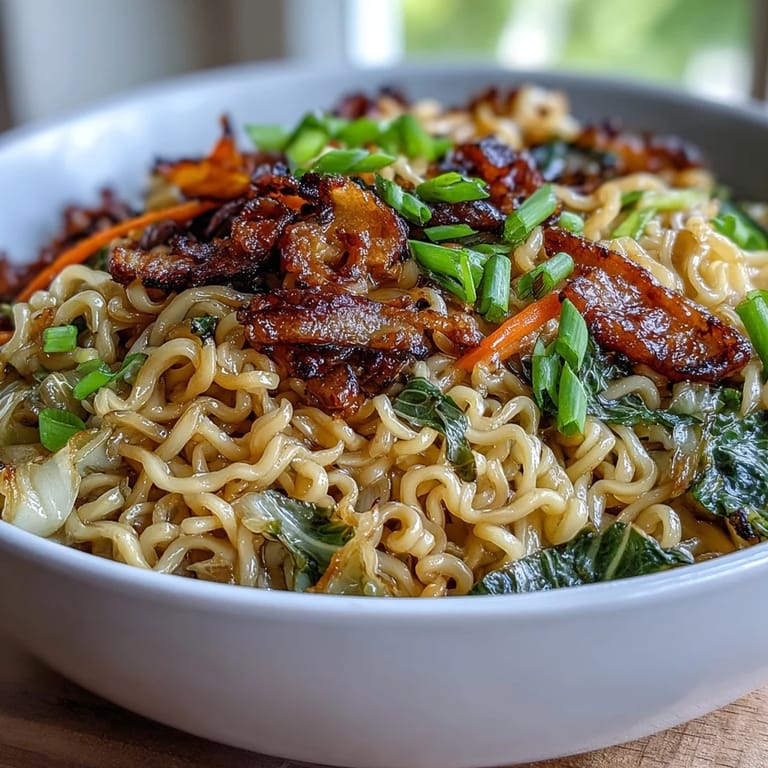
 I threw this together on a Tuesday night when my fridge was nearly empty and my stomach was loudly complaining. All I had were two packs of instant ramen, half a cabbage wilting in the crisper, and a carrot that had seen better days. What started as a desperate pantry raid turned into one of my most requested weeknight dinners. The cabbage gets these beautifully charred edges that crunch between your teeth, and the noodles soak up the savory sauce in a way that makes you forget you're eating something you assembled in under half an hour.
My roommate wandered into the kitchen halfway through me making this, drawn by the smell of ginger and garlic hitting hot oil. She stood there watching me toss the cabbage around the pan, and when I plated it up, she grabbed a fork without asking and declared it better than the stir-fry place down the street. Now she texts me on random evenings just asking if I'm making the cabbage noodles again.
Ingredients
- Green cabbage: The star of the show, it needs to be sliced thin so it cooks quickly and gets those crispy browned bits that make this dish addictive.
- Carrot: Julienned carrots add a pop of color and a slight sweetness that balances the salty sauce beautifully.
- Scallions: Separating the whites and greens is worth it because the whites cook down mellow and sweet while the greens stay bright and sharp as garnish.
- Garlic and ginger: Fresh is essential here because they create the aromatic base that makes your kitchen smell like a proper stir-fry restaurant.
- Instant ramen noodles: Ditch those seasoning packets and use the noodles as a blank canvas for the real sauce you're about to make.
- Soy sauce: The salty backbone of the sauce, it ties everything together with that umami depth.
- Oyster sauce: Adds a rich, slightly sweet complexity, or swap for mushroom sauce if you want to keep it vegan.
- Toasted sesame oil: Just a tablespoon brings that nutty, roasted flavor that makes the whole dish feel complete.
- Rice vinegar: A touch of acidity cuts through the richness and keeps your palate awake.
- Sugar: Balances the salty and sour notes, helping the cabbage caramelize.
- Chili flakes: Optional but highly recommended if you like a little heat sneaking up on you between bites.
- Vegetable oil: You need something neutral with a high smoke point for that proper high-heat stir-fry action.
Tired of Takeout? 🥡
Get 10 meals you can make faster than delivery arrives. Seriously.
One email. No spam. Unsubscribe anytime.
Instructions
- Boil the noodles:
- Get a pot of water rolling at a full boil, drop in the ramen noodles, and cook them just until they separate and turn tender. Drain them well and set them aside so they're ready to jump into the pan later.
- Mix the sauce:
- In a small bowl, whisk together the soy sauce, oyster sauce, sesame oil, rice vinegar, sugar, and chili flakes until the sugar dissolves and everything looks glossy. This little bowl of magic is what transforms plain noodles and cabbage into something crave-worthy.
- Start the aromatics:
- Heat your vegetable oil in a large skillet or wok over medium-high heat until it shimmers, then toss in the garlic, ginger, and white parts of the scallions. Stir them around for about a minute until your kitchen smells incredible and the garlic just starts to turn golden.
- Fry the vegetables:
- Add the cabbage and carrot to the hot pan and let them cook, stirring occasionally, for four to five minutes. You want the cabbage to soften but still have some bite, with crispy brown edges forming where it touches the pan.
- Toss with noodles and sauce:
- Add the cooked noodles to the skillet, pour in your prepared sauce, and toss everything together vigorously for two to three minutes. Make sure every strand of noodle and piece of cabbage gets coated in that glossy, savory sauce.
- Finish and serve:
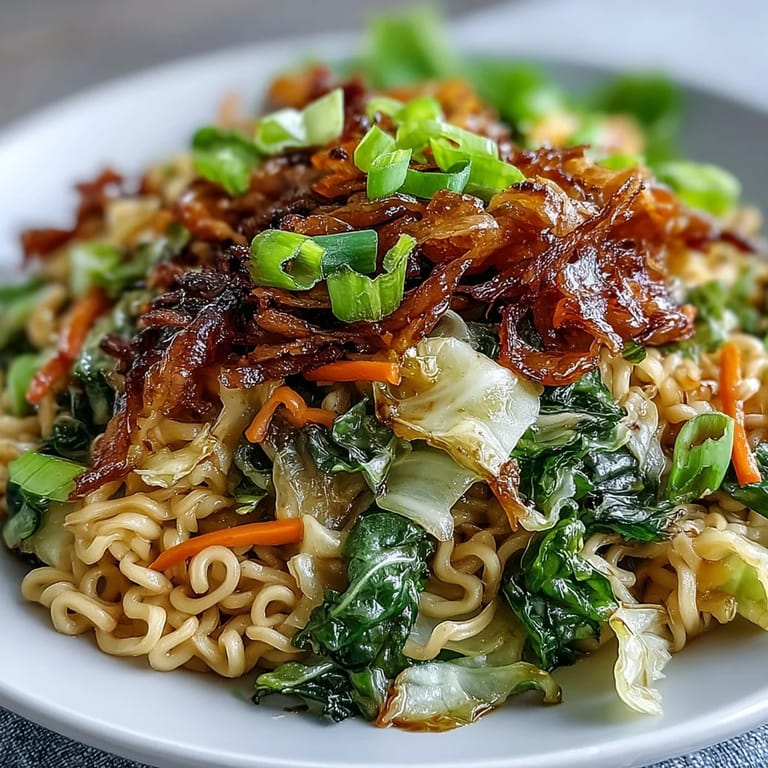
- Pull the pan off the heat, scatter the green parts of the scallions over the top, and serve immediately while everything is still hot and the textures are at their peak.
 Pin It
 The first time I made this for my younger brother, he was skeptical because he saw me pull out instant ramen and assumed I was being lazy. Then he took a bite, paused, and went completely silent for three minutes while he demolished his entire bowl. He looked up at me with noodles still hanging from his mouth and just said, "Okay, I get it now." That's when I knew this recipe was a keeper.
Making It Your Own
This dish is incredibly forgiving and practically begs you to riff on it with whatever you have around. I've tossed in sliced mushrooms, bell peppers, snap peas, and even some wilted spinach at the end, and it always works. A fried egg on top turns it into a complete meal, the runny yolk mixing into the noodles like an extra sauce. If you want protein without the egg, cubed tofu crisped up in the pan before you add the vegetables is fantastic.
Sauce Adjustments
The sauce ratio in this recipe is my personal sweet spot, but your taste buds might want something different. If you like things saltier, add an extra splash of soy sauce. If you want more funk, increase the oyster sauce. I've made this with a full tablespoon of chili flakes when I was in a spicy mood, and I've also left them out completely when cooking for my friend who can't handle heat at all. The sesame oil is the one thing I wouldn't mess with too much because it really is the flavor that pulls everything together.
Storage and Reheating
Honestly, this is best eaten immediately, straight from the pan when the cabbage still has some crunch and the noodles haven't had time to soak up all the sauce. That said, I've definitely eaten leftovers for lunch the next day. The noodles will be softer and the vegetables less crisp, but it still tastes good, especially if you reheat it in a hot skillet with a tiny splash of water to loosen everything up.
- Store leftovers in an airtight container in the fridge for up to two days.
- Reheat in a skillet over medium heat with a tablespoon of water, stirring frequently.
- Microwave reheating works in a pinch but won't bring back any of the texture.
 Pin It
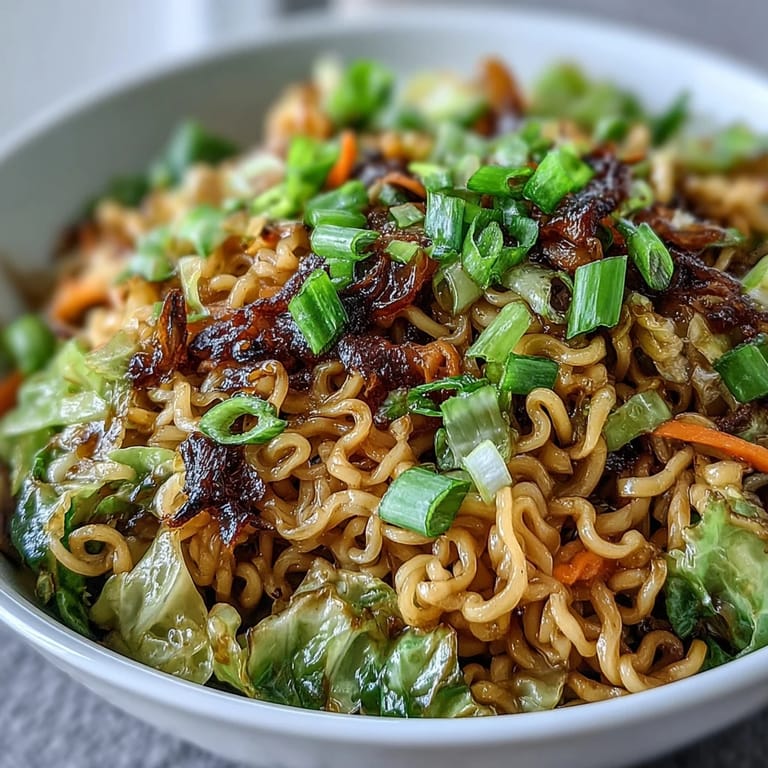
 This recipe taught me that good food doesn't need to be complicated or expensive, it just needs to be made with a little attention and a willingness to let simple ingredients shine. Now go make yourself a bowl and enjoy every crispy, saucy bite.
Recipe FAQ
- → Can I use fresh noodles instead of instant ramen?
Yes, fresh ramen or udon noodles work wonderfully. Cook according to package directions and proceed with the stir-fry as directed. Fresh noodles often have better texture and flavor.
- → How do I make this dish spicier?
Increase the chili flakes to 1-2 teaspoons, add sriracha or chili oil to the sauce, or toss in fresh sliced chilies when stir-frying the aromatics. Adjust heat level to your preference.
- → What can I substitute for oyster sauce?
Use mushroom sauce for a vegetarian option, hoisin sauce for sweetness, or a combination of soy sauce and a pinch of sugar. Each creates a slightly different but delicious flavor profile.
- → Can I prepare components ahead of time?
Yes, slice vegetables and mix the sauce up to 24 hours in advance. Store separately in the refrigerator. Cook noodles and stir-fry just before serving for best texture.
- → What other vegetables work well in this stir-fry?
Bell peppers, snap peas, broccoli, mushrooms, bok choy, or bean sprouts are excellent additions. Add heartier vegetables with the cabbage and quicker-cooking ones toward the end.
- → How do I prevent the noodles from sticking together?
Toss cooked noodles with a small amount of oil after draining. When adding to the skillet, use tongs or chopsticks to separate them gently while tossing with the sauce.