 Pin It
 My desk drawer used to be a graveyard of takeout menus and crumpled napkins until I stumbled on this layered jar trick during a particularly hectic work season. I was tired of soggy salads and expensive noodle bowls that never tasted quite right by lunchtime. One Sunday afternoon, I lined up four jars on my counter, layered them with whatever vegetables looked good at the market, and tucked them into the fridge. By Wednesday, I was the person everyone asked about at the office microwave.
I started bringing these to potlucks after a friend saw me eating one at a park picnic and demanded the recipe on the spot. She loved how the sauce stayed at the bottom, keeping everything fresh, and how you could customize each jar for different dietary preferences. Now half my friend group meal preps this way every Sunday, and we text each other photos of our jar combinations like theyre art projects.
Ingredients
- Dried ramen or rice noodles (200 g): Rice noodles give a lighter texture and work beautifully for gluten free eaters, while ramen noodles hold up better if you like a chewier bite.
- Cooked chicken breast, tofu, or shrimp (200 g, diced): I usually roast a whole chicken breast with salt and pepper on Sunday, then dice it up, but leftover rotisserie chicken works just as well and saves even more time.
- Shredded carrots (1 cup): Buy pre shredded to save your knuckles, or use a box grater if you have five extra minutes and want them fresher.
- Thinly sliced bell peppers (1 cup, red or yellow): Red and yellow peppers add sweetness and color, green ones taste a bit more bitter, so I skip those for this dish.
- Baby spinach or kale (1 cup): Spinach wilts nicely when you add hot water, kale stays chewier and more substantial if you prefer texture.
- Thinly sliced scallions (1/2 cup): These add a sharp, fresh bite that cuts through the richness of the sesame oil.
- Bean sprouts (1/2 cup): They stay crunchy even after a few days in the jar, which is a nice surprise when everything else softens.
- Soy sauce (4 tbsp): Use tamari if you need gluten free, and low sodium versions work great if you want more control over the salt level.
- Rice vinegar (2 tbsp): This adds tanginess without the harshness of white vinegar and balances the sesame oil perfectly.
- Sesame oil (2 tbsp): A little goes a long way, this is what makes the whole jar smell amazing when you open it.
- Honey or maple syrup (1 tbsp): Just enough sweetness to round out the soy sauce, maple syrup makes it vegan friendly.
- Sriracha or chili sauce (2 tsp, optional): I always add it to mine, but my kids prefer theirs without, so I keep it flexible.
- Garlic (1 clove, minced): Fresh garlic makes the sauce come alive, jarred minced garlic works in a pinch but tastes a bit flat.
- Fresh ginger (1 tsp, grated): Grate it on a microplane for the best texture, it adds warmth and a little zing that dried ginger cant replicate.
- Chopped cilantro (2 tbsp, optional): Love it or hate it, this is the topping that divides my household cleanly down the middle.
- Roasted peanuts or cashews (2 tbsp, chopped, optional): I add these right before eating so they stay crunchy, cashews are milder if peanuts feel too strong.
- Sesame seeds (1 tbsp, optional): Toasted sesame seeds add a nutty aroma, but raw ones work too if thats what you have.
- Lime wedges (optional): A squeeze of lime right before eating brightens everything up and makes it taste restaurant quality.
Tired of Takeout? 🥡
Get 10 meals you can make faster than delivery arrives. Seriously.
One email. No spam. Unsubscribe anytime.
Instructions
- Cook and cool the noodles:
- Boil the noodles according to the package directions, then drain and rinse them under cold water until theyre completely cool. This stops them from turning mushy and keeps them from clumping together in the jar.
- Whisk together the sauce:
- Combine soy sauce, rice vinegar, sesame oil, honey, Sriracha, minced garlic, and grated ginger in a small bowl and whisk until smooth. Taste it and adjust the heat or sweetness to your liking before dividing it up.
- Portion sauce into jars:
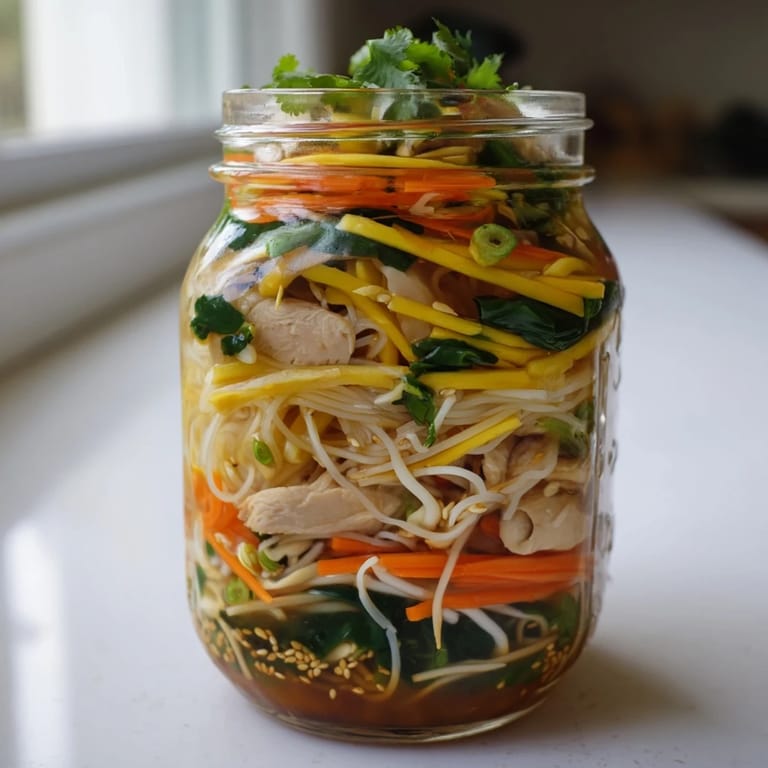
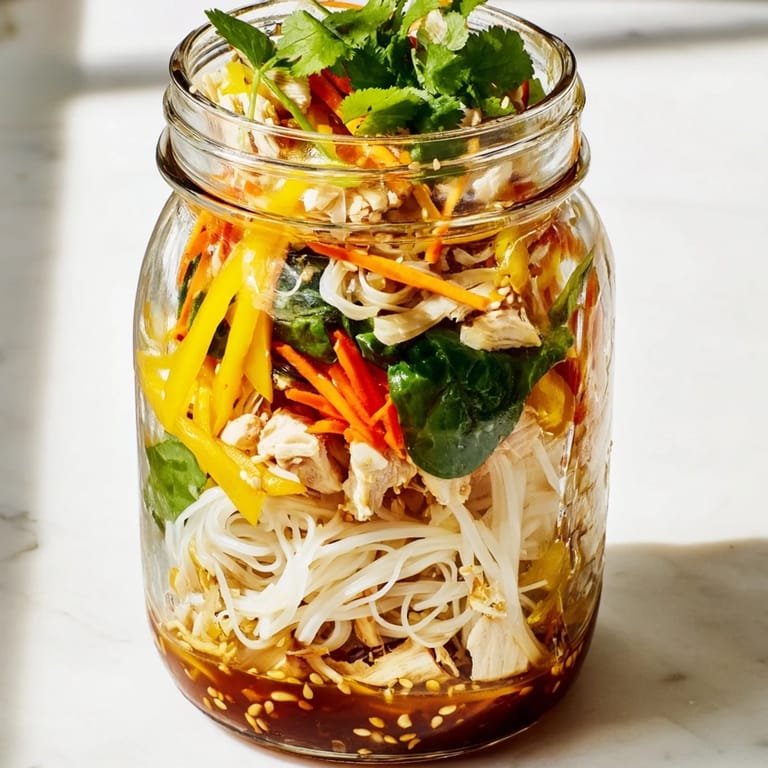
- Divide the sauce evenly among four large mason jars, pouring it directly into the bottom of each one. This keeps everything else from getting soggy and lets the flavors meld together while the jars sit in the fridge.
- Layer the protein:
- Add your diced chicken, tofu, or shrimp on top of the sauce in each jar. The protein soaks up some of the sauce flavor and acts as a barrier between the liquid and the vegetables.
- Add the vegetables in order:
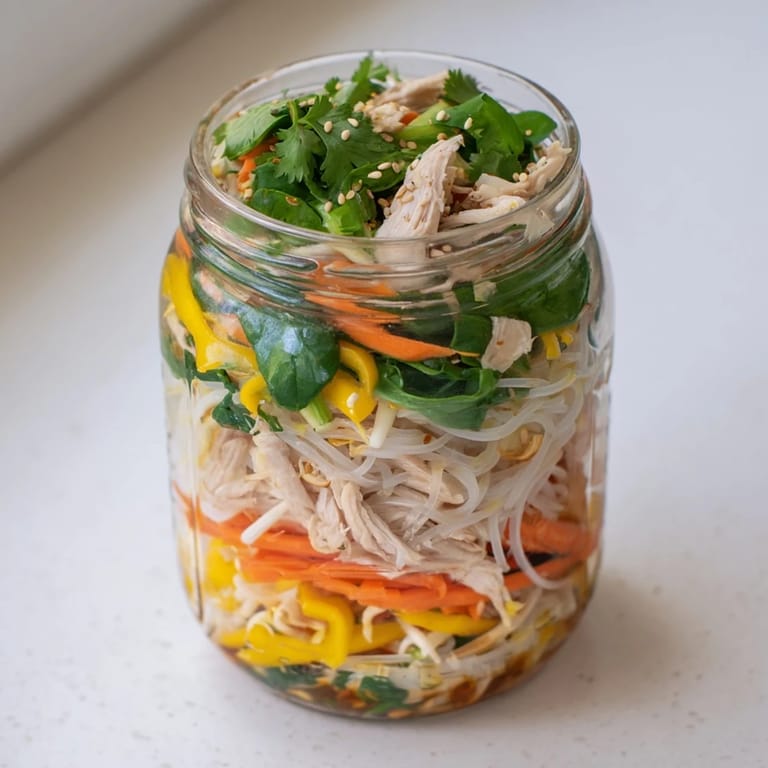
- Layer in the carrots, bell peppers, spinach or kale, scallions, and bean sprouts, pressing them down gently to fit. The order matters because the sturdier vegetables go closer to the sauce and the delicate greens stay near the top.
- Top with noodles:
- Finish each jar with a generous portion of the cooked noodles, packing them in loosely so theres still room to stir everything together later. Seal the lids tightly and refrigerate until youre ready to eat.
- Serve and enjoy:
- When youre ready, remove the lid, add any toppings you like, and pour about half a cup of hot water into the jar. Let it sit for two to three minutes to warm everything through, then stir well and eat it straight from the jar or dump it into a bowl.
 Pin It
 The first time I brought one of these jars to a family gathering, my aunt asked if I had ordered it from some fancy meal prep service. When I told her I made four of them in less than half an hour, she made me write down every step on the back of a grocery receipt. Now she sends me pictures of her jars every few weeks, each one more colorful than the last, and I love knowing this little trick has made her lunches easier too.
Choosing Your Noodles
Rice noodles are my go to because they stay tender without getting gummy, and they work for anyone avoiding gluten. Ramen noodles have more chew and absorb the sauce differently, which some people prefer, especially if they like a heartier texture. I have also used soba noodles when I want something earthier, and spiralized zucchini when I am trying to skip carbs altogether, though zucchini noodles release water and are best eaten the same day.
Protein Swaps and Ideas
Rotisserie chicken is the easiest shortcut, but I have used leftover steak, grilled pork, and even hard boiled eggs when I did not feel like cooking anything at all. Tofu needs to be pressed and pan fried with a little soy sauce first, otherwise it tastes bland and spongy in the jar. Shrimp should be cooked just until pink and cooled completely before layering, and edamame is a great plant based option that adds protein and a pop of green color.
Storing and Reheating Tips
These jars keep well in the fridge for up to four days, but I have found they taste best within the first three. If you are bringing one to work, keep it cold until you are ready to eat, then add hot water from a kettle or microwave a small cup of water separately and pour it in. You can also microwave the whole jar without the metal lid for about two minutes, but I prefer the hot water method because it keeps the vegetables from overcooking.
- Label each jar with the date you made it so you do not forget which one is oldest.
- If you are making these for kids, skip the spicy sauce and let them add their own toppings at mealtime.
- Use wide mouth jars if you have them, they are easier to fill and much easier to eat from with a fork.
 Pin It
 There is something deeply satisfying about opening the fridge on a Monday morning and seeing a row of these jars lined up, ready to go. It turns meal prep from a chore into something that actually feels like taking care of yourself, one colorful layer at a time.
Recipe FAQ
- → How long do mason jar noodles stay fresh?
Mason jar noodles keep well in the refrigerator for up to 4 days. The layering method keeps ingredients properly separated, preventing the noodles from absorbing excess moisture. Store with lids tightly sealed for optimal freshness.
- → Can I prepare these without cooking the noodles first?
Yes, you can use dried noodles directly in the jar. When ready to eat, pour hot water into the jar and let sit for 5-7 minutes until the noodles soften. Pre-cooking gives you more control over texture and prevents overcooking.
- → What proteins work best for this preparation?
Cooked chicken breast, tofu, shrimp, and edamame all work excellently. For best results, dice proteins into uniform pieces. If using shrimp or chicken, ensure they're completely cooked before jarring. Tofu and edamame offer great vegetarian alternatives.
- → How do I reheat these meals?
Remove the jar lid and pour approximately half a cup of hot water into the jar. Let it sit for 2-3 minutes to warm the ingredients and soften the noodles, then mix thoroughly. Alternatively, transfer contents to a bowl and microwave for 1-2 minutes.
- → Are these jars suitable for taking to work?
Absolutely. These are ideal for work lunches and on-the-go meals. Pack them in an insulated lunch bag with an ice pack to maintain cold temperatures. The tight-sealing lids prevent leaks, making transport convenient and mess-free.
- → Can I modify the sauce for dietary restrictions?
Yes, the sauce is highly adaptable. Use tamari instead of soy sauce for gluten-free needs. Omit honey and use agave for vegan preferences. Adjust sesame oil quantity for lower fat options, or substitute with other neutral oils while maintaining flavor balance.