 Pin It
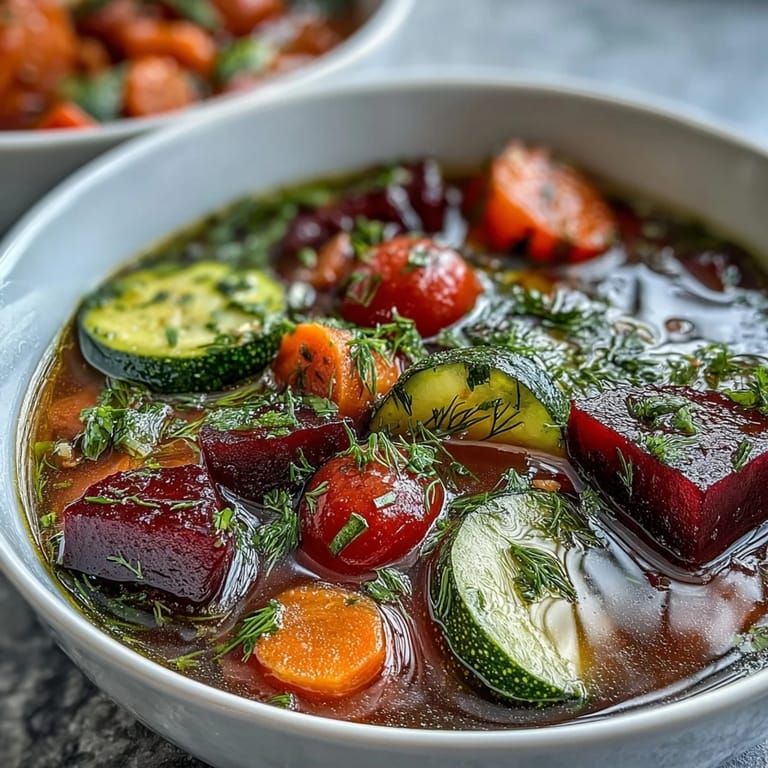
 One autumn afternoon, my neighbor dropped off a basket of vegetables from her garden—beetroots so deep purple they stained my fingers, carrots that still had soil clinging to them, and zucchini that seemed to multiply in the basket. I stood at my counter looking at this rainbow of produce and thought, why not throw it all into one pot? That spontaneous decision led to this Rainbow Vegetable Detox Soup, which has since become my go-to when I need something that feels both nourishing and celebratory.
I made this for my sister when she was going through a rough patch, and watching her brighten at the sight of those jewel-toned vegetables was worth every chop and stir. She called it her "reset button soup," and now whenever life feels chaotic, she asks me to make it again. There's something about feeding someone food that's this vibrant and alive that changes the whole moment.
Ingredients
- 1 medium beetroot, peeled and diced: This is what gives the soup its stunning color and earthy sweetness, though fair warning—it will stain your cutting board and your fingers bright magenta.
- 2 medium carrots, peeled and sliced: They soften into natural sweetness as they simmer, balancing the earthiness of the beetroot perfectly.
- 1 medium courgette (zucchini), diced: This keeps things light and adds a subtle freshness that prevents the soup from feeling too heavy.
- 2 medium tomatoes, chopped: Use fresh ones if you can find good ones, because they add brightness that canned sometimes miss.
- 1 green bell pepper, diced: The slight vegetal bite here is crucial—it keeps the soup from becoming one-note sweet.
- 1 small red onion, finely chopped: Red onion adds a hint of sharpness that mellows beautifully as everything cooks together.
- 2 cloves garlic, minced: Don't skip the mincing—it distributes the flavor evenly rather than leaving garlic chunks that startle you.
- 1.5 liters (6 cups) vegetable broth (low sodium): The broth is your soup's foundation, so choose one you actually like drinking on its own.
- 2 tbsp fresh parsley, chopped: This brightens everything at the end and shouldn't be added early or it loses its fresh bite.
- 1 tbsp fresh dill, chopped: Dill is the secret player here—it adds an unexpected herbal note that makes people ask what the mystery ingredient is.
- 1 tbsp fresh basil, chopped: This ties the whole thing together with a subtle sweetness that feels almost luxurious.
- 1 tsp ground black pepper: Add it gradually and taste as you go, because black pepper can become assertive quickly.
- 1 tsp sea salt (or to taste): Sea salt dissolves differently than table salt, creating a cleaner taste.
- 2 tbsp olive oil: Use something you wouldn't mind drizzling over bread—this is a small amount where quality actually matters.
- Juice of 1/2 lemon: The acidity wakes up all the vegetable flavors and prevents the soup from tasting muddy.
Tired of Takeout? 🥡
Get 10 meals you can make faster than delivery arrives. Seriously.
One email. No spam. Unsubscribe anytime.
Instructions
- Heat and Soften the Aromatics:
- Warm the olive oil in a large pot over medium heat, then add the red onion and garlic. Sauté for 2 to 3 minutes until the kitchen fills with that unmistakable fragrant haze and the onion turns translucent at the edges.
- Build with Root Vegetables:
- Add the beetroot and carrots, stirring occasionally for about 5 minutes. You'll notice the oil begins to take on a reddish hue from the beetroot—this is exactly what should be happening.
- Add the Mid-Range Vegetables:
- Stir in the courgette, tomatoes, and green bell pepper, cooking for 3 to 4 minutes. The pot becomes a complete painter's palette at this point.
- Introduce the Broth:
- Pour in the vegetable broth and bring everything to a boil. You'll see the vegetables start to bob around—this is your signal to reduce the heat.
- Simmer Until Tender:
- Cover the pot and let it simmer for 20 to 25 minutes until the vegetables are completely soft when you press them with a spoon. The soup will smell like concentrated essence of garden.
- Finish with Fresh Herbs and Brightness:
- Stir in the parsley, dill, basil, lemon juice, salt, and black pepper. Taste and adjust—this is your moment to make it perfect for your palate.
- Serve with Intention:
- Ladle into bowls and garnish with a pinch of extra fresh herbs if you have them. The color alone is half the satisfaction here.
 Pin It
 There was an evening when I doubled this recipe for a small dinner party, and my kitchen became this steamy, colorful sanctuary while everyone gathered around the counter. By the time we sat down with our bowls, the soup felt less like nutrition and more like we were all sharing in something intentionally nourishing together. That's when I realized this recipe is really about creating a moment.
The Art of Vegetable Layering
What makes this soup sing is the order in which you add things—it's not arbitrary. Root vegetables need the most time, so they go in first; delicate tomatoes go in later so they don't completely dissolve. I learned this the hard way by throwing everything in at once and ending up with soup that tasted muddled instead of harmonious. Now I think of it as building a house: foundation first, walls next, details last.
When Life Calls for Modifications
The beauty of this soup is how forgiving it is. One winter, I didn't have fresh dill, so I grabbed dried herbs from my cupboard and halved the amounts—the soup still worked beautifully, just with a slightly different character. I've also swapped zucchini for cucumber when I was short on groceries, added chickpeas when I needed more substance, and even blended half the soup when my friend with braces wanted something she could eat comfortably.
Storage and Serving Wisdom
This soup keeps beautifully in the refrigerator for up to four days, and it actually tastes better the next day once all the flavors have had time to know each other. I always store the fresh herbs separately and stir them in just before serving, which keeps them from turning dark and melancholy in the fridge. If you're meal prepping, freeze it in portions, though I'd recommend adding the lemon juice and fresh herbs after reheating rather than before.
- Serve alongside crusty bread, toasted sourdough, or even whole-grain crackers for something hearty.
- A drizzle of good olive oil on top right before eating adds richness that feels luxurious.
- Keep fresh lemon wedges at the table so everyone can adjust the brightness to their taste.
 Pin It
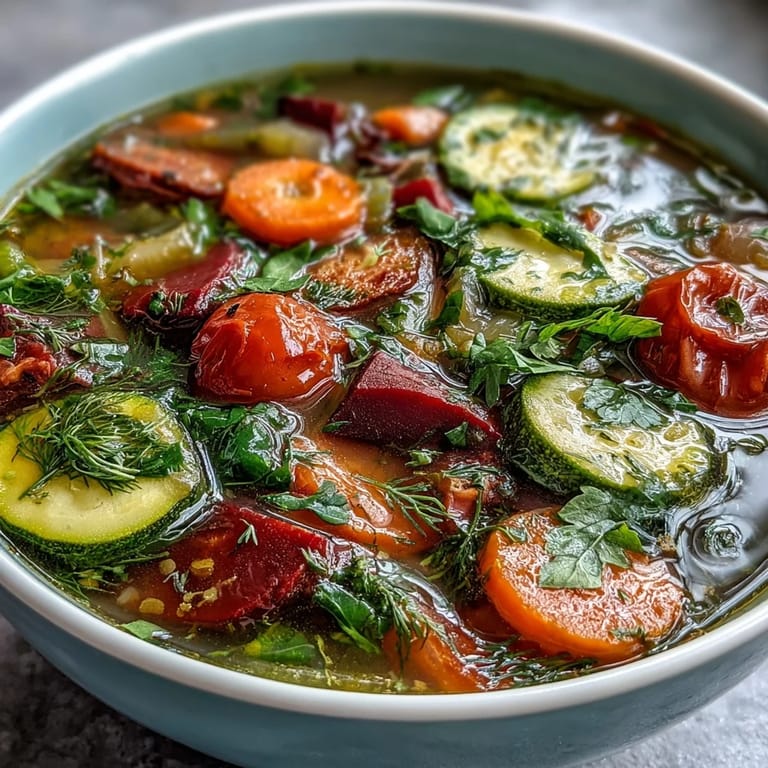
 This soup has become my answer to those moments when I want to nourish myself and the people around me without overthinking it. There's real comfort in a bowl that looks this beautiful and tastes this honest.
Recipe FAQ
- → What makes this detox soup colorful?
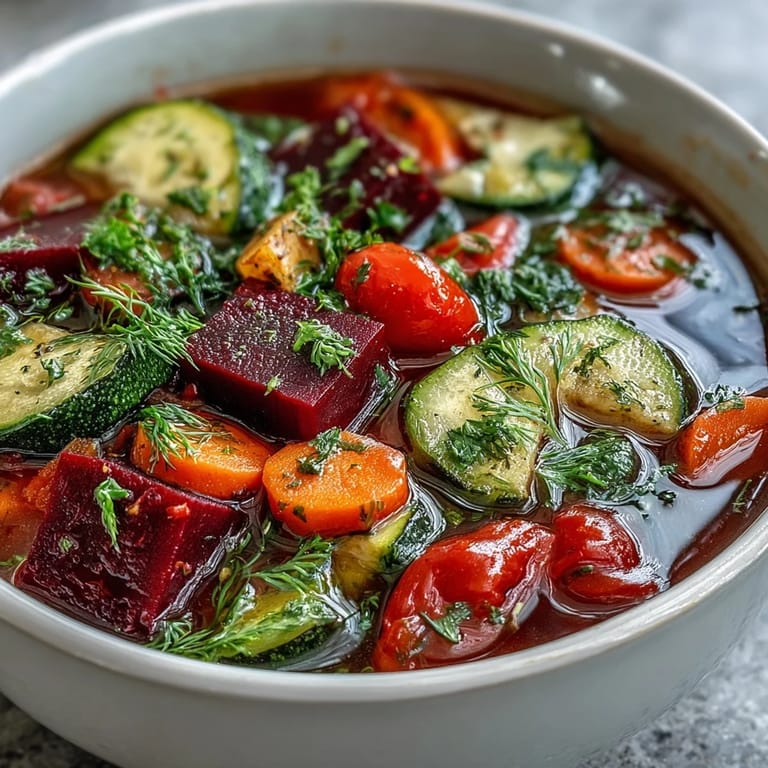
The vibrant rainbow comes from beetroot (purple-red), carrots (orange), courgette (green), tomatoes (red), and bell pepper (green). Each vegetable adds distinct nutrients and visual appeal to your bowl.
- → Can I add protein to this soup?
Absolutely. Stir in cooked lentils, chickpeas, or white beans during the last 5 minutes of simmering. Quinoa also works well—add it earlier so it cooks through in the broth.
- → How long will leftovers keep?
Store cooled soup in airtight containers for up to 4 days. The flavors actually deepen over time. Reheat gently on the stovetop, adding a splash of water or broth if needed.
- → Can I freeze this soup?
Yes, freeze in portion-sized containers for up to 3 months. Leave a bit of space at the top as liquids expand when frozen. Thaw overnight in the refrigerator before reheating.
- → How do I make the soup smoother?
Use an immersion blender to puree部分 of the soup directly in the pot, or transfer batches to a standard blender. Leave some vegetable chunks for texture, or blend completely smooth.
- → What vegetables can I substitute?
Swap sweet potato for carrots, add celery for more crunch, or include spinach and kale in the last few minutes. The base works with most seasonal vegetables you have on hand.