 Pin It
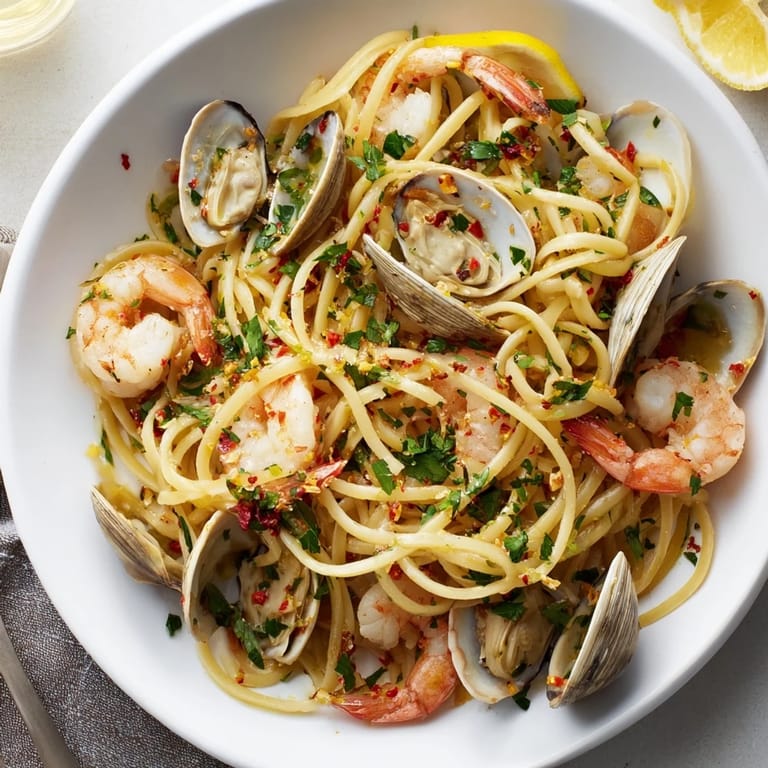
 There's something about the smell of garlic hitting hot olive oil that stops you mid-thought. I learned that making seafood pasta aglio e olio one night when a friend called saying she'd be at my place in thirty minutes, and I had shrimp and clams in the fridge. No cream, no tomato sauce, just the things Italian fishermen have relied on for centuries. The pasta came together so fast, and tasted so alive, that I've made it dozens of times since—each time remembering that first frantic but joyful dinner.
I'll never forget cooking this for my partner during the first week we moved into a place with a proper stove and a view of the water. We didn't have much furniture yet, but we lit candles, opened a bottle of white wine, and sat at the kitchen counter watching the shrimp turn pink and the clams pop open. It felt like we were celebrating something small and perfect, and somehow that pasta tasted better than anything I'd made before.
Ingredients
- Large shrimp, peeled and deveined (250 g / 9 oz): Look for shrimp that smell like the ocean, not like ammonia—that's the sign they're fresh. Peeling them yourself costs less, and you can make a quick broth from the shells if you're feeling ambitious.
- Fresh clams, scrubbed and rinsed (500 g / 1 lb): Buy them the day you plan to cook, keep them in a bowl in the fridge covered with a damp towel, and discard any that stay open when tapped. They should close when touched—that's how you know they're alive.
- Spaghetti (400 g / 14 oz): Use a good quality pasta that will hold onto the oil; cheaper brands get mushy and won't carry the sauce the way you want.
- Extra virgin olive oil (6 tbsp): This is your sauce, so choose one you actually like tasting on bread—it matters more than you'd think.
- Garlic cloves, thinly sliced (5): Slice them thin so they cook evenly and turn golden without burning, which happens faster than you expect.
- Red chili flakes (1/2–1 tsp, to taste): Start with less; you can always add more heat, but you can't take it back.
- Dry white wine (1/2 cup): Use something you'd drink—a crisp Pinot Grigio or Sauvignon Blanc—because the flavor concentrates as it cooks.
- Lemon, zested and juiced (1): The brightness matters; don't skip this or use bottled juice. A microplane zester makes the zest impossibly fine.
- Fresh flat-leaf parsley, chopped (1/4 cup): Add most of it to the pasta, but save some to finish each plate—fresh herbs at the end make everything taste alive.
- Salt and freshly ground black pepper: Taste as you go, especially after adding the seafood; the clams and shrimp add their own saltiness.
Tired of Takeout? 🥡
Get 10 meals you can make faster than delivery arrives. Seriously.
One email. No spam. Unsubscribe anytime.
Instructions
- Start the pasta water:
- Fill a large pot with cold water, add a generous handful of salt (it should taste like the sea), and bring it to a rolling boil. The salt seasons the pasta from the inside out, and the starchy water you'll reserve later becomes liquid gold for your sauce.
- Cook the spaghetti:
- Add pasta and stir it once or twice in the first minute so strands don't stick. Cook until it's al dente—tender with a slight bite in the center—which usually takes a minute or two less than the package says. Before you drain it, scoop out about 1/2 cup of the starchy cooking water and set it aside; you'll need it soon.
- Build the garlic oil:
- While the pasta cooks, pour olive oil into a large skillet and set it over medium heat. Once the oil shimmers, add your thinly sliced garlic and chili flakes, stirring constantly until the garlic turns golden and smells unbelievably fragrant—this takes only about a minute. The moment it starts to color, it can burn, so watch it closely and pull it off the heat if it darkens too fast.
- Sauté the shrimp:
- Add the shrimp to the skillet and cook for just two minutes, turning halfway through, until they've turned from translucent gray to opaque pink. They'll keep cooking as the dish comes together, so don't overdo it or they'll toughen up.
- Steam the clams open:
- Push the shrimp to the side, pour in the white wine (which will sizzle and smell wonderful), then add the clams and cover the skillet with a lid. Shake the pan every minute or so, and in three to five minutes the clams will open. Discard any that stubbornly stay shut—they weren't alive to begin with.
- Bring it all together:
- Return the shrimp to the skillet, add the drained pasta along with the lemon zest and juice, and toss everything until the pasta is coated with glossy oil and seafood. Add splashes of reserved pasta water as you toss, creating a silky sauce that clings rather than pools at the bottom.
- Season and finish:
- Taste it, add salt and pepper carefully (remember the seafood is already salty), then scatter the fresh parsley over everything. Serve immediately while it's still hot, with extra parsley and lemon wedges on the side.
 Pin It
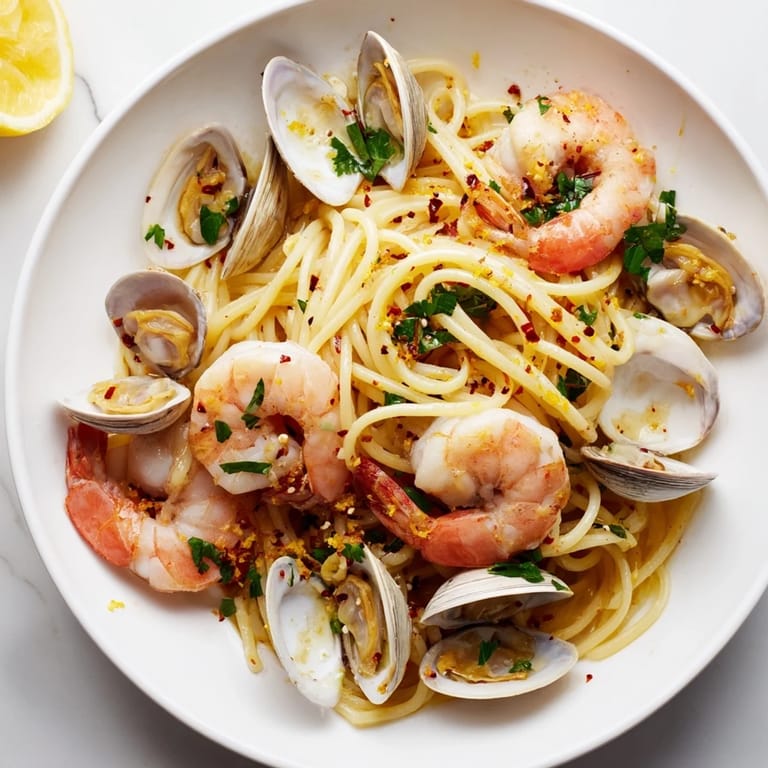
 Years later, my mom made this after I sent her the recipe, and she called me halfway through asking if she'd gone wrong because there was no cream. I heard the smile in her voice when she took that first bite and understood—sometimes the simplest ingredients make the most honest food.
Choosing Your Seafood
The joy of this dish lives in the quality of what you buy. Fresh shrimp and clams aren't expensive if you shop at a good fish counter, and the person behind it can tell you exactly when things arrived. I've learned to ask how long the clams have been in the tank and to open one myself to make sure the meat looks full and moist. When you start with seafood that tastes like the ocean, the rest of the cooking is almost beside the point.
The Magic of Pasta Water
Pasta water sounds boring until you realize it's doing all the work in finishing your sauce. Those starch particles emulsify with the olive oil, turning a thin liquid into something silky and luxurious that clings to every strand. I used to drain my pasta and throw the water away, and my aglio e olio never felt quite right until I learned this one trick—now I never cook pasta without saving the water first.
Timing and Rhythm
This dish teaches you to trust your senses more than your clock. The garlic needs thirty seconds to one minute depending on your stove's heat, the shrimp takes two minutes, and the clams take however long they need to open. The rhythm is important—start the water first, begin the garlic oil while you wait, add the shrimp as the pasta cooks—so everything finishes at once and hits the plate while it's still singing.
- Have everything prepped and ready before you start cooking, because there's no time to mince garlic or peel shrimp once the oil is hot.
- Keep a kitchen timer handy, but also learn to cook by smell and color—your senses tell you more than numbers on a clock.
- If something finishes early, take it off the heat and cover it; letting things sit for a minute beats overcooking them by trying to time everything perfectly.
 Pin It
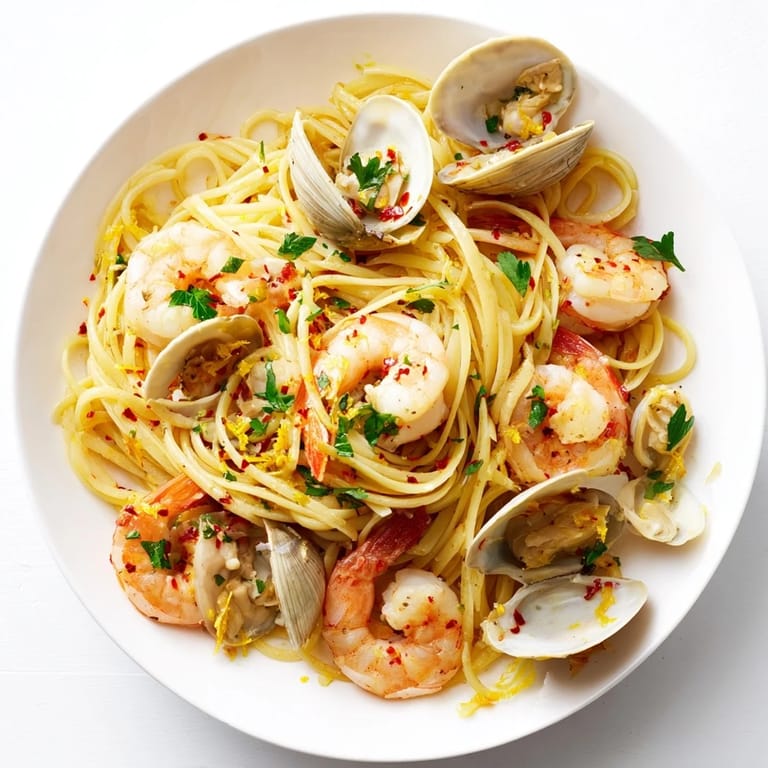
 This pasta has become my answer when I want to cook something that feels special without making myself anxious in the process. It's foolproof if you pay attention, fast enough for weeknights, and elegant enough to serve when people matter.
Recipe FAQ
- → What pasta works best with this dish?
Spaghetti is ideal as it holds the light garlic and olive oil sauce well, allowing the seafood flavors to shine.
- → Can I substitute clams with another shellfish?
Yes, mussels or calamari make great alternatives, offering similar textures and complementing the garlic and chili flavors.
- → How do you prevent garlic from burning?
Cook garlic on medium heat just until it turns golden and fragrant; avoid high heat or overcooking to keep it from burning and becoming bitter.
- → What wine pairs well with this pasta?
A crisp Italian white such as Pinot Grigio or Sauvignon Blanc complements the seafood and citrus notes perfectly.
- → Is there a gluten-free option for this meal?
Substituting the spaghetti with gluten-free pasta allows a gluten-free variation without compromising on flavor.