 Pin It
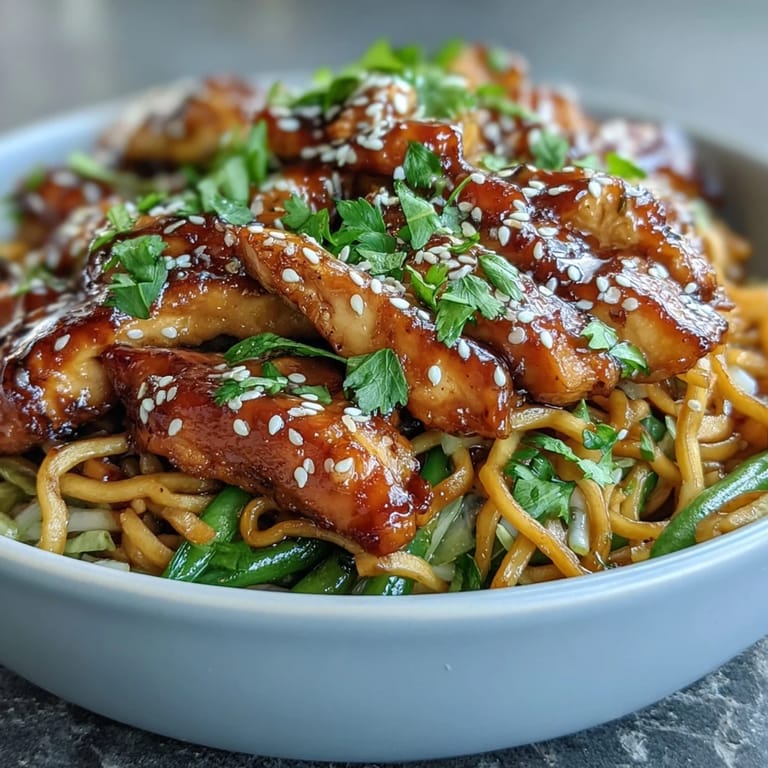
 There's something about the smell of sesame oil hitting a hot pan that instantly transports me to that tiny noodle shop wedged between two buildings in a city I visited years ago. I didn't order anything fancy that day, just watched the cook move with such efficiency, tossing noodles and chicken in one fluid motion. That bowl changed how I thought about weeknight dinners, proving that simple ingredients and a little heat could create something that tasted like more than the sum of its parts. Now whenever I make this, I'm chasing that same feeling, that perfect balance of sweet and savory that somehow feels both comforting and exciting.
I made this for my partner on a Tuesday night when we were both exhausted, and I remember him looking genuinely surprised when I set down a steaming bowl that didn't come from a restaurant. The noodles were still warm, the vegetables had that perfect snap to them, and he kept asking if I'd actually made it or if I was pulling his leg. That's when I realized this recipe wasn't just good, it was the kind of good that makes someone feel genuinely cared for, especially when it's made on a random weeknight instead of a special occasion.
Ingredients
- Boneless, skinless chicken breast or thighs (500 g): Thighs stay juicier if you're not careful with timing, but breast works beautifully if you slice it thin and don't overcook it past that golden point.
- Dried udon, soba, or rice noodles (250 g): Udon gives you that satisfying chew, soba brings earthiness, rice noodles keep things light, pick based on your mood and what's in your pantry.
- Red bell pepper, thinly sliced: The color matters here, both visually and flavor-wise, but yellow or orange work if that's what you have.
- Medium carrot, julienned: Cut them thin enough that they soften in minutes but stay crisp at the core, that texture contrast is where magic happens.
- Sugar snap peas, trimmed (100 g): These are worth seeking out because they add sweetness and crunch that regular peas can't deliver the same way.
- Spring onions, sliced: Save some of the green parts for garnish, the raw bite at the end is essential.
- Low-sodium soy sauce (60 ml): Low-sodium gives you control over saltiness, which matters more than you'd think when everything else is coming together.
- Brown sugar (2 tbsp): This isn't about making it dessert, it's about rounding out the salt and ginger with just enough sweetness to make the sauce sing.
- Toasted sesame oil (1 tbsp): Use the actual toasted stuff, not the light kind, the flavor difference is the entire point.
- Rice vinegar (1 tbsp): This brightens everything up and keeps it from tasting heavy, don't skip it.
- Fresh ginger, grated (2 tsp): Freshly grated tastes alive in a way powdered never will, take the thirty seconds.
- Garlic, minced (2 cloves): More than you think you need, less than you actually want, two is the sweet spot for this amount.
- Cornstarch (1 tsp, optional): If your sauce is too thin, this thickens it without making it heavy, but it's not essential if you're okay with a looser glaze.
- Toasted sesame seeds (2 tbsp): Toast them yourself if you can, store-bought toasted works but homemade smells incredible and tastes fresher.
- Fresh coriander or cilantro, chopped: The herbal finish that makes this taste like it came from somewhere special, not just your stove.
- Lime wedges (optional): A squeeze at the end adds brightness that ties everything together, don't leave it off just because it's optional.
Tired of Takeout? 🥡
Get 10 meals you can make faster than delivery arrives. Seriously.
One email. No spam. Unsubscribe anytime.
Instructions
- Get your noodles ready:
- Cook them according to the package, but pull them out just before they're completely soft so they've still got a little resistance. Drain and rinse under cold water until they're cool, then toss them with a tiny bit of oil so they don't stick to each other while you cook the rest.
- Mix your sauce while the pan heats:
- Whisk together the soy sauce, brown sugar, sesame oil, rice vinegar, ginger, and garlic in a small bowl, then add the cornstarch if you're using it. This becomes your flavor anchor, so taste it straight from the spoon and adjust if something's calling for more.
- Get the pan hot and sear the chicken:
- Heat a large skillet or wok over medium-high heat, add a splash of oil, then let it shimmer for a moment. Add the chicken pieces in a single layer and let them sit for a minute before stirring, that's how you get the golden crust that makes everything taste better.
- Remove chicken and build the vegetable layer:
- Once the chicken's cooked through and light brown, push it to the side and add a bit more oil if the pan looks dry. Stir-fry the bell pepper, carrot, and snap peas for a couple of minutes, stirring constantly so they cook evenly but stay crisp.
- Bring it all together:
- Return the chicken to the pan, pour in that sauce you made earlier, and toss everything until it's coated. Let it bubble gently for a minute or two until the sauce thickens and starts to cling to the noodles and vegetables.
- Add the noodles and spring onions:
- Dump in the cooled noodles and most of the spring onion slices, toss everything together until it's hot throughout and every strand is glossy with sauce. This is the moment where it stops feeling like separate components and becomes one cohesive bowl.
- Serve and garnish:
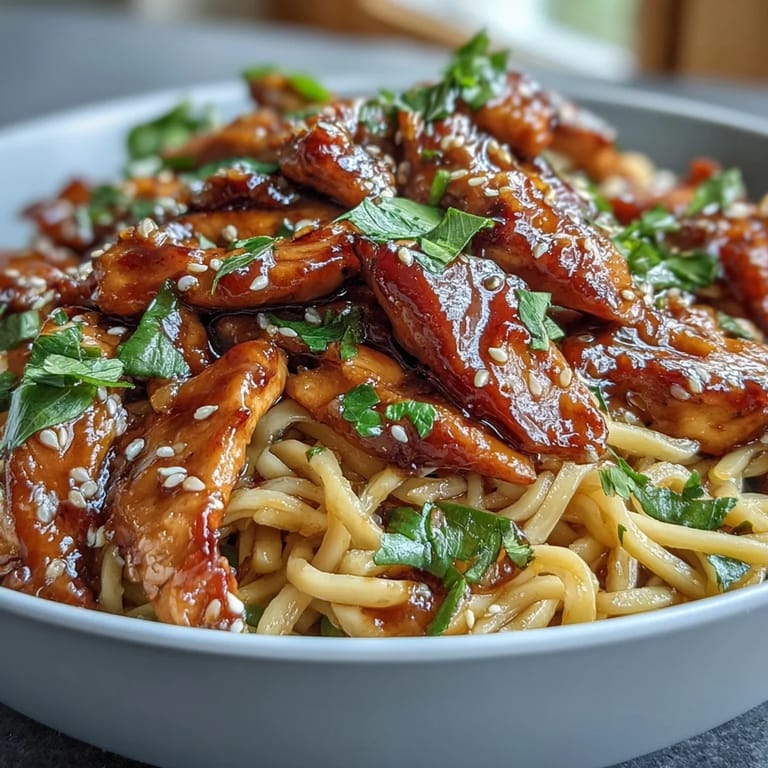
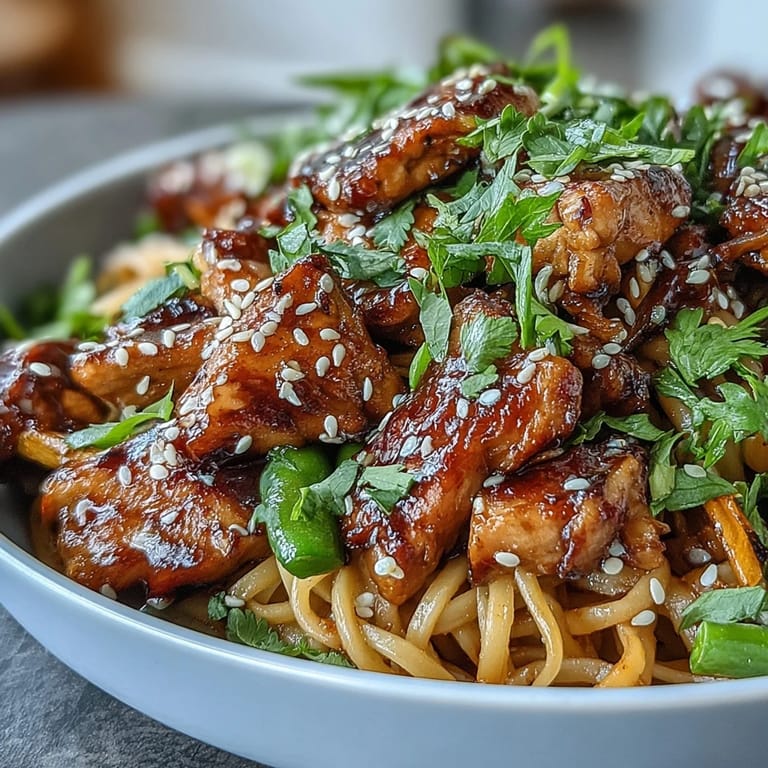
- Divide into bowls and scatter sesame seeds and cilantro over the top, then add a lime wedge so people can squeeze brightness into their bites. The final fifteen seconds of garnishing matters more than you'd think.
 Pin It
 I remember making this on a rainy Sunday when a friend stopped by unexpectedly, and instead of ordering takeout like we usually do, I found myself pulling together this bowl with whatever I had. She sat at my counter watching the whole process, and by the time I served it she was already asking for the recipe. That's when I understood that the best meals aren't about having perfect ingredients or spending hours in the kitchen, they're about sharing something made with intention, even when it happens by accident.
The Sauce Is Everything
This recipe lives or dies by that sesame-ginger sauce, and I learned that lesson by making it without tasting first. The balance of sweet and salty and tangy is delicate, and everyone's palate is different, so what tastes perfect to me might need more ginger or less sugar to you. Spend a moment tasting a tiny bit on the end of a spoon before you commit it to the whole bowl, you'll save yourself from having to salvage things later.
Vegetable Timing Is Your Friend
The vegetables are the unsung heroes of this dish because they provide contrast and freshness against all that savory sauce. Cut them thin enough that they cook quickly but still have structure, and keep the heat at medium-high so they blister slightly on the outside while staying crisp in the middle. I used to overcook them into submission until someone pointed out that the best vegetable dishes still have a little resistance, and now I'm almost paranoid about pulling them off heat too early.
Making It Your Own
This recipe is genuinely forgiving once you understand the core concept, which is noodles and protein held together by a balanced sauce and brightened by fresh vegetables. I've made it with broccoli and mushrooms, with tofu instead of chicken, with cashews stirred in for crunch, and it's worked every single time because the foundation is solid. The beauty of it is that you can adapt it to whatever you're craving or whatever you have available, and it'll still taste intentional and delicious.
- Add chili flakes or sriracha if you want heat, start with a little and taste as you go.
- A handful of roasted peanuts or cashews stirred in at the end adds richness and crunch that elevates the whole thing.
- If you're making this ahead, keep the noodles and sauce separate and combine them just before serving so nothing gets soggy.
 Pin It
 This bowl has become my answer to the question of what to make when I want something that tastes restaurant-quality but doesn't require any special skills or impossible ingredients. It's proof that good food doesn't have to be complicated, it just has to be made with a little attention and a willingness to taste as you go.
Recipe FAQ
- → What type of noodles work best?
Udon, soba, or rice noodles all work beautifully. Udon offers a chewy texture that holds sauce well, soba adds a nutty buckwheat flavor, and rice noodles stay light and delicate. Choose based on preference or what you have available.
- → Can I make this vegetarian?
Absolutely. Substitute the chicken with firm tofu, pressed and cubed, or use edamame for extra protein. The sauce and vegetables remain the same, creating a equally satisfying plant-based version.
- → How do I store leftovers?
Store in an airtight container in the refrigerator for up to 3 days. The noodles will absorb more sauce over time, so you may want to add a splash of water or extra sauce when reheating. Reheat gently in a skillet or microwave.
- → Can I adjust the sweetness?
Yes, the brown sugar amount can be tweaked to your taste. Start with less if you prefer a more savory profile, or increase slightly for a sweeter glaze. You can also add a pinch of red pepper flakes if you enjoy heat.
- → What other vegetables can I add?
Broccoli florets, sliced mushrooms, shredded cabbage, or baby spinach all work wonderfully. Add harder vegetables like broccoli earlier so they have time to tenderize, and delicate greens like spinach at the very end just to wilt.
- → Is this gluten-free friendly?
Yes, with simple swaps. Use tamari instead of soy sauce and choose gluten-free rice noodles. Always check labels on ingredients like soy sauce and cornstarch to ensure they're certified gluten-free if needed.