 Pin It
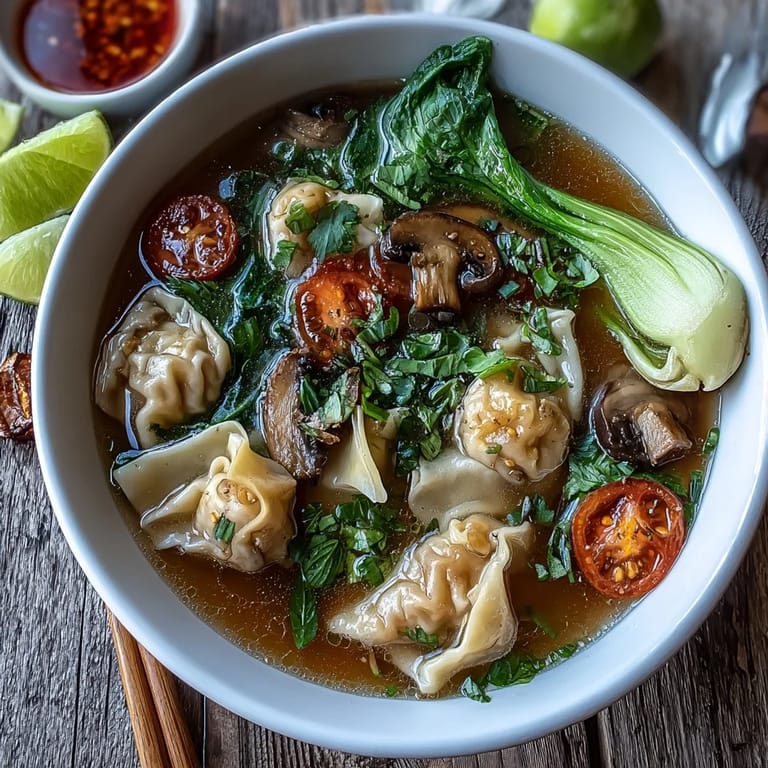
 The first time I combined tom yum and wontons, I was hiding from a Bangkok thunderstorm in a tiny shop where an elderly Thai cook was teaching her grandson Chinese recipes. The grandmother was critiquing his wonton folding technique while adding her own lemongrass and lime to the broth. Three hours later, rain still pounding, I'd learned this beautiful fusion that captures both culinary traditions. The fragrance of lemongrass and lime hitting that hot broth still transports me to that cramped kitchen.
Last winter when my friend Mei was recovering from surgery, I brought over a thermos of this soup. Her eyes welled up as the steam hit her face, and she said it reminded her of her grandmother who made both Chinese and Thai food. We sat quietly slurping wontons and sipping broth, and sometimes I think that soup did more healing than her medication ever did.
Ingredients
- Wonton wrappers: Look for the thinnest ones you can find, usually in the refrigerated section near tofu, as they create a more delicate dumpling that better absorbs the fragrant broth.
- Lemongrass: The woody outer layers hide the aromatic treasure inside, so peel them away and use only the pale lower portion, smashed thoroughly to release the essential oils.
- Kaffir lime leaves: These glossy leaves contribute an irreplaceable citrus note that regular lime cant match, but if unavailable, add extra lime zest to approximate the flavor.
- Galangal: Its floral peppery quality is subtly different from ginger, though ginger works in a pinch, I discovered this after a desperate supermarket substitution.
- Fish sauce: The funky depth might seem alarming in the bottle, but it transforms into pure umami magic in the broth, becoming completely unrecognizable from its potent origin.
Tired of Takeout? 🥡
Get 10 meals you can make faster than delivery arrives. Seriously.
One email. No spam. Unsubscribe anytime.
Instructions
- Master the wonton fold:
- Place a teaspoon of filling in the center of each wrapper, being careful not to overfill or theyll burst. Dab water along two connecting edges, then fold into a triangle, pressing out air bubbles as you seal the edges.
- Create your aromatic base:
- When simmering the lemongrass, galangal, and lime leaves in the broth, you want gentle bubbles, not a rolling boil. The fragrance will fill your kitchen as these ingredients slowly release their essence.
- The mushroom moment:
- Add the mushrooms and watch them drink up the flavors of your infused broth. As they soften and darken, theyre becoming little flavor sponges that will burst with soup goodness when bitten.
- Balance your seasonings:
- The holy trinity of fish sauce, lime juice, and sugar should create a perfect harmony where no single note dominates. Taste and adjust until the flavor makes you involuntarily close your eyes with pleasure.
- The gentle wonton dance:
- Lower your wontons into barely simmering broth with a spoon rather than dropping them. Too vigorous a boil might tear these delicate parcels before their time.
- Add the greens last:
- When the bok choy hits the hot broth, it should still be vibrant green when served. Just 60 seconds is often enough for perfect wilting.
 Pin It
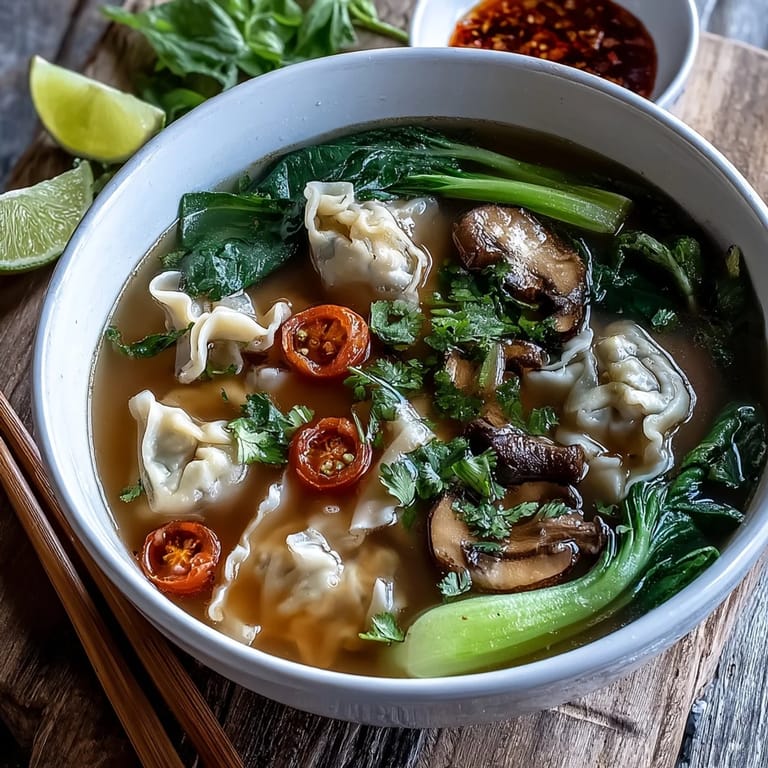
 During a particularly harsh winter, this soup became my Sunday ritual. I would simmer the broth while the snow fell outside, the steamy windows and fragrant kitchen creating a tropical escape in my Minneapolis apartment. Friends started showing up unannounced, having somehow developed a sixth sense for when a pot was on, and soon my tiny table hosted an impromptu weekly gathering with bowls of tom yum wonton bringing warmth from the inside out.
Make-Ahead Possibilities
I discovered quite by accident that uncooked wontons freeze beautifully when my dinner guests canceled last minute. Arrange them in a single layer on a baking sheet until frozen solid, then transfer to a sealed bag for up to a month. The broth base without the delicate greens or final lime juice can be refrigerated for three days, making this seemingly complex soup actually perfect for busy weeknights when you need something soulful without the full preparation time.
Customizing Your Spice Level
My Thai cooking teacher always said the proper spice level for tom yum should make you sweat slightly but not overwhelm the other flavors. I keep a small dish of sliced fresh chilies in fish sauce on the table for each person to customize their heat level. The beauty of this approach came clear during a dinner party when both my spice-adverse mother and my hot sauce-obsessed neighbor could enjoy the same pot of soup, each adjusting their bowls to personal preference.
Serving Suggestions
While perfectly complete on its own, this soup transforms into a feast when served with simple sides like coconut rice or quick-pickled cucumber salad. When hosting a casual gathering, I set out small bowls of extra garnishes so guests can doctor their own soup exactly as they like, creating a personalized experience that somehow makes the meal more memorable.
- For a beautiful presentation, serve in wide shallow bowls that allow the wontons to be partially visible rather than hidden in a deep bowl.
- Keep extra lime wedges on the table, as most people reach for more acidity after the first few spoonfuls.
- If serving to children or spice-sensitive guests, prepare the broth with whole chilies that can be easily removed before serving their portions.
 Pin It
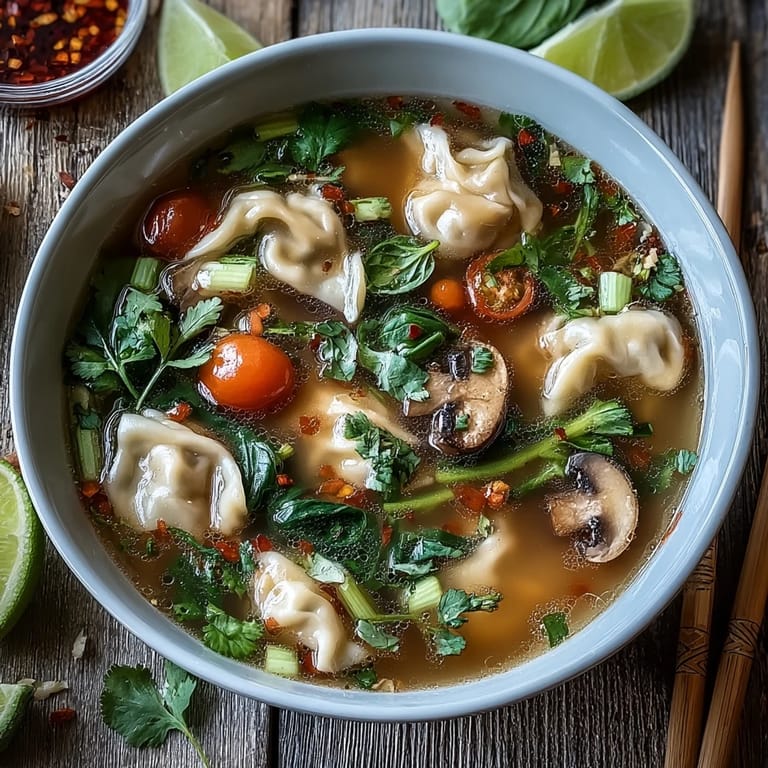
 This soup represents what I love most about cooking, the way traditions cross borders and create something entirely new yet somehow familiar. Each spoonful tells the story of cultural exchange, of grandmothers passing down techniques, and of the simple magic that happens when fresh ingredients meet careful hands.
Recipe FAQ
- → Can I make this soup vegetarian?
Yes. Replace ground pork with crumbled tofu in the wontons, use vegetable stock instead of chicken stock, and substitute fish sauce with soy sauce or tamari. Omit the shrimp or replace with mushrooms.
- → How spicy is this soup?
The spice level is medium to hot depending on how many chilies you add. Start with 1-2 sliced chilies and adjust to your preference. You can also serve chili oil on the side for those who want extra heat.
- → Can I freeze the wontons?
Absolutely. Arrange uncooked wontons on a baking sheet, freeze until firm, then transfer to a freezer bag. They'll keep for up to 2 months. Cook them directly from frozen in the simmering broth, adding 1-2 minutes to the cooking time.
- → What can I use if I can't find galangal?
Fresh ginger is the best substitute, though it has a slightly different flavor profile. Use a bit more ginger than the galangal called for, and consider adding a squeeze of extra lime to compensate for galangal's citrusy notes.
- → Can I prepare the broth in advance?
Yes. Make the broth up to 2 days ahead and store it in the refrigerator. Reheat gently before adding the wontons and fresh vegetables. The flavors actually develop and improve after sitting overnight.
- → What's the best way to fold wontons?
Place filling in the center, moisten two adjacent edges with water, fold into a triangle, and press firmly to seal. For a traditional look, bring the two bottom corners together, overlap them, and press to secure. Keep wrapped wontons covered with a damp cloth to prevent drying.