 Pin It
 My first attempt at biryani was a disaster—I'd watched someone make it once at a dinner party and thought, how hard could it be? Turns out, the secret isn't in trying to replicate some fancy restaurant version; it's in understanding that biryani is really just a conversation between rice, spices, and whatever protein you're cooking with. This simplified version taught me that lesson without the stress. Now it's what I make when I want something that feels special but doesn't demand hours of my time.
I made this for my sister on a random Tuesday when she was stressed about work, and watching her face light up when she tasted it reminded me why cooking matters. She kept saying it tasted like comfort, and I realized that's exactly what this dish delivers—something that feels indulgent and restaurant-quality but comes together in your own kitchen while you're humming along.
Ingredients
- Boneless, skinless chicken thighs (500 g): Thighs are forgiving; they stay tender even if you're not watching the clock like a hawk, unlike breast meat which can dry out before you blink.
- Plain yogurt (2 tbsp): This isn't just a binder—it tenderizes the chicken and adds a subtle tang that balances the spices beautifully.
- Ground turmeric, cumin, and coriander (1 tsp each): These three are the backbone; together they create warmth without heat, though the chili powder is there if you want a kick.
- Basmati rice (300 g): Rinsing it matters more than you'd think—it removes excess starch so each grain stays separate and fluffy instead of clumpy.
- Vegetable oil or ghee (2 tbsp): Ghee tastes richer, but oil works just fine and is usually what I reach for on a regular Tuesday.
- Onion, garlic, ginger, tomato: These aromatics are where the magic happens; they build layers of flavor that make the whole dish sing.
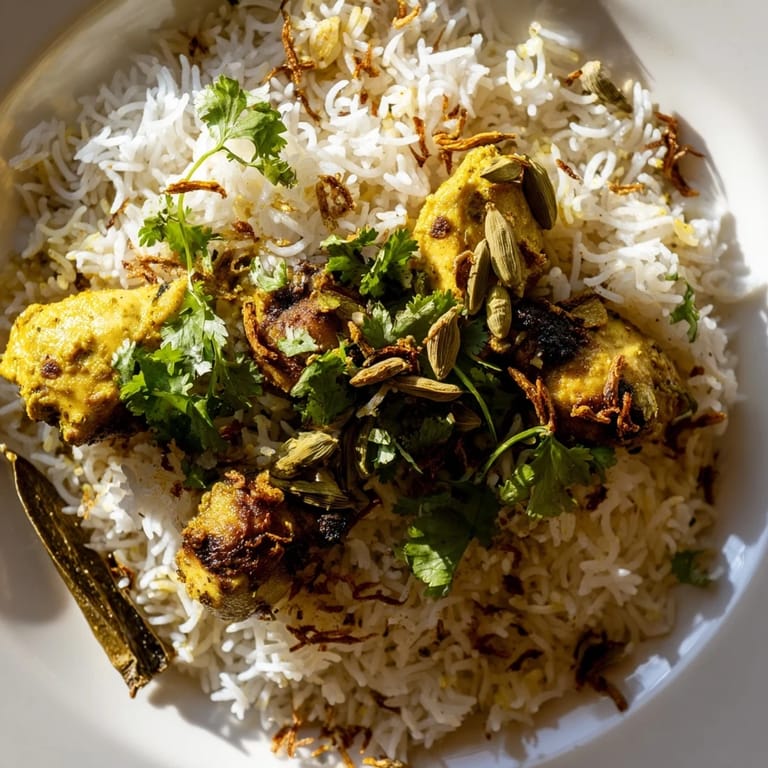
- Whole spices (bay leaf, cloves, cardamom, cinnamon): These steep into the rice and create that signature biryani aroma that makes people pause and ask what you're cooking.
- Fresh cilantro and fried onions: The cilantro brightens everything at the end, while fried onions add a little textural surprise if you have them on hand.
Tired of Takeout? 🥡
Get 10 meals you can make faster than delivery arrives. Seriously.
One email. No spam. Unsubscribe anytime.
Instructions
- Marinate the chicken with purpose:
- Toss your chicken pieces with yogurt and those ground spices—turmeric, cumin, coriander, and chili powder if you're feeling it. Even ten minutes makes a difference, but if you have time, let it sit longer while you prep everything else.
- Toast those onions until golden:
- Heat your oil or ghee over medium heat and add sliced onions, letting them brown slowly for about six to eight minutes. This isn't a rush; golden onions are the foundation of flavor, and they'll get even better when they crisp up later as garnish.
- Build the aromatics layer:
- Once the onions are golden, add minced garlic and ginger, stirring for just a minute until the smell hits you—that's your signal to move on. Then add the diced tomato and let it soften for a couple minutes, breaking down into the oil.
- Bloom the whole spices:
- Add your bay leaf, cloves, cardamom pods, and cinnamon stick, stirring gently for about a minute so they release their essential oils right into the pot. You'll notice the aroma shift and deepen—that's them waking up.
- Cook the chicken until partially done:
- Add your marinated chicken to the pot and let it cook for five to seven minutes, stirring occasionally until the pieces are lightly browned on the outside but not cooked through. This seals in the juices and keeps the meat tender.
- Fold in the rice gently:
- Add your rinsed basmati rice, stirring gently so it gets coated with all those spices and aromatics without breaking the grains. You're not mixing a cake here; just enough to combine everything evenly.
- Add water and cook covered:
- Pour in the water, bring it to a gentle boil, then cover the pot and reduce the heat to low. Let it simmer for eighteen to twenty minutes until the rice is tender and the liquid is completely absorbed—resist the urge to peek too much.
- Rest and fluff:
- Turn off the heat and let the pot sit covered for five minutes; this allows the rice to finish cooking gently with residual heat. Then fluff it all with a fork, breaking up any clumps.
 Pin It
 There's a moment right when you uncover the pot and that steam rises up carrying the smell of cardamom and cinnamon—that's when this stops being just a recipe and becomes an experience. My nephew, who usually picks at everything, asked for seconds without me asking, and that said everything I needed to know.
The Secret to Fragrant Rice
The whole spices aren't there for decoration; they're steeping in the water as the rice cooks, infusing every grain with subtle, sophisticated flavor. I used to think biryani needed hours of layering and resting, but this method proves that if you understand how spices work, you don't need all that fuss. The key is respecting the timing—letting the aromatics bloom, not rushing the chicken's cooking, and giving the rice space to absorb all those flavors.
Why Thighs Matter More Than Breast
Chicken thighs are darker, fattier, and infinitely more forgiving than breast meat, which is why they're the smart choice here. They stay juicy even if your rice takes an extra minute or two to cook, and they actually taste like something instead of being a blank canvas. I learned this the hard way after making biryani with breast meat once and ending up with chicken that felt like it belonged in a school cafeteria, not on a special dinner table.
Finishing Touches That Matter
The garnishes—cilantro, fried onions, lemon wedges—aren't decorative afterthoughts; they're the final conversation the dish has with your palate. The cilantro adds brightness, the fried onions give texture, and the lemon cuts through the richness with a sharp, welcome note. Serve this hot, and don't skip the raita or cucumber salad on the side; they cool everything down and let your mouth reset between bites.
- If you can't find fried onions, crisp up some thin onion slices in a pan for two minutes—homemade is actually better.
- A pinch of saffron soaked in warm milk and drizzled over the rice before covering adds luxury without complication.
- Leftover biryani reheats beautifully in the microwave with a splash of water, though honestly, I've never had leftovers last past the first meal.
 Pin It
 This biryani reminds me that some of the best dishes aren't complicated—they're just honest, with each ingredient doing exactly what it's supposed to do. Once you make it once, it becomes a weeknight go-to that feels impressive without the stress.