 Pin It
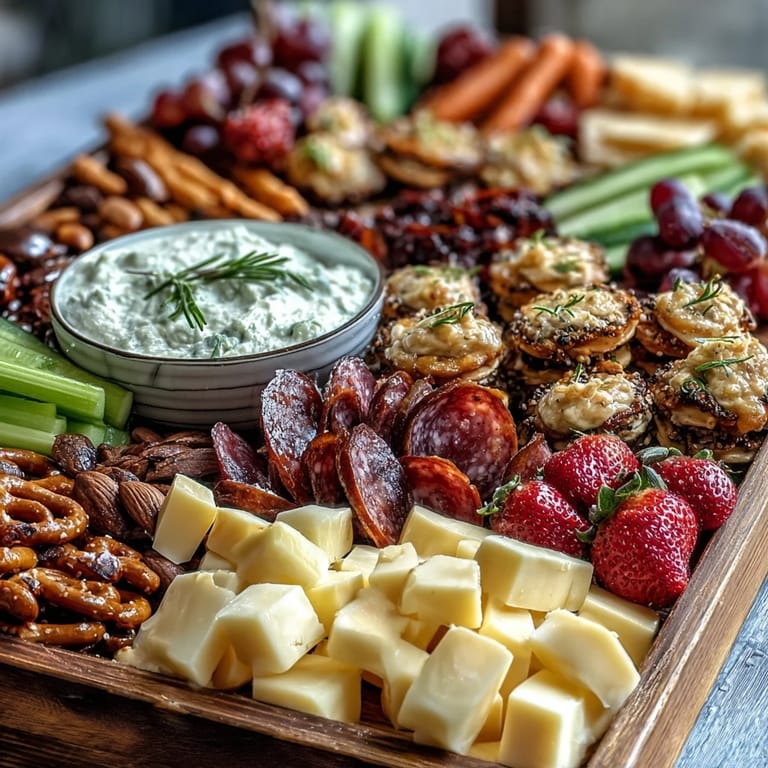
 My sister called me three days before her graduation asking if I could bring something to the backyard celebration, and my mind immediately went to snack boards. There's something magical about arranging a spread where everyone finds exactly what they want without anyone having to ask. I'd built a few before, but never one quite as intentional as this one felt—mixing the salty crunch of cheese and salami with bright berries and chocolate-covered pretzels, all designed to keep a crowd of celebrating families happy for hours.
What I didn't expect was watching my nephew, who's notoriously picky about food, actually try three different things from the board just because they looked so beautiful arranged together. His younger cousin filled a napkin with grapes and almonds and sat on the porch munching away for twenty minutes. That moment—when food becomes part of the celebration itself instead of just fuel—that's when I knew this snack board idea was perfect for milestone moments.
Ingredients
- Cheddar cheese cubes: Cut them yourself from a block if you can; pre-cubed cheese sometimes tastes slightly off, and these need to shine since they're one of the anchors of your board.
- Salami slices: Roll them or fold them for visual interest—a flat pile looks boring, but arranged in little spirals they become part of the landscape.
- Turkey or ham roll-ups: These offer a milder protein option than salami, and they're less salty, which matters when you're building balance across the entire board.
- Mixed olives: Green and kalamata together give complexity; if you have a friend who hates olives, it doesn't matter because you're not forcing anyone to eat them.
- Roasted nuts: Almonds, cashews, or a mix—something about roasted nuts makes people feel like they're eating something substantial, even though they're just snacking.
- Baby carrots: They're prettier than cut carrots because they still look whole and fresh, and people unconsciously eat more vegetables when they look this way.
- Cherry tomatoes: Pick ones that are actually ripe and slightly soft; hard, mealy tomatoes ruin the eating experience and people will skip them.
- Cucumber slices: Slice them thick enough that they don't get soggy, thin enough that they're elegant—right before serving is ideal.
- Mini pretzels: The savory version of these are your salty-crunchy backbone; they pair perfectly with dips and contrast beautifully with cheese.
- Assorted crackers: Choose a mix of textures and shapes; variety keeps people reaching back for another bite.
- Chocolate-covered pretzels: These bridge the sweet and savory worlds in the most delicious way, giving guests permission to have a little of everything.
- Assorted berries: Fresh strawberries, blueberries, and raspberries add brightness and a little tartness that keeps your palate interesting.
- Grapes: They're the unexpected sweet element that even savory-first people will grab, especially when they're chilled.
- Mini cookies or macarons: These feel festive and celebratory; pick flavors that complement rather than compete, like vanilla or chocolate.
- Dried apricots: Chewy and naturally sweet, they appeal to people who want something less sugary than candy.
- Gummy candies: Optional but honestly, kids love them and they add pops of color, so why not include them.
- Yogurt-covered raisins: A compromise between healthy and indulgent that appeals to more people than you'd expect.
- Hummus: Garlicky and earthy, this gives the vegetable-heavy eaters something substantial to pair with carrots and cucumbers.
- Ranch dip or tzatziki: Creamy and comforting, ranch works with almost everything on your board; tzatziki brings brightness if you want something lighter.
- Honey or fruit preserves: Drizzle this over cheese or dip crackers in it; it's the element that makes people stop and say this is really good.
Tired of Takeout? 🥡
Get 10 meals you can make faster than delivery arrives. Seriously.
One email. No spam. Unsubscribe anytime.
Instructions
- Start with your base:
- Set your large board or platter on the surface where it'll stay, because once you start loading it with food, you're not moving it again. Take a moment to visualize where everything goes—some people prefer organizing by type, others by color, and honestly, either way works as long as there's intention behind it.
- Place your dips strategically:
- Put the small bowls of hummus, ranch, and honey in three different spots around the board so people naturally spread out instead of crowding around one corner. Think of them as anchors that hold the whole arrangement together and give people gathering points.
- Build your savory foundation:
- Arrange your cheese cubes, meats, olives, and nuts in clusters rather than scattered randomly—clusters feel abundant and make it easy for someone to grab a little collection of complementary things. Leave some space between clusters so the board doesn't look overcrowded or chaotic.
- Tuck in your fresh vegetables:
- Add carrots, tomatoes, and cucumbers in the gaps, using their bright colors to create visual contrast against the deeper tones of cheese and cured meats. A well-placed cherry tomato can actually guide someone's eye to where the ranch dip is.
- Add textural elements:
- Scatter your pretzels and crackers across the board like you're giving the whole thing a textural confetti—they need to be accessible from multiple sides so people don't have to reach awkwardly.
- Create sweet clusters:
- Place your berries, grapes, cookies, and chocolate-covered pretzels in little groups between the savory items, using them as color and flavor punctuation. Step back and look at the board—does it feel balanced, or is one side heavier than the other?
- Garnish if you're feeling fancy:
- A few fresh mint leaves or edible flowers between clusters make this feel celebratory, but honestly, a beautiful board doesn't need decoration—it's already gorgeous. This step is truly optional and more about how much time you have and how much you want to shine.
- Serve and replenish:
- Keep small tongs, forks, or toothpicks nearby so people can serve themselves without touching everything with their hands. As the party goes on, keep an eye on what's disappearing and fill those spots back in—an empty section makes a board look picked over, even if there's plenty of food left.
 Pin It
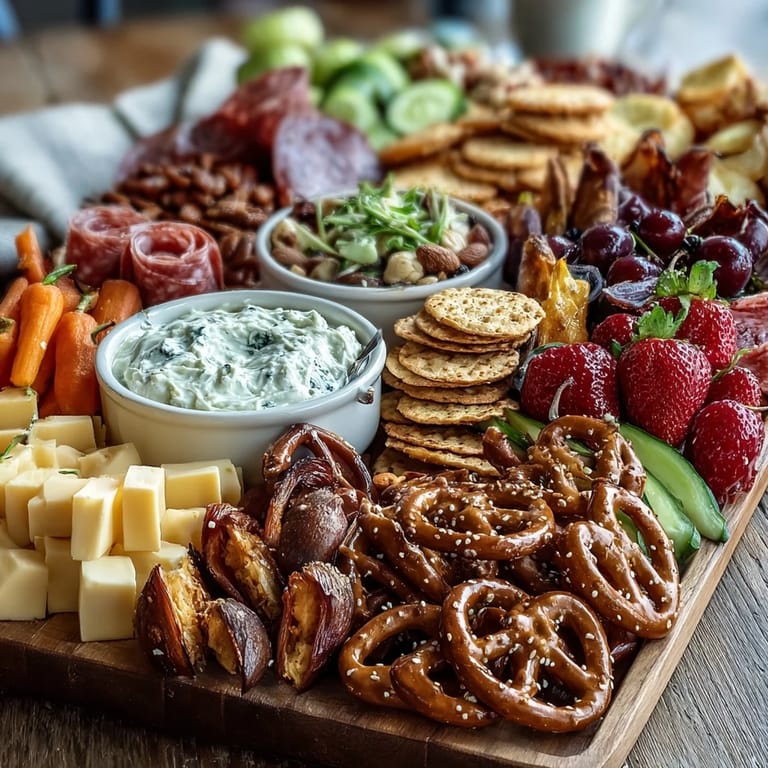
 By the end of the party, my sister came over to where I was standing and just pointed at the board—three-quarters gone, picked over beautifully, with only the items someone's clearly vegetarian friend had avoided and a couple of sad crackers left. She laughed and said this is exactly how you want an appetizer board to look at a party: like everyone found what they needed and stayed happy.
The Art of Board Arrangement
Building a snack board is actually a design exercise disguised as food preparation. I learned this the hard way after my first attempt looked scattered and confusing, like I'd just dumped everything on a platter and hoped for the best. What changed everything was thinking of the board as a landscape with focal points—the dips are your mountains, the cheese your plains, the berries your accents of color. Once you stop thinking ingredient and start thinking composition, everything clicks into place naturally.
Timing and Temperature Considerations
The worst feeling is spending thirty minutes arranging a beautiful board only to watch the cheese start sweating and the vegetables get limp. I now set my board up no earlier than thirty to forty-five minutes before guests arrive, which gives me time to breathe and finalize any last-minute touches without watching my careful work slowly deteriorate. If you absolutely must prep early, keep the fresh items separate and add them right before everyone arrives—your future self will thank you when everything still looks crisp and intentional.
Customization for Every Crowd
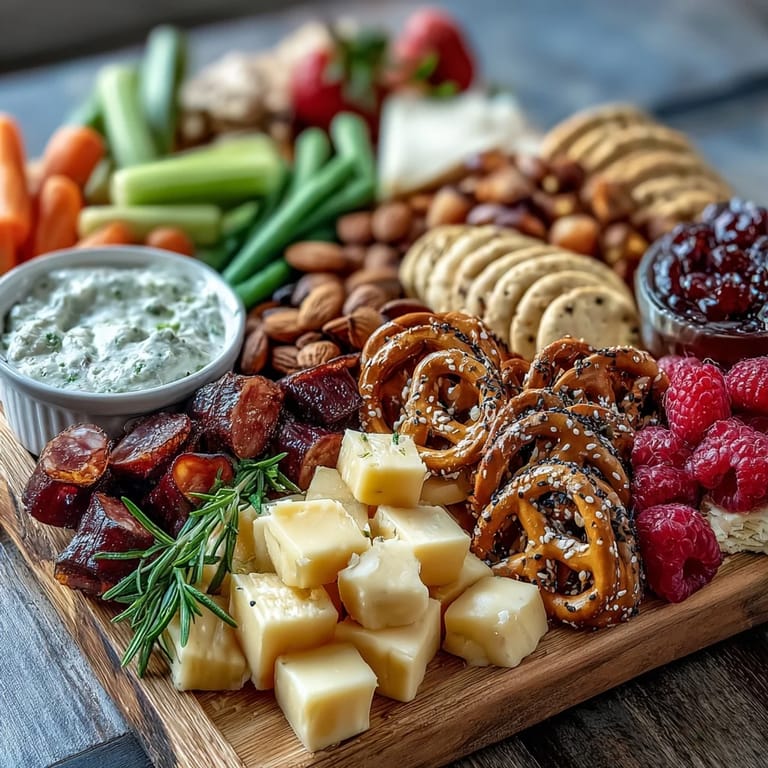
The beautiful thing about a snack board is how personally you can tailor it without changing the fundamental concept. I've made gluten-free versions by swapping in gluten-free crackers and pretzels, vegetarian boards that skip the meats entirely but add more cheese varieties and nuts, and even a version for a friend who can't eat dairy that used cashew cheese instead. The structure stays the same; only the players change, and somehow it still looks just as gorgeous and festive.
- Ask your host or guests about major preferences or allergies before you shop, not after you've already bought everything.
- When making a board for mixed dietary needs, keep allergen-heavy items slightly separated so people can easily avoid what doesn't work for them.
- Label things if you're unsure—a small card saying dairy-free or nut-free takes two seconds and prevents awkward conversations later.
 Pin It
 A snack board is honestly the most forgiving way to feed a group of people who all want different things, and somehow it always feels special. Make this for your next gathering and watch how people interact with it—it becomes less about hunger and more about celebration.
Recipe FAQ
- → How should I arrange the items on the snack board?
Group savory items such as cheeses and meats separately from sweet fruits and treats, placing dips around the edges for easy access and visual balance.
- → Can I customize the savory bites for dietary needs?
Yes, you can swap meats for vegetarian options or select gluten-free crackers and pretzels to suit different preferences.
- → What dips pair well with this board?
Hummus, ranch dip, tzatziki, and honey or fruit preserves provide complementary flavors to both savory and sweet bites.
- → How long can the snack board be left out?
For best freshness and safety, keep the board refrigerated until shortly before serving and replenish items as needed during the event.
- → What tools help serve this snack board efficiently?
Use small tongs, forks, or toothpicks for guests to pick individual bites easily and maintain hygiene.