 Pin It
 One chilly afternoon, a sudden craving for something comforting and savory led me to experiment with onigiri for the first time. The sound of rice simmering on the stove and the gentle aroma of grilled salmon immediately made my kitchen feel warmer. The whole process was almost meditative—hands dampened, working patiently, and the promise of a crisp, golden result. While shaping each rice ball, I found myself quietly humming, completely absorbed in the task. It was one of those accidental kitchen moments where you realize how simple ingredients can create pure joy.
I’ll never forget preparing these grilled salmon onigiri for my partner when we decided to have a spontaneous rooftop lunch. The breeze carried the scent of seaweed, and each bite brought out smiles as we watched the clouds drift by. It was a simple gesture—packing up the still-warm rice balls with green tea—but it turned an ordinary Thursday into something memorable. Neither of us could stop talking about how the crispy layer made the rice absolutely irresistible. It instantly became a cherished midday ritual for us.
Ingredients
- Salmon fillet: Use fresh, skinless salmon—grilling it with soy and mirin brings out its umami depth, and I’ve found flaking it with a fork leads to perfectly sized bits for filling.
- Soy sauce: Just a little adds color and savoriness; I prefer low sodium so the salmon’s natural flavor shines through.
- Mirin: This Japanese sweet rice wine gives a subtle sweetness—don’t skip it if you can help it.
- Toasted sesame oil: Adds a nutty aroma that makes the salmon almost irresistible; just a few drops go a long way.
- Salt and black pepper: Simple seasoning is all you need—don’t overdo it, as the salmon and soy are already quite savory.
- Japanese short-grain rice: The right rice is key—short-grain gets sticky and holds shape, making forming the onigiri much easier for beginners and pros alike.
- Rice vinegar (optional): A splash brightens the rice, but you can absolutely omit it if you like to keep things classic.
- Nori sheets: Wrapping the onigiri keeps your hands clean and adds a hint of ocean flavor; halve the sheets for easier wrapping.
- Toasted white sesame seeds (optional): These are my finishing touch—just a sprinkle for crunch and toasty flavor.
- Water and salt (for shaping): Wet hands and a pinch of salt make rice shaping much less sticky, a pro move I wish I’d learned sooner.
Tired of Takeout? 🥡
Get 10 meals you can make faster than delivery arrives. Seriously.
One email. No spam. Unsubscribe anytime.
Instructions
- Cook the Rice:
- Rinse the rice a few times until the water runs clear—it’s oddly satisfying to watch the starchy cloud disappear. Cook the rice with fresh water until tender and sticky, then let it steam with the lid on to finish perfectly; stir in salt and rice vinegar while still warm.
- Prepare the Salmon:
- Preheat your grill pan or oven—it’s time to give the salmon some smoky love. Brush the fillet with soy sauce, mirin, and sesame oil, then grill or bake until it flakes apart with a fork, releasing a savory aroma that fills the kitchen.
- Shape the Onigiri:
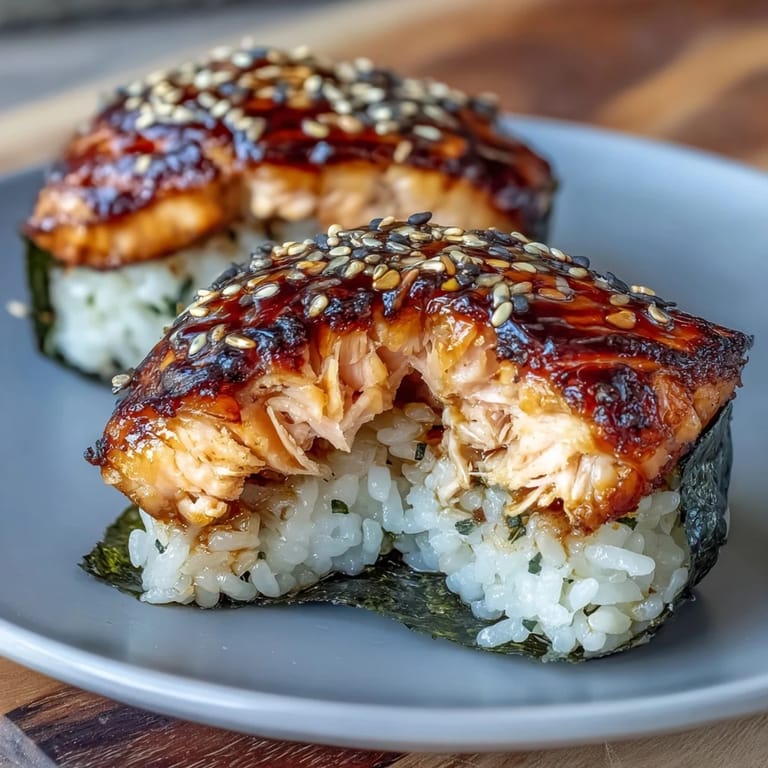
- Fill one small bowl with water, one with salt, and keep rice warm nearby. Wet your hands, sprinkle some salt on your palms, grab a scoop of rice, flatten, tuck in a spoonful of salmon, and gently form into a triangle or oval—it’s part art, part puzzle.
- Grill the Onigiri:
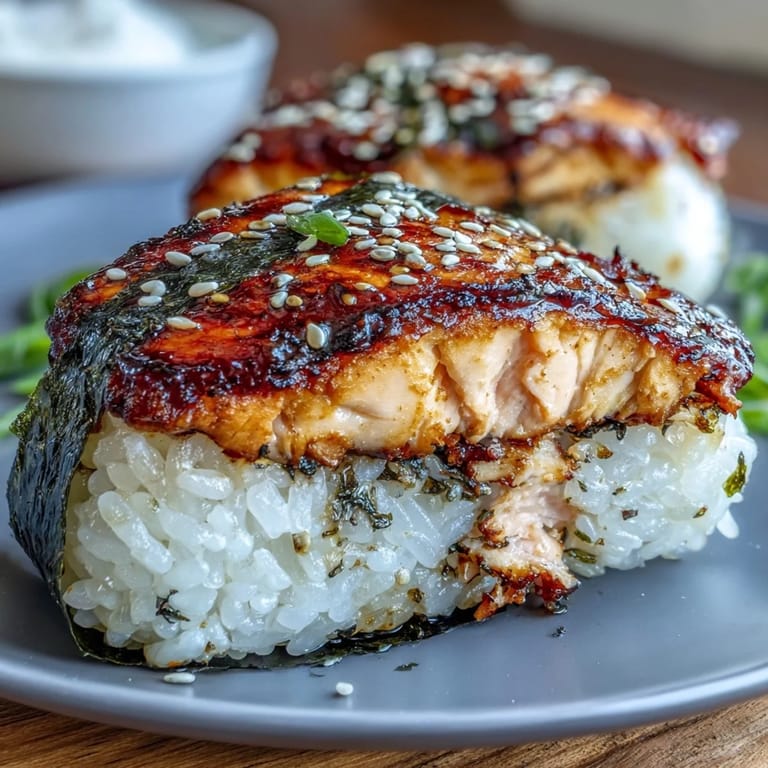
- Lightly oil a skillet or grill pan and heat it up; place the rice balls down and listen for the soft sizzle. Flip after a few minutes to get that light golden crust—brushing with extra soy sauce gives an irresistible savory kick.
- Wrap and Serve:
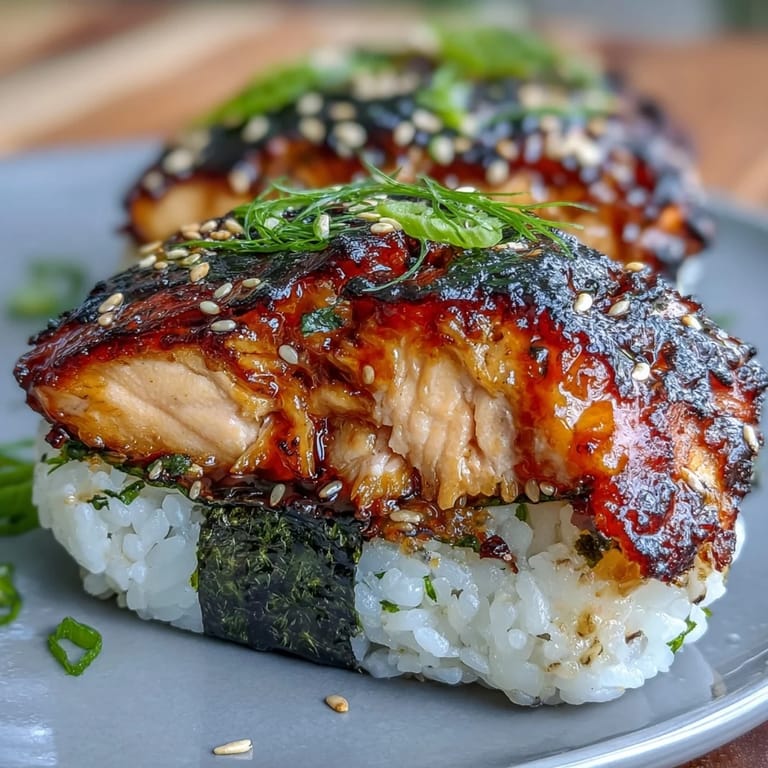
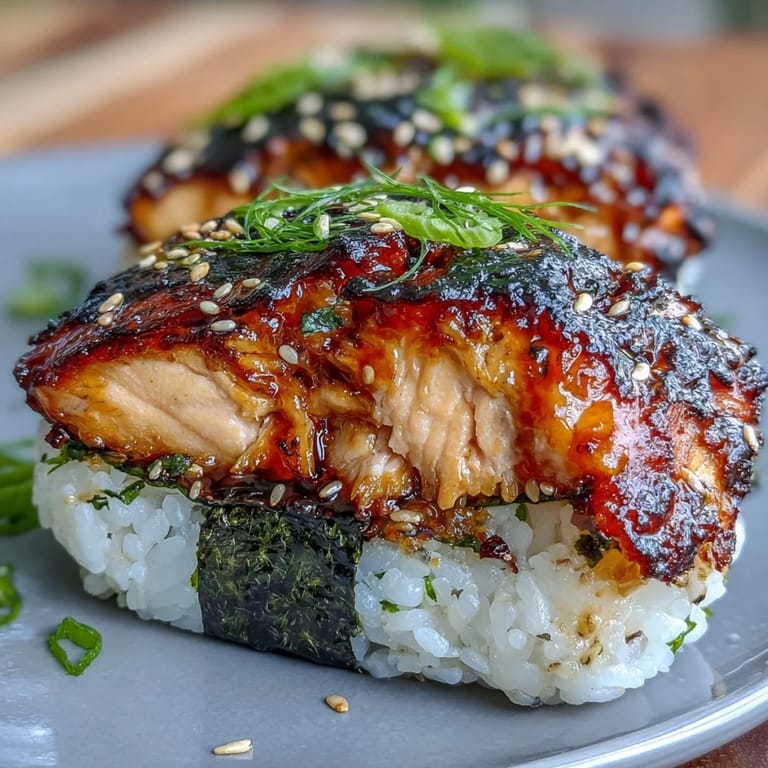
- Wrap each onigiri with a strip of nori and sprinkle with sesame seeds if you like. Enjoy warm, feeling the difference in texture between the crisped rice, tender filling, and cool seaweed wrap.
 Pin It
  Pin It
 There came a point when these onigiri transformed from snacks to heartfelt tokens. Once, I packed a few for a long train journey, and sharing them with a fellow traveler sparked a lively conversation about favorite comfort foods. That’s when I realized these little triangles were more than the sum of their parts—they had the power to connect people, no matter where the day took us.
Getting Rice Texture Just Right
Mastering perfectly sticky rice makes all the difference—the grains should cling but not become gluey. I used to overcook or under-season until I started measuring water precisely and letting the rice steam off the heat. The steam step is crucial for fluffiness and molding. Give the rice enough time to rest, and you’ll notice shaping becomes much less fiddly. Warm rice is much easier to work with than cold.
Creative Filling Upgrades
While traditional salmon is hard to beat, a dab of wasabi or umeboshi (pickled plum) inside adds an exciting zing. I sometimes toss in a few green onions or a drizzle of spicy mayo for variety. Don’t be afraid to use leftover cooked fish or even canned salmon—the rice brings everything together. Taste as you go and adjust the filling to your mood. This recipe is wonderfully flexible, so let curiosity lead you.
Smart Serving and Storage Advice
Freshly grilled onigiri are unbeatable, but they also make sturdy travel companions if wrapped tightly. If you’re prepping ahead, pack the nori separately and wrap just before eating to keep it crisp. These keep their texture for a few hours at room temp, or can be quickly refreshed in a hot pan if chilled.
- Use damp hands for each onigiri to avoid sticking.
- Brush lightly with soy sauce for a pretty sheen and deeper flavor.
- Keep extras in the fridge, then re-crisp in a pan for a quick snack.
 Pin It
  Pin It
 Sharing grilled salmon onigiri always brings a sense of accomplishment and a generous pinch of delight. Next time you crave something cozy yet portable, I hope these rice balls surprise you with just how satisfying homemade can be.
Recipe FAQ
- → What rice is best for onigiri?
Use Japanese short-grain rice for its natural stickiness and tenderness. Rinse until the water runs clear, cook with a slightly firm texture, then let rest before shaping so grains hold together without becoming mushy.
- → Can I use canned salmon instead of fresh?
Yes. Drain canned salmon well and flake, then season with a little soy and sesame oil to boost flavor. Fresh gives the best texture, but canned works well for convenience.
- → How do I prevent onigiri from falling apart?
Work with warm rice and wet your hands to prevent sticking. Rub a pinch of salt on your palms, press firmly but gently when molding, and use just enough rice to encase the filling so the center won’t collapse.
- → What's the best way to get a golden, crisp exterior?
Heat a lightly oiled nonstick skillet or grill pan over medium heat and cook 2–3 minutes per side until golden. Brush with a little soy before flipping for extra color and savory depth.
- → How should I store and reheat leftover onigiri?
Refrigerate in an airtight container for up to 2 days. Reheat gently in a skillet until warmed through to preserve texture; avoid microwaving dry rice without covering, which can make it rubbery.
- → Any serving or flavor variations to try?
Try adding a touch of wasabi, pickled plum (umeboshi), or scallions to the filling. Sprinkle toasted sesame seeds or brush with a teriyaki-style glaze for a different flavor profile.