 Pin It
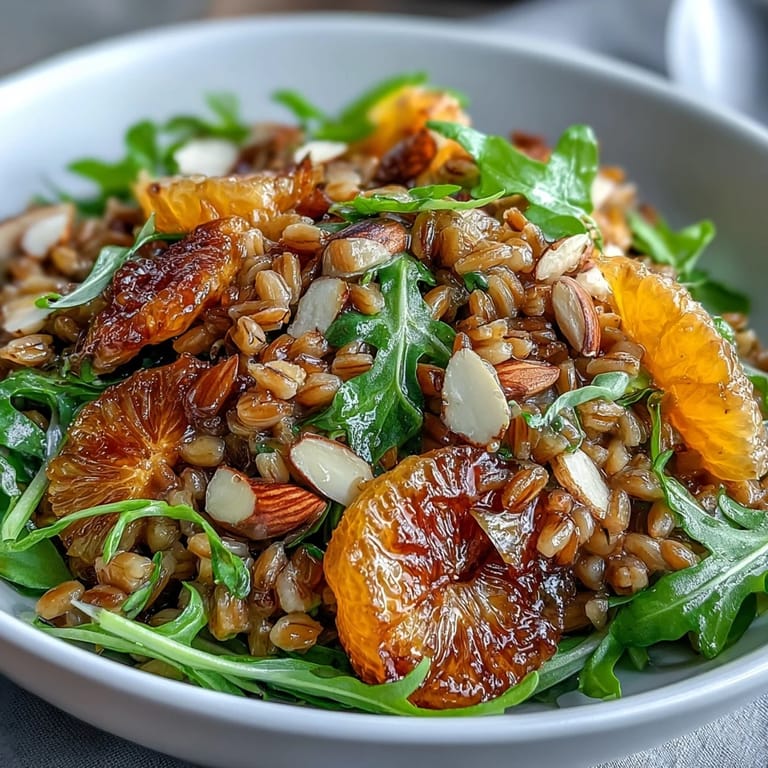
 There's something about the smell of farro toasting that makes me stop what I'm doing and pay attention—it's nutty and warm, like the kitchen suddenly knows something I don't yet. I stumbled onto this salad on a late September afternoon when my farmer's market bag was overflowing with fennel and blood oranges, and I needed something that felt both light and substantial. What started as a puzzle of how to use everything became this bright, crunchy bowl that somehow tastes like sunshine tastes.
I made this for a dinner party once when I was still learning to cook for groups, and someone asked for the recipe before dessert even arrived—that's when I knew it worked. The way the fennel's subtle anise flavor dances with the orange juice, and how the almonds add this satisfying crunch that makes people slow down and actually taste what's in front of them, it became my go-to dish when I want to feel confident in the kitchen.
Ingredients
- Whole grain farro: This stuff is chewy and nutty when cooked right, way more interesting than regular pasta, and it holds up beautifully against acidic dressing without getting mushy.
- Water and kosher salt: Don't skip salting your cooking water—it's the difference between bland grains and ones that taste like themselves.
- Medium fennel bulb: Slice it thin so it softens slightly as it sits with the dressing, and please save those fronds because they're like edible lace on top.
- Large oranges: Go for ones that are heavy for their size and smell floral at the stem—that's how you know they're sweet and juicy enough to make the dressing sing.
- Arugula or baby spinach: Use whichever you prefer, but add it right before serving or it'll wilt into submission from the warm farro.
- Fresh parsley: This is the green that keeps everything from feeling too heavy, so don't leave it out.
- Sliced almonds, toasted: Toasting them yourself makes them taste richer and more almond-y than anything pre-toasted, and it takes literally three minutes.
- Extra-virgin olive oil: This is your dressing's backbone, so use something you actually like tasting on its own.
- Orange juice and lemon juice: Fresh squeezed changes everything—bottled juice tastes tired next to it.
- Honey or maple syrup: Just a teaspoon balances the acid and makes the dressing feel complete.
- Dijon mustard: An emulsifier that helps everything come together and adds a gentle tang you don't quite taste but definitely notice without.
- Sea salt and fresh black pepper: Taste as you season, because citrus dressing needs less salt than you'd think.
Tired of Takeout? 🥡
Get 10 meals you can make faster than delivery arrives. Seriously.
One email. No spam. Unsubscribe anytime.
Instructions
- Rinse and cook the farro:
- Pour your farro into a fine-mesh strainer and rinse it under cold water until the water runs clear—this removes excess starch. In a medium saucepan, combine rinsed farro with three cups of water and half a teaspoon of kosher salt, bring it to a boil, then lower the heat, cover, and let it simmer gently for 25 to 30 minutes until each grain is tender but still has a slight chew to it.
- Toast the almonds while farro cooks:
- Spread your sliced almonds in a dry skillet over medium heat and stir them almost constantly for two to three minutes until they turn golden and smell absolutely incredible—this is the moment when your kitchen smells like it knows what it's doing. Pour them onto a plate the second they're done so they don't keep cooking in the hot pan.
- Cool the farro and prep your vegetables:
- Drain any remaining water from the cooked farro and spread it on a plate or shallow bowl so it cools faster. While it cools, slice your fennel bulb paper-thin (a mandoline makes this easier but a sharp knife works), peel your oranges and segment them over a bowl so you catch their juice, and chop your parsley.
- Build your salad base:
- In a large bowl, combine your cooled farro, sliced fennel, orange segments, arugula or spinach, and parsley—at this point it doesn't look like much, just scattered ingredients waiting for something to tie them together.
- Make your dressing:
- In a small bowl or a jar with a tight lid, whisk together three tablespoons of extra-virgin olive oil, one tablespoon each of fresh orange juice and lemon juice, one teaspoon of honey, one teaspoon of Dijon mustard, and a quarter teaspoon each of sea salt and freshly ground black pepper. Taste it and adjust—it should make your mouth want more.
- Bring it all together:
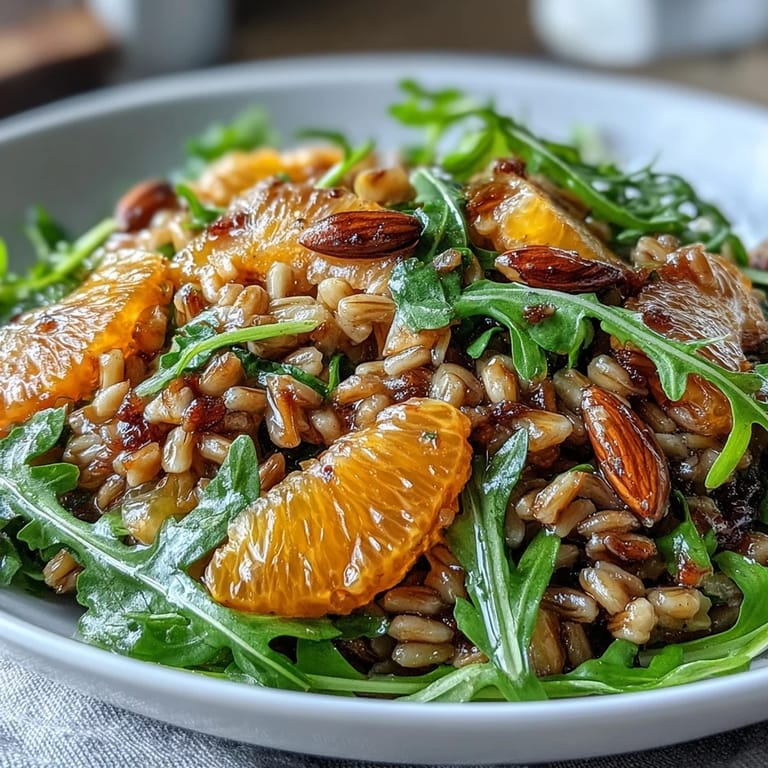
- Pour the dressing over your salad and toss everything gently but thoroughly so the dressing coats every grain and leaf. Just before serving, scatter the toasted almonds over top and garnish with those reserved fennel fronds you saved—it looks like you tried, in the best way.
 Pin It
 There was this Tuesday when I brought this salad to a friend's house and she served it alongside grilled fish, and suddenly it wasn't just a side dish anymore—it was the thing everyone kept coming back to. That's when I realized it works because nothing in it tries too hard; everything is just itself, brightly.
Why Farro Matters Here
Most grains go soft and forgettable once you dress them, but farro stays firm enough to hold onto its texture even after sitting with citrus and oil. It's got this nutty flavor that doesn't need anything else to be interesting, which means the dressing and vegetables get to be supporting players instead of carrying the whole dish. I've tried this with quinoa when I needed it gluten-free and barley when I wanted something earthier, but farro just hits different—it's the reason this salad works.
The Fennel-Citrus Magic
Fennel is one of those vegetables that people are nervous about because it smells intense, but once you slice it thin and let it sit in a citrus dressing, something changes. The brightness mellows the anise flavor and makes it taste more like a memory of licorice than the real thing, and your mouth doesn't know whether to expect sweet or savory and that's exactly the point. Oranges have this way of making fennel taste more like itself, somehow softer and more sophisticated.
Toasting Your Way to Better Almonds
This is going to sound dramatic but toasting almonds is one of those small kitchen skills that changes everything you cook afterward. The oils in the nuts wake up and deepen, and suddenly what was just a crunchy add-on becomes a flavor all its own that makes people ask what you did differently. You're not cooking them hard, just waking them up in a hot pan for a few minutes, but your entire dish tastes more intentional because of it.
- Toast your almonds just before you serve the salad so they stay crispy instead of getting soft from sitting with the dressing.
- If you forget and they get soggy, just eat them anyway because they still taste better than store-bought toasted ones.
- Keep a close eye on them the first time you do it so you learn what golden looks and smells like in your own kitchen.
 Pin It
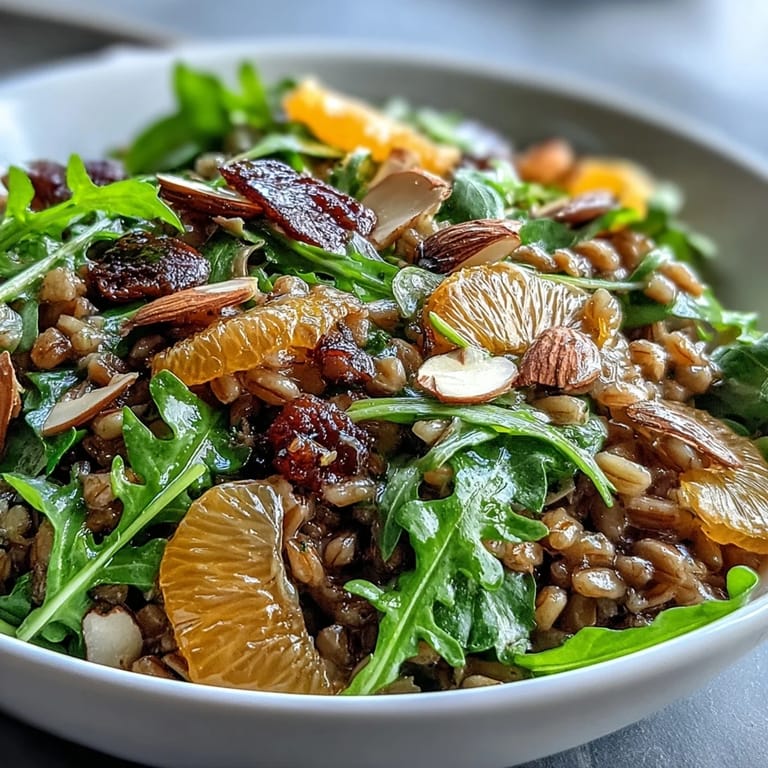
 This is the kind of salad that tastes like you've been cooking all afternoon, but somehow you've barely tried. Serve it at room temperature or chilled, and watch people slow down to actually taste what you've made.
Recipe FAQ
- → Can I make this ahead of time?
Yes, prepare the components up to 24 hours in advance. Store the farro, dressing, and ingredients separately, then toss together just before serving for best texture.
- → What can I substitute for farro?
Barley, wheat berries, or quinoa work well. Quinoa creates a gluten-free option while maintaining similar cooking times and texture.
- → How do I prevent the oranges from making the salad soggy?
Segment the oranges carefully, removing all membrane and pith. Add them right before serving, or pat them gently with paper towels if assembling ahead.
- → Can I add protein to make it more filling?
Grilled chicken, chickpeas, white beans, or crumbled feta cheese all complement the Mediterranean flavors beautifully while adding substantial protein.
- → How long does the dressing stay fresh?
The citrus vinaigrette keeps in a sealed jar in the refrigerator for up to one week. Shake well before using, as ingredients may separate.