 Pin It
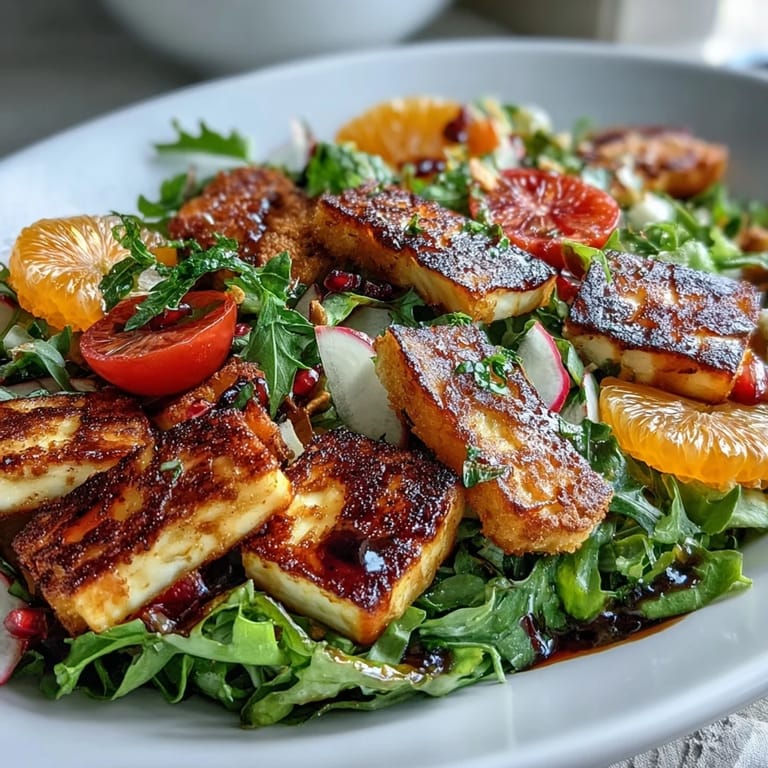
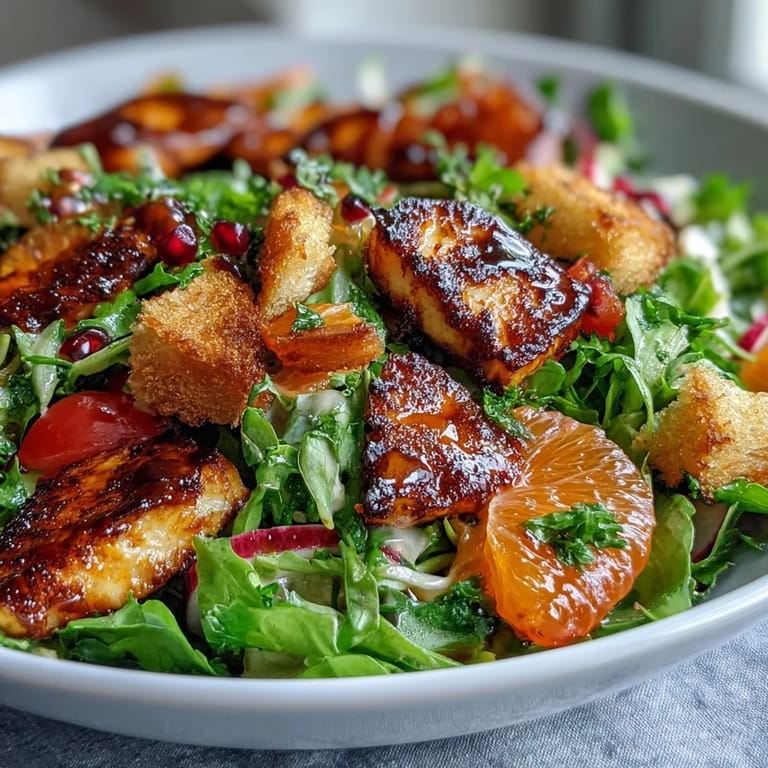
 I discovered this salad on a blistering summer afternoon when a friend arrived with a bag of blood oranges from the farmers market and challenged me to do something unexpected with them. The halloumi was already in my fridge, leftover from a Mediterranean shopping spree, and suddenly the idea clicked: why not take the bold flavors of fattoush and crown it with crispy, squeaky cheese and those jewel-toned citrus slices? That first bite felt like sunshine on a plate, and I've been making it ever since.
I made this for my sister's book club once, and watching everyone slow down mid-conversation to savor a forkful told me everything I needed to know. One guest actually asked for the recipe before dessert was served, which honestly felt like the highest compliment. That evening, this salad graduated from my weeknight rotation to something I now make whenever I want to show someone I care about feeding them well.
Ingredients
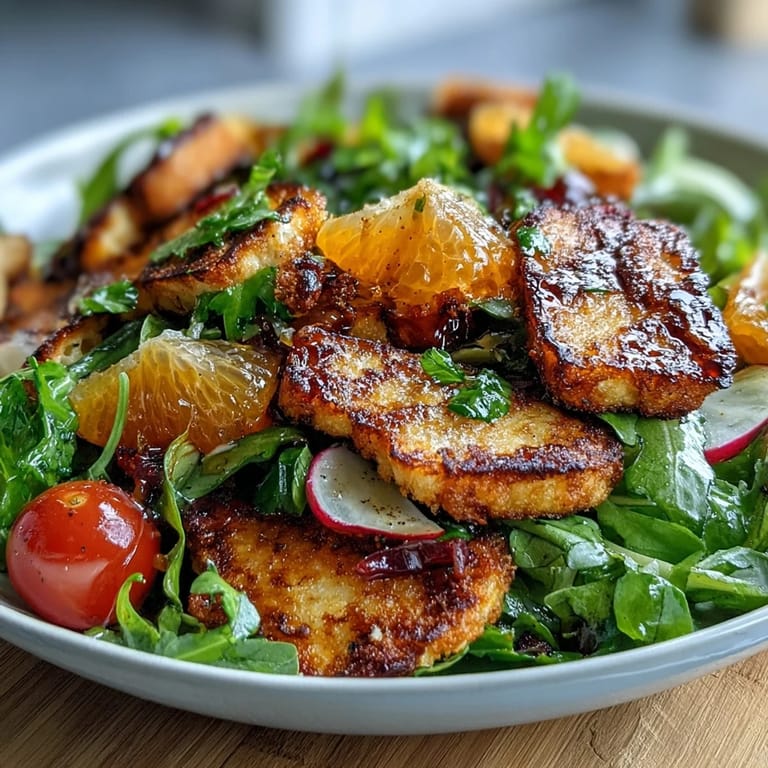
- Halloumi cheese, 200 g sliced: This squeaky cheese has the magic ability to hold its shape when fried, turning golden and crispy on the outside while staying soft inside, which is exactly why it's the star of this show.
- Blood oranges, 2 peeled and sliced: Their deep crimson color and slightly tart complexity bring sophistication that regular oranges can't quite match, though you can absolutely swap them in a pinch.
- Mixed salad greens, 200 g: Combine romaine for crunch, arugula for peppery bite, and fresh parsley and mint for herbaceous brightness, then taste as you go because the balance should feel right to you.
- Cucumber, 1/2 sliced: Think of this as your palate cleanser, bringing cool crispness and mild flavor that lets the other ingredients shine without competing.
- Cherry tomatoes, 200 g halved: Halving them instead of leaving whole helps them distribute evenly and allows the dressing to coat them better.
- Radishes, 4 thinly sliced: Their peppery bite and satisfying crunch are what prevent this from becoming just another soft, forgettable salad.
- Red onion, 1 small thinly sliced: A thin slice goes a long way here; you want texture and sharpness, not to feel like you're eating raw onion for dinner.
- Sourdough bread, 2 thick slices cut into cubes: Sourdough's tanginess adds character to the croutons, but any crusty bread works if that's what you have.
- Olive oil for croutons and frying, 3 tbsp total: Don't skimp here; good olive oil is what turns bread into golden croutons and cheese into something genuinely delicious.
- Extra virgin olive oil for dressing, 3 tbsp: Save your best bottle for the dressing since this is where its flavor really matters.
- Fresh lemon juice, 1 tbsp: Freshly squeezed makes a tangible difference; bottled juice tastes tired by comparison.
- Red wine vinegar, 1 tbsp: This brings acidity and complexity without overpowering, but white wine vinegar works if red is what you've got.
- Ground sumac, 1 tsp: This is the secret weapon that makes people ask what that amazing flavor is, so don't skip it or substitute without tasting first.
- Pomegranate molasses, 1 tsp: A small amount adds tangy sweetness and depth that no other single ingredient can replicate.
- Sea salt and black pepper to taste: Season gradually throughout and adjust at the end when everything comes together.
Tired of Takeout? 🥡
Get 10 meals you can make faster than delivery arrives. Seriously.
One email. No spam. Unsubscribe anytime.
Instructions
- Warm your oven and get the croutons going:
- Set the oven to 180°C and toss your sourdough cubes with olive oil and salt until they're evenly coated, then spread them out on a baking sheet. You'll know they're done when they smell toasty and look golden around the edges, which usually takes about 8 to 10 minutes with a quick stir halfway through.
- Build your dressing in advance:
- Whisk together the extra virgin olive oil, lemon juice, red wine vinegar, sumac, pomegranate molasses, salt, and pepper in a small bowl until it's smooth and emulsified. Taste it now while you have time; this is your moment to adjust the balance before everything else comes together.
- Fry the halloumi until it's golden and crispy:
- Heat a tablespoon of olive oil in a nonstick skillet over medium heat until it shimmers slightly, then add your halloumi slices in a single layer. Let them sit undisturbed for about a minute until they develop a golden crust, then flip and repeat on the other side until they're warm through but not falling apart.
- Assemble your salad base:
- Toss together all your greens, cucumber, cherry tomatoes, radish, and red onion in a large bowl, then scatter the blood orange slices on top. The oranges go in at this stage so they're distributed evenly throughout rather than clustered in one spot.
- Bring everything together with confidence:
- Add the warm halloumi and crispy croutons to the greens, pour the dressing over everything, and toss gently with your hands or two large spoons. The warmth of the cheese will slightly soften the greens while maintaining their structure, and you want that delicate balance, so move quickly.
- Serve and savor immediately:
- This salad is at its best the moment it comes together while the halloumi is still warm and the croutons haven't had time to soften. Divide among plates and eat right away before the magic fades.
 Pin It
 There's something about watching someone taste this salad for the first time that never gets old, because that moment when the warm cheese, cold citrus, and bright dressing hit all at once creates this pause where they're clearly reassessing what a salad can be. It's become my go-to recipe for proving that vegetarian food can absolutely hold its own as a main event.
The Art of Perfect Croutons
I learned the hard way that oven-toasted croutons beat pan-fried every time, because the dry heat surrounds them evenly while you're busy with other tasks. Once I tried making them in a skillet on the stove, and half burned while the other half stayed pale and soft, teaching me that patience with an oven timer is infinitely better than divided attention on the stovetop. The slight char at the edges is what you're after, that moment when they've gone from soft bread to something with real structure that survives the dressing without instantly dissolving.
Why Sumac Changes Everything
Sumac is one of those ingredients that makes you sound like you know what you're doing even if you've never traveled further than your local spice market, because it brings an almost citrusy tartness without being acidic the way lemon is. The first time I used it, I was skeptical because a teaspoon seemed so small, but it transformed a straightforward vinaigrette into something with character and unexpected dimension. If you can't find it, don't just skip it; try mixing a pinch of lemon zest with a tiny bit of paprika, and you'll get some of the same effect.
Timing and Temperature Magic
The temperature contrast in this salad is half the appeal, and I mean that literally, so plan your timing so the halloumi goes into the pan right around when you're ready to dress and serve. Cold greens plus warm cheese plus crisp croutons create this textural symphony that falls apart if you let things sit around cooling. The moment everyone sits down, you should be sliding their plate in front of them, and if that feels like pressure, remember it's a 30-minute recipe from start to finish so you're barely in the kitchen anyway.
- Prep all your vegetables and make your dressing while the croutons toast so you're not scrambling at the end.
- Have your greens in the bowl and ready to dress before you even heat the skillet for the cheese.
- Keep a warm plate nearby for the halloumi so it stays at the perfect temperature while you assemble everything else.
 Pin It
 This salad reminds me why cooking doesn't have to be complicated to be genuinely memorable, and how sometimes the best meals are the ones where fresh ingredients and simple techniques let each other shine. Make it once and it becomes the recipe you return to whenever you want something that tastes like summer and feels like showing someone you care.
Recipe FAQ
- → What makes halloumi unique in this dish?
Halloumi's high melting point allows it to hold its shape when fried, developing a crispy golden exterior while remaining soft and salty inside. This texture contrasts beautifully with the crisp vegetables and citrus.
- → Can I prepare the components ahead?
Yes, you can toast the croutons and whisk the dressing up to a day in advance. Store them separately in airtight containers. Fry the halloumi just before serving for optimal texture.
- → What can I substitute for blood oranges?
Regular oranges, grapefruit, or even segmented mandarins work well. The key is having a sweet citrus element to balance the salty halloumi and tangy sumac dressing.
- → How do I prevent the salad from getting soggy?
Toast the croutons until very crisp, dress the salad just before serving, and toss gently to coat evenly. The warm halloumi should be added last to maintain its crispy exterior.
- → Is this suitable for meal prep?
Store components separately: greens in one container, croutons and dressing in others. Assemble just before eating. The halloumi is best freshly fried but can be gently reheated.
- → What greens work best for this fattoush?
Romaine provides crunch, while arugula adds peppery notes. Fresh parsley and mint are traditional in Levantine cuisine, contributing authentic bright flavors to complement the citrus.