 Pin It
 My cousin's daughter was turning eight, and her mother asked me to bake something special for her First Communion celebration. I'd never made a fondant rose before, but there was something about the quiet intention of it—creating something delicate and pure for such a meaningful day. The vanilla sponge I'd perfected over years felt like the right foundation, and I knew the buttercream would hold everything together, literally and figuratively.
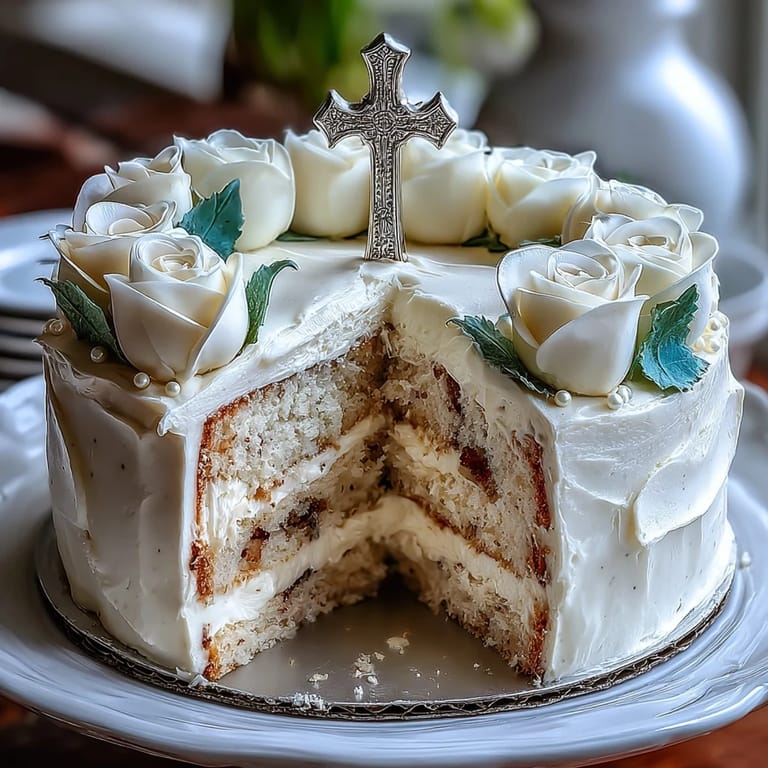
I'll never forget pulling the cooled cakes from the wire racks and realizing how level they'd baked—no wobbly tops to shave down. My hands were shaking slightly as I piped the first rose, and when it actually looked like a flower, I had to laugh at myself. By the time I set that cross topper in place, I wasn't just decorating a cake anymore; I was creating a memory for a girl who'd remember this day forever.
Ingredients
- All-purpose flour (2 ½ cups): The backbone of a tender crumb—measure by spooning into your cup and leveling, not scooping, to avoid packing it too densely.
- Baking powder (2 ½ tsp): Double-check the expiration date; stale leavening is the silent killer of otherwise perfect cakes.
- Salt (½ tsp): Amplifies the vanilla and balances sweetness in ways you won't consciously taste but will absolutely feel.
- Unsalted butter (1 cup for sponge, 1 ½ cups for frosting): Room temperature is non-negotiable; cold butter won't cream properly and your cake will be dense.
- Granulated sugar (2 cups): Creaming this with butter for a full three minutes incorporates air that makes the cake rise and lighten.
- Large eggs (4, room temperature): Cold eggs won't emulsify smoothly into the butter mixture and can cause the batter to break.
- Pure vanilla extract (1 tbsp for sponge, 2 tsp for frosting): The soul of this cake; don't skimp on imitation when the real thing makes such a difference.
- Whole milk (1 cup, room temperature): It tempers the richness and creates a delicate crumb structure.
- Powdered sugar (5 cups, sifted): Sifting removes lumps that will create grittiness in your frosting no matter how long you beat it.
- Heavy cream or whole milk (3–4 tbsp for frosting): Adjusting this gradually lets you reach the perfect spreading consistency without overworking the frosting.
- White fondant (16 oz): Store in an airtight container; it dries out quickly and becomes impossible to work with.
- Green gel food coloring (optional): Gel colors don't add moisture like liquid food coloring does, keeping your fondant from becoming sticky.
- Edible pearls or silver dragees (optional): These tiny details catch the light and add elegance without overwhelming the cake's purity.
- Cross-shaped cake topper: Choose one that feels meaningful—whether it's edible fondant or a keepsake you'll treasure afterward.
Tired of Takeout? 🥡
Get 10 meals you can make faster than delivery arrives. Seriously.
One email. No spam. Unsubscribe anytime.
Instructions
- Prepare your pans and oven:
- Preheat to 350°F and grease those round cake pans generously, then line the bottoms with parchment paper so your cakes release cleanly without sticking. This step takes thirty seconds but prevents heartbreak.
- Mix your dry ingredients:
- Whisk flour, baking powder, and salt together in a medium bowl—this distributes the leavening evenly so every bite rises the same way. Set aside.
- Cream butter and sugar:
- Beat them together in a large bowl for a full three minutes until it's pale, fluffy, and almost cloud-like in texture. This is where the magic of volume begins.
- Add eggs one at a time:
- Drop each egg in and beat well after each addition, so it fully incorporates before the next one arrives. Rushing this step can cause the batter to look curdled and separated.
- Mix in vanilla:
- Stir the vanilla extract into your creamed mixture, letting its aroma fill your kitchen with promise.
- Alternate flour and milk:
- On low speed, add a third of the flour mixture, then half the milk, then another third of flour, then the rest of the milk, finishing with the last flour portion. This alternation prevents overworking the batter, which would toughen your cake.
- Divide and smooth:
- Pour batter evenly between the two prepared pans and smooth the tops gently with an offset spatula so they bake level.
- Bake until golden:
- Bake for 30 to 35 minutes until a toothpick inserted in the center comes out clean and the cake springs back when lightly touched. Your kitchen will smell absolutely heavenly.
- Cool in pans, then turn out:
- Let cakes rest in their pans for 10 minutes—this allows them to set slightly so they won't crack or crumble when you flip them. Then turn them out onto wire racks to cool completely before frosting.
- Make the buttercream:
- Beat softened butter until creamy, gradually add sifted powdered sugar in batches, and mix in vanilla and a pinch of salt. Add milk or cream one tablespoon at a time until you reach a consistency that's spreadable but not too soft.
- Level and crumb coat:
- If your cake layers have domed tops, slice them level with a serrated knife. Place one layer on your cake board, spread with buttercream, add the second layer, then coat the entire cake thinly to trap crumbs. Chill for 20 minutes so this base layer sets.
- Apply final frosting layer:
- Spread a final, smooth layer of buttercream over the chilled crumb coat, using an offset spatula dipped in hot water for the silkiest finish.
- Shape fondant roses:
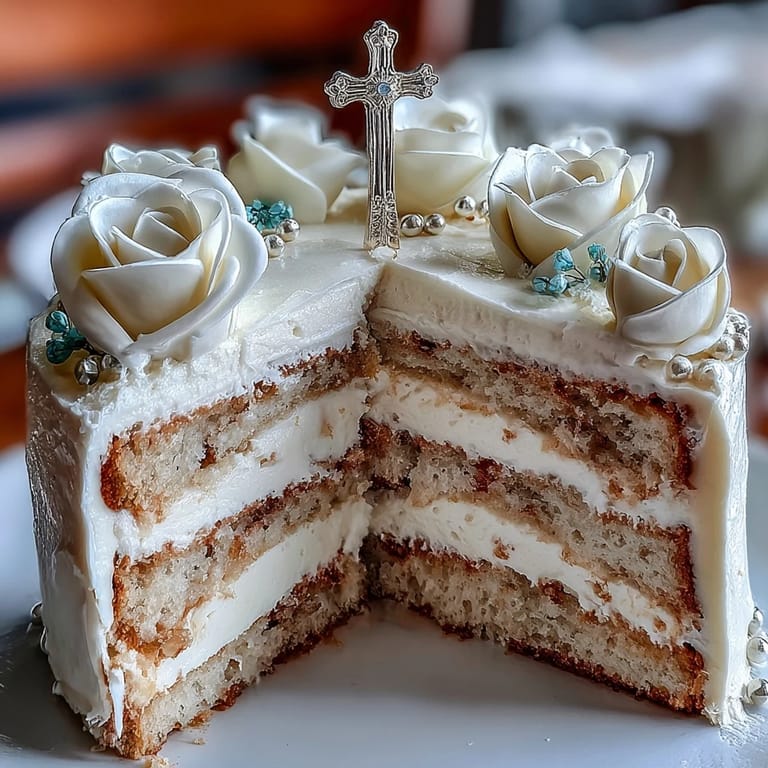
- Roll small fondant balls, flatten them gently, then layer and shape them into petals that curl like real roses. This requires patience more than perfection—slight imperfections make them look more organic.
- Create fondant leaves:
- If using them, tint a small amount of fondant pale green and shape simple leaf shapes with a small knife or fondant tool.
- Arrange roses and accents:
- Position your fondant roses and leaves on the frosted cake however feels balanced to you, then scatter edible pearls or dragees in the spaces between for shimmer and grace.
- Crown with the cross topper:
- Place your cross topper at the center or wherever feels right, making sure it's secure before you consider the cake complete.
- Chill until serving:
- Refrigerate the finished cake until it's time to serve, which helps the frosting set firm and keeps everything looking pristine.
 Pin It
 When we delivered the cake to the church hall, people gasped—actually gasped—when they saw those fondant roses. But the real moment came when that little girl cut into it and tasted the vanilla sponge, and her eyes lit up like she'd discovered something wonderful and secret, just for her. That's when I understood why this cake exists.
Understanding Fondant Work
Fondant intimidates most home bakers, but it's really just sweet, smooth dough that responds to warmth and patience. The first time I shaped a rose, I over-handled it and it became sticky and unmanageable; I learned to work quickly, use a light dusting of powdered sugar, and step away if I got frustrated. Your hands transferring heat into the fondant is natural and fine—it means you're working with it, not against it. If a petal tears, just smooth it back together with your fingers; the imperfections add charm, not detract from it.
The Buttercream That Never Fails
This buttercream is forgiving in ways that French or Swiss meringue buttercreams aren't, which makes it perfect for celebration cakes where you need confidence, not complications. I've made it in kitchens that were too warm and too cold, added it to room-temperature cakes and cold ones, and it's never let me down. The secret is not overthinking the milk addition—add it slowly and stop when the frosting spreads smoothly. Overmix and you'll have greasy, separated frosting; undermix and it will be too stiff to spread without tearing the cake layers.
Making This Cake Your Own
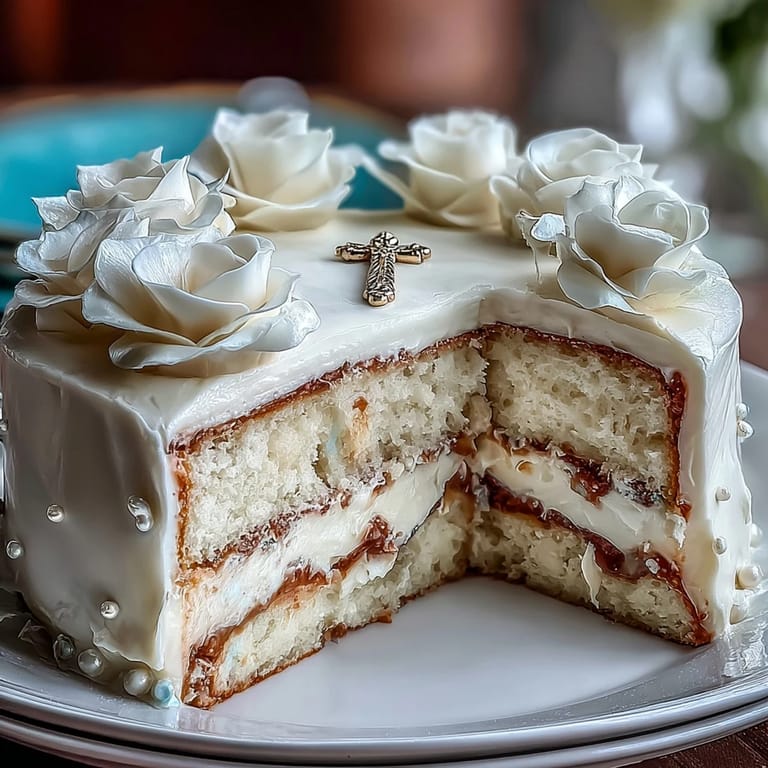
This cake is elegant in its simplicity, but it's also a canvas for your own touches. I've seen versions with lemon zest folded into the sponge, almond extract substituted for half the vanilla, and even delicate piped buttercream scrollwork between the fondant roses. Some bakers add a thin layer of jam between the cake layers for tartness, or dust edible pearl dust over the fondant roses for extra shimmer. Whatever you choose, the bones of this recipe are strong enough to support your creativity.
- If your kitchen is warm, work fondant in shorter bursts and refrigerate it between shaping roses to keep it from becoming too soft.
- White chocolate shavings scattered over the finished cake add texture and sophistication without competing with the fondant work.
- Consider the lighting where the cake will be displayed—edible pearls and dragees shine more under natural light than under overhead fluorescents.
 Pin It
 This cake celebrates moments that matter, whether it's a First Communion, a milestone birthday, or simply a day when someone deserves to feel special. Bake it with intention and watch how the care you pour into it comes through in every bite.
Recipe FAQ
- → How can I make the vanilla sponge more moist?
Substituting half the butter with vegetable oil or adding a bit of sour cream can help increase moisture without altering flavor significantly.
- → What tips ensure smooth buttercream frosting?
Beat softened butter until creamy before gradually adding sifted powdered sugar. Adding milk or cream slowly enhances spreadability and texture.
- → How do I create realistic fondant roses?
Roll small fondant balls, flatten them into thin petals, then shape and layer each petal carefully. Tinting some fondant green can create lifelike leaves.
- → Can I prepare this cake ahead of time?
Yes, bake the sponge layers a day prior and store wrapped tightly. Assemble and decorate on the day of serving for best freshness.
- → What are suitable substitutes for whole milk in frosting?
Heavy cream or plant-based milks like almond can be used to adjust consistency and richness according to preferences.