 Pin It
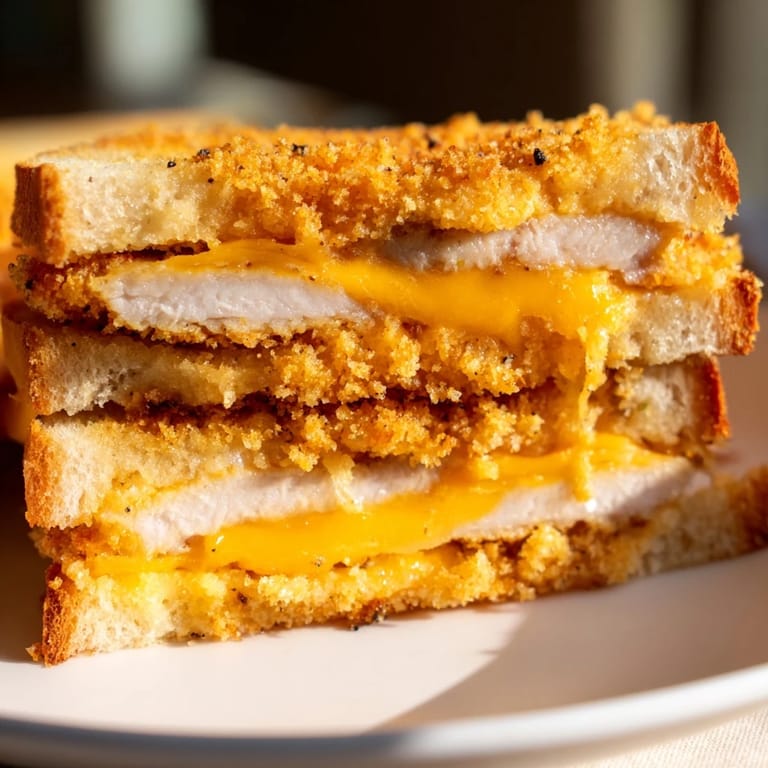
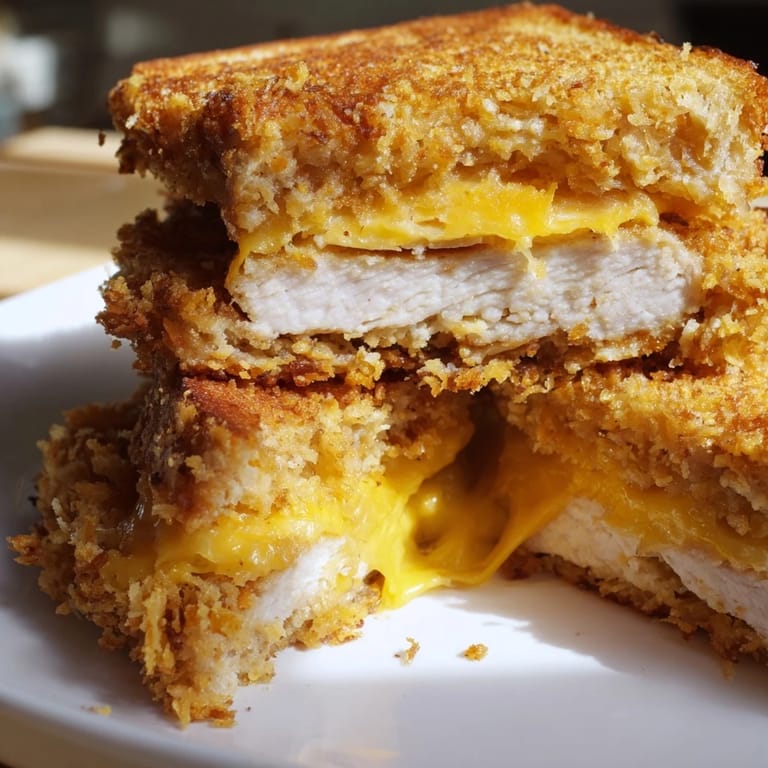
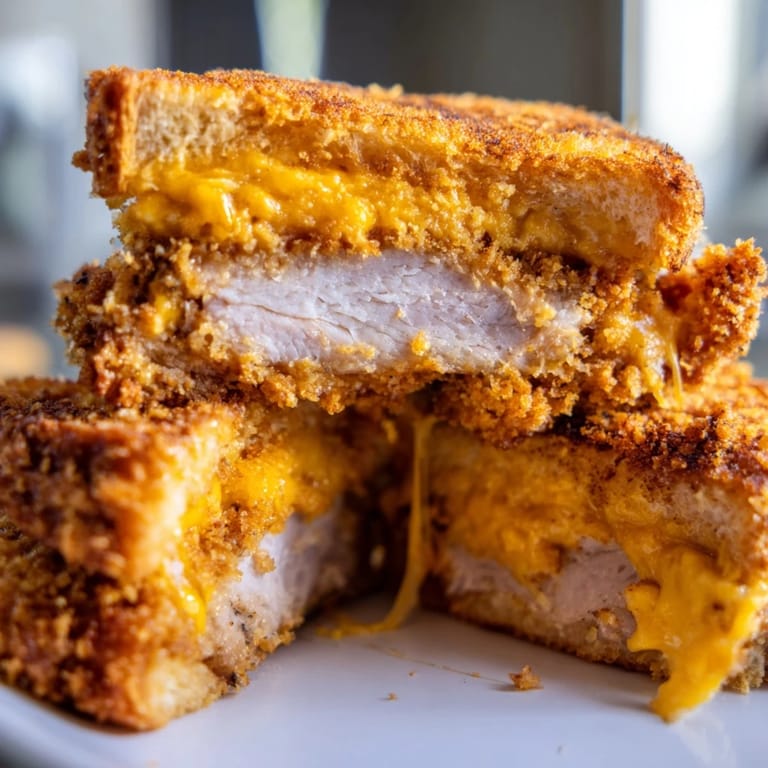
 The first time I made this sandwich, I wasn't trying to reinvent anything—I just had leftover panko-crusted pork chops in the fridge and a craving for grilled cheese that felt too ordinary. What happened next was pure accident brilliance: I sliced those crispy chops thin, layered them between sharp cheddar and buttery bread, and let the skillet work its magic. That golden, crunchy exterior giving way to juicy pork and melted cheese inside changed how I thought about lunch forever.
I remember making these for my roommate on a Sunday afternoon when we were both too hungry to wait for takeout delivery. The smell of the panko frying mingled with butter hitting the griddle, and by the time I plated them, he was already hovering in the kitchen. We ate at the counter, and I watched his expression shift from skepticism to complete silence—the good kind, when food is too good to interrupt with words.
Ingredients
- Boneless pork chops (about 1 lb total): Look for chops that are roughly the same thickness so they cook evenly; thinner pieces also mean more surface area for that golden panko crust.
- All-purpose flour: This is your foundation for breading—it helps the egg adhere and creates structure.
- Large eggs: Beat them well so they coat smoothly and give the panko something to grip.
- Panko breadcrumbs: Coarser than regular breadcrumbs, they fry up crispier and stay that way longer than you'd expect.
- Garlic powder and smoked paprika: These aren't just flavor boosters; they're what make people ask 'what is that taste' when you serve this.
- Vegetable oil: Any neutral oil works, but you need enough depth to properly fry—don't skimp or the bottoms won't crisp evenly.
- Sturdy white or sourdough bread: Thin, delicate bread will tear under the weight of pork and cheese; you need something that stands up to pressure.
- Sharp cheddar cheese: Sharp, not mild—the punch of flavor matters when it's competing with breaded pork chop.
- Unsalted butter: Spread it on the outside for that golden, crispy exterior that makes grilled cheese sing.
- Mayonnaise (optional): This is a kitchen secret: it creates extra crispness on the bread because of its fat content, competing with butter in the best way.
Tired of Takeout? 🥡
Get 10 meals you can make faster than delivery arrives. Seriously.
One email. No spam. Unsubscribe anytime.
Instructions
- Dry and season your pork chops:
- Pat them completely dry with paper towels—any moisture will steam instead of sear. Season both sides generously and let them sit while you set up your breading station.
- Set up the breading assembly line:
- Three bowls: flour in the first, beaten eggs in the second, panko mixed with garlic powder and smoked paprika in the third. This order matters because it creates layers of adhesion.
- Bread each chop with intention:
- Coat in flour first, shake off excess, then egg, then panko—and here's the trick: press the panko gently but firmly so it actually sticks instead of falling off during frying. Wet hands help here.
- Heat your oil to the right temperature:
- A quarter-inch of oil in a large skillet over medium-high heat should shimmer before you add the chops. If it smokes, it's too hot; if it barely sizzles, it's too cool.
- Fry until golden and cooked through:
- Three to four minutes per side, watching for that deep golden-brown color. Use tongs to flip gently so you don't knock off all that breading you just worked to apply.
- Rest and slice thin:
- Let the fried chops cool for five minutes on paper towels, then slice them thin enough to bend slightly. This makes them easier to layer and more forgiving when the cheese melts around them.
- Butter your bread generously:
- Soft butter spreads easier and creates better browning than cold butter—use about a tablespoon per sandwich slice on the outside.
- Layer with purpose:
- Cheese first on the unbuttered side (it anchors everything), then your sliced pork chops, then another slice of cheese before topping with bread. The cheese sandwich protects the pork from drying out.
- Optional mayo boost:
- A thin spread of mayo on the outside before grilling creates an extra-crispy crust that people notice immediately.
- Grill on medium heat:
- Three to four minutes per side on a preheated skillet or griddle, pressing gently with a spatula for even browning. You want the bread golden and the cheese noticeably melted.
- Rest before cutting:
- Two minutes might seem short, but it lets everything set so your layers don't slide apart when you slice diagonally.
 Pin It
 There's a moment when you bite into this sandwich where all the planning pays off: the crunch of panko, the creamy melt of cheese, the savory depth of breaded pork, and the buttery toast all happen at once. That's when you understand why this isn't just lunch—it's a small, delicious rebellion against ordinary cooking.
Building Layers That Actually Work
The secret to this sandwich isn't any single ingredient; it's understanding how textures interact. The panko needs to stay crispy, the cheese needs to melt, and the bread needs to be substantial enough to hold weight without falling apart. I learned this by making mistakes: I once used thin bread and watched it collapse under the pork weight like a sad soggy napkin. That failure taught me that every element has to earn its place, and substituting something flimsy because 'it's just bread' is how you end up disappointed.
The Science of Breading That Lasts
Panko stays crispier than regular breadcrumbs because of its structure—those larger, airier flakes fry differently and resist moisture longer. But here's what most people miss: pressing the breadcrumbs onto the pork chop isn't just helpful, it's essential. Loose breading falls off in the skillet and creates a mess; pressed breading creates a seal. The egg underneath is the glue, and the flour underneath that is what the glue sticks to. Skip any step in this progression and you'll have a worse result.
Making It Your Own
This sandwich is a foundation, not a law. I've added crispy bacon, thin apple slices, and even a swipe of Dijon mustard when I was feeling adventurous. The beauty is that the core—crispy pork, melted cheese, buttery bread—is so solid that you can riff on it without breaking anything. Think of it as jazz instead of classical; the structure is there to support your creativity, not limit it.
- Pickles add brightness and cut through the richness, so don't skip them if you enjoy that kind of thing.
- A thin layer of mayo on the outside of the bread fries up even crispier than butter alone, though using both is absolutely allowed.
- Swapping sharp cheddar for Swiss or provolone changes the entire flavor profile in ways that are worth exploring.
 Pin It
 This sandwich proves that sometimes the most satisfying meals come from combining things that shouldn't work together on paper but do something magical on a plate. Make it once, and you'll find yourself craving it again.
Recipe FAQ
- → How do I get the pork chops extra crispy?
Ensure the panko coating is pressed firmly on after dredging and fry in hot oil without overcrowding the pan to maintain crispiness.
- → Can I substitute cheddar cheese with others?
Yes, Swiss or provolone work well. Choose cheeses that melt smoothly and complement pork's flavor.
- → What bread types work best for this melt?
Sturdy white or sourdough bread holds up to the filling and browns nicely for a crisp texture.
- → How should I slice the pork chops for the sandwich?
Let chops rest after frying, then slice thinly to ensure easy layering and a balanced bite.
- → Is mayonnaise necessary for crispness?
Mayonnaise is optional but helps create an extra crispy golden crust on the bread when grilled.